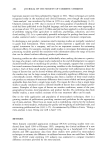
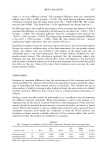
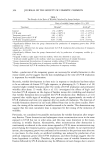
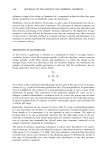
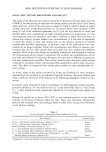
310 JOURNAL OF THE SOCIETY OF COSMETIC CHEMISTS Finally, the Draize eye test procedure was modified by instillation of graded concentra- tions (in saline) from 0.063% up to 0.5% in order to assess the relative irritancy of various quaternaries. This test was intended to identify safe-use levels for surfactants used in finished formulations. The results [for details consult Table 2 in Cutler and Drobeck (3)] can be summarized as follows: quaternaries that include a benzyl group (benzalkonium types) appear to be milder than those with two fatty alkyl groups. Nevertheless, there is no compelling reason to conclude that human dermal irritancy shows the same pattern as eye damage in the Draize test. Table II below shows the maximum tolerated concentrations of active surfactants. Draize's data and the ensuing discussion during the May 1952 Toilet Goods Association meeting (4) are important. Draize noted that different grades of sodium lauryl sulfate and different lots of the (supposedly) identical commercial grade elicited different levels of eye damage. Although Draize's readings suggest that 100% concentration of sorbitan esters were tolerated, one questioner reported that in his tests many non-ionics elicited corneal opacity. These important comments are included as an Appendix since few readers today have ready access to the TGA proceedings. Despite these uncertainties, Hazelton (5) confirms the previously established order of cationics anionics nonionics as the best initial criterion for predicting eye irritation potential. How and where the same pattern was established for human skin irritation remains a mystery. The intense research activity of the early fifties was followed by a hiatus. Researchers and formulators accepted the ratings of surfactants as skin irritants on the basis of the classic model (5). The work of van der Valk eta/. (6) initiated the period of research in which rabbit eye irritation and erythema were replaced by parametric measurements on human subjects. The work was based on the concept that skin exposed to surfactants would show enhanced TEWL long before visible eythema appeared. Their ranking of irritancy of surfactants (2%) based on evaporimetric scores is: sodium lauryl sulfate cocobetaine sodium laurate polysorbate 60. These studies included a quaternary surfactant, as defined above, and their approach was followed by Berardesca eta/, (7), who included another quaternary. Briefly, 0.03 ml/cm 2 of four different surfactants at different con- centrations were applied to eight subjects once daily for three days to 16-cm 2 test sites Table II Maximum Tolerated Concentrations* of Active Surfactants Surfactant Concentration (%) Lauralkonium chloride 0.5 Benzalkonium chloride 0.5 Benzethonium chloride 0.5 Cetethyl dimonium chloride 0.8 Stearalkonium chloride 3.0 Sodium lauryl sulfate 20.0 Octoxynol-9 5.0 Polysorbate 80 100.0 * Rabbit eye instillation concentration at which no corneal or iris lesions were evident by the seven-day reading (4).

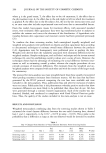
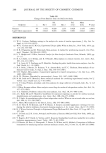
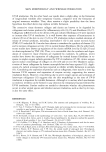
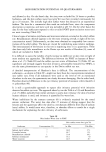
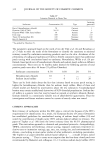
SKIN IRRITATION POTENTIAL OF QUATERNARIES 311 and allowed to dry. On the fourth day, the sites were occluded for 24 hours to produce hydration, and the skin surface water loss (g/m2hr) was then recorded continuously for up to 25 minutes. The initially high skin surface water loss decayed in an exponential fashion. The data for a commercial skin wash are excluded here, since the component description is imprecise, and lactic acid was included at pH 5.0. On the other hand, the data for the four surfactants exposed to this so-called POST (post-occlusion stress test) are most revealing (Table III). Clinical signs of irritation (erythema and microvesiculation) occurred at the alkyl sulfate site. Benzalkonium chloride appears to be the most irritating overall, in light of the low concentration tested. Unfortunately, no data were obtained at comparably low concen- trations of the alkyl sulfate. The data are crucial for establishing some relative rankings. The innocuousness of the betaine in this test is surprising since it is a quaternary. These data bear only little resemblance to the Draize eye test results of Hazelton (4), some of which are included in Table IV. It is difficult to assess the validity of early testing via rabbit eye or skin tests in light of more modern test approaches. The differences between the POST on humans of Berar- desca et al. (7) (Table III) and the rabbit eye test scores of Hazelton (5) (Table IV) are significant and strongly suggest that skin irritancy, presumably measured via TEWL, is not the same phenomenon as eye opacity in the Draize rabbit eye test. A detailed interpretation of Hazelton's data is difficult. The concentrations of the surfactants--as shown in Table IV--might not have been the concentrations introduced into rabbit eyes. Even if all substances were used at the level of 1% as mentioned elsewhere in the text, the quaternaries are clearly the most damaging. On the other hand, Hazelton observed differences in the eye irritancy potential of nonionic ethers (laureth-4 vs polysorbate 80). It is still a questionable approach to equate skin irritancy potential with irritation observed in rabbit eye tests. The approach taken by van der Valk et al. (6) and Berardesca et •l. (7) differs radically from earlier attempts to assess skin irritancy: the skin of normal human subjects is used, and irritancy is quantified by water loss. Water imbibition by the stratum corneum (8) is evidently maximal for the tested anionic surfactant. The water loss data after 25 minutes of drying suggest that the betaine and the quaternary affect the skin by a mechanism different from that of sodium lauryl sulfate. It would seem wise, therefore, to abandon efforts to search for a single mechanism for explaining the skin irritancy of surfactants. Table III Skin Surface Water Loss in POST Skin surface water loss (g/m2/h) Surfactant Concentration (%) 1st Min 25th Min Sodium lauryl sulfate 7 64.0 27.1 Cocamido betaine 7 44.7 12.1 Benzalkonium chloride 1 33.8 10.3 Sorbitan monolaurate 10 36.1 7.8 Water (control) 40.5 8.7
Purchased for the exclusive use of nofirst nolast (unknown)
From: SCC Media Library & Resource Center (library.scconline.org)