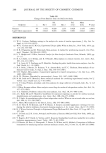
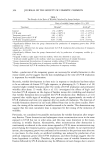
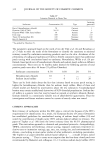
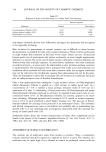
314 JOURNAL OF THE SOCIETY OF COSMETIC CHEMISTS Table VI Response of Atopics and Non-Atopics to 4-Hour Patch Test Procedure Substance Positive response Atopics Non-atopics Cocotrimonium chloride (35%) Sodium dodecyl sulfate (20%) Hydrochloric acid (10%) 3/29 5/29 16/30 10/28 5/29 5/29 non-atopics evidently did not react differently, and again the quaternary did not appear to be especially irritating. Skin irritation by quaternaries in normal cosmetic use is difficult to assess because documentation is available for only a few isolated substances. There is little justification to judge human skin irritation on the basis of the classic Draize eye test. Animal and human patch tests of quaternaries rely almost exclusively on acute (single) applications, whereas it is known that in the case of dilute anionic surfactants, irritation responses are observed only after multiple exposure. As noted above, erythema--the most commonly recorded end point--is a late event. Its relationship to skin irritation (scaling, tautness) is undocumented. The assumption that a substance that under acute and strenuous test conditions elicits eythema will also cause skin irritation under less stringent conditions may not be valid since the mechanisms causing these phenomena may not be the same. Thus, the formulator is rarely able to prejudge the non-irritancy of a surfactant and must rely on safety/irritation tests of finished formulations. Only a few quaternaries have undergone a rigid irritancy review: (a) Dihydrogenated tallow dimonium chloride is graded as a mild irritant in rabbit patch tests. At a concentration of 7.5% it reached a mean primary irritation index of 0.26 out of a maximum of 8, after 15 alternating 24-hour patch tests. (b) Benzethonium and meth- ylbenzethonium chlorides produced no irritancy in repeated human patch tests at con- centrations below 0.5%. (c) Benzalkonium chloride, by contrast, appears to be much more irritating. Although repeated patch testing at 0.1% caused no irritant responses, tests at 0.5% or more produced a much higher response rate. The past use of benzal- konium chloride for creating of test protocols is an unfortunate choice. This substance and related compounds are toxic to microbiota and probably also to mammalian epi- dermal cells. It is not surprising that investigators consistently find this material irri- tating in closed patch tests (16). Additional details about the irritant characteristics of these three compounds can be found in the reports of the Cosmetic Ingredient Review [J. Am. Co//. Toxicol. 1(2), 71, 1982 ibid. 4(5), 65, 1985 and ibid. 8(4), 589, 1989]. ASSESSMENT OF SURFACTANT IRRITANCY The cosmetic use of surfactants varies from product to product. Thus, a compound's irritancy potential should be expected to depend on how it is used. The irritancy of a surfactant may be quite high if it is allowed to remain in prolonged contact with the

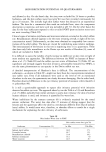
SKIN IRRITATION POTENTIAL OF QUATERNARIES 315 skin, while removal of the offending substance may reduce potential irritancy to neg- ligible. Even prolonged contact of a surfactant with the skin might not elicit irritancy effects adverse reactions might depend on permeation to lower strata of the skin. For example, an oil-soluble surfactant may exhibit adverse effects that depend on the stratum corneum lipid levels. A surfactant that can blend into or mix with barrier lipids might have long-term effects on the barrier competency of the skin. Penetration into or through skin is a function of the surfactant's molecular weight and shape. Unless the stratum corneum is damaged prior to or during the surfactant's application, high-molecular-weight compounds should remain on the surface. Blends of surfactants exhibit features that might differ radically from the effects of the individual components. Formulators must proceed cautiously in the blending of surfac- tants since the results might be unpredictable and might depend on the formation of mixed miceliar species. In light of older as well as more recent data, the irritancy of diverse types of surfactants on intact human skin should not be judged on the basis of their ionization. Other characteristics and usage are likely to exert a far greater impact: Lower skin irritancy Higher skin irritancy High molecular weight Water solubility Rinse-off product Little or no skin permeation Low molecular weight Lipid solubility Leave-on product High skin permeation Rational analysis, based on some of the above concepts, suggests that the water-insoluble stearalkonium chloride, e.g., left on the skin is less likely to cause irritation than the lipid-soluble (and penetration-enhancing) laureth-4. The mechanisms of skin irritancy manifestations such as scaling and tautness remain obscure. The literature includes many suggestions for explaining skin irritancy after (repeated) mild exposure to dilute surfactant solutions. Particularly noteworthy are the reviews by Rhein (17), Imokawa (18), Abraham (19), and Rawlings et aL (20). Despite much effort, no definitive evidence has been published that can explain the phenomena of skin irritancy by surfactant exposure. Any attempt to explain the phenomena caused by different surfactants by a single mechanism is likely to fail. Instead, it is more likely that irritant responses in skin can be caused by several mechanisms, either alone or in concert, and might depend on the nature of the surfactant. CONCLUSIONS 1. Skin irritancy by surfactants is related to the fate of the topically applied substance. Permeation into the epidermis is a primary requisite. Permeation through the epi- dermis is likely to elicit toxic responses, especially in the case of quaternaries. Photodecomposition of surfactants remaining on the skin might cause responses that cannot be assessed by patch testing (21). The chemical structures of quaternaries and their general stability make them useful in cosmetic products. 2. The tendency of quaternaries to bond to negatively charged sites blocks their ten-
Purchased for the exclusive use of nofirst nolast (unknown)
From: SCC Media Library & Resource Center (library.scconline.org)