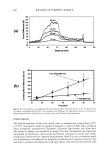
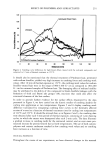
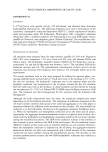
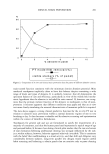
250 JOURNAL OF COSMETIC SCIENCE sodium bisulfite, a strong reducing agent and antioxidant. The use of this reagent resulted in 15% and 23% protection of Trp after 10 min of hair exposure to hot irons at 132øC and 152øC, respectively. The mechanism for the thermal decomposition of Trp most likely involves oxidation, which could be inhibited by using sodium bisulfite. Similarly, it has previously been reported that the photodecomposition of Trp in hair can be affected by reducing agents such as ascorbic acid. In contrast to this, the thermal-protective effect of such chemically diverse materials as a cationic polymer, cationic surfactant, or protein hydrolyzate cannot be explained by an oxidation-prevention mechanism. The retardation of heat conduction is a possibility, although our earlier calculations suggest that heat propagation through a fiber assembly is so fast that steady-state conditions are attained within a fraction of a second (5). A very thin layer of surface treatment, with a thickness on the order of a fraction of a micron, could result in a multilayer heat barrier in a bundle of hair possibly affecting the temperature distribution and consequently the rate of Trp decomposition. Conceivably, another factor could be that an intervening layer of surface treatment prevents direct contact between the hot surface of an appliance and the fiber surface, thus eliminating local overheating effects. COMBING ANALYSIS In order to monitor the surface damage or surface modification induced by thermal exposure, we have performed combing analysis on thermally treated hair. This tech- nique, which measures frictional forces corresponding to the combing process, has previously been found to be a very sensitive tool for detecting changes in the fiber surface as a result of thermal treatment (5), photo-irradiation (16), and reactive chemical treat- ments (17). Figure 4 contains combing curves, representing force difference as a function of distance (or tress length), for modified and unmodified hair that was thermally exposed to a curling iron at 152øC for a total of 12 min. The values of force difference were obtained by subtracting untreated control traces from the curves obtained after the treatment. In agreement with our previous publication (5), untreated hair exhibits an increase in combing force values in the thermally exposed region of the tress, resulting in a peak (maximum) on the force-vs-distance curve presented in Figure 4. This may be attributed to the thermal-oxidative damage of the lipid layer present on the fiber surface. For fibers treated with hydrolyzed wheat protein, there is an even greater increase in fiber friction than in untreated hair. This result has been obtained not only for neat solutions of protein hydrolyzates, but also for commercial formulations based on this raw material. This effect, perhaps caused by heat-activated grafting of wheat protein fragments to hair keratin, could lead to an increase in the hydrophilicity and surface energy of hair, resulting in increased combing forces. In contrast, hair treated with PVP/DMAPA acrylates copolymer exhibits a depression (minimum) in the combing curve, correspond- ing to the thermally exposed region of the tress. This suggests preferential binding of the cationic polymer to the thermally treated section of the fiber assembly and either an actual reduction in surface damage or its masking by a deposited layer of polymer capable of reducing the combing forces. Finally, with a cationic surfactant (quaternium 70), the changes in the combing curve as compared to the untreated control are minimal and provide evidence of only a slight increase in the region where thermal treatment was administered.

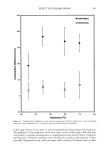
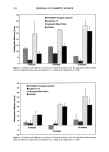
EFFECT OF POLYMERS AND SURFACTANTS 251 120 lOO 80 e 60 -• 40 fl. 20 -20 UntreatedProtWhea•/Hydroly .... - .... '" PVP/DMAPA Acrylates Copolymer Quatemium 70 0 20 40 60 80 100 120 140 160 Distance (mm) Figure 4. Combing curve differences for light-brown fibers treated with the indicated compounds and subjected to 12 min of thermal treatment at 152øC. It should also be mentioned that the thermal treatment of Piedmont hair, pretreated with sodium bisulfite, yielded very high increases in combing forces and combing work values. After 10 min of thermal exposure at 152øC, the combing work values for sodium bisulfite-treated hair were in the range of 900-1100 G'cm as compared to 180-200 G ß cm for untreated samples of Piedmont hair. The damaging effect of sodium bisulfite may be attributed to the ability of this compound to break disulfide linkages with the formation of thiol and Bunte salt groups (18), reactions that could also affect the structural elements of the hair surface. In order to provide further evidence for the surface effects illustrated by the data presented in Figure 4, we have carried out the kinetic studies of combing analysis for curling iron application at two temperatures. Figures 5 and 6 display combing work difference (calculated by integrating combing force curves in the thermally affected section of a tress) as a function of thermal treatment time for curling iron temperatures of 132øC and 152øC. It should be stressed that, as in Figures 2 and 3, the combing data were obtained after each 4-min period of thermal exposure, consisting of 1-min heating cycles, in which the tresses were shampooed after each 2-min cycle. The data illustrate a gradual increase in combing work for the untreated control, and an even more pro- nounced increase for protein-treated hair at both temperatures. The use of both cationic polymer and cationic surfactant resulted in low combing work values and no combing force increases as a function of time. TEXTURAL PROPERTIES Throughout the course of our experiments, we have observed changes in the textural
Purchased for the exclusive use of nofirst nolast (unknown)
From: SCC Media Library & Resource Center (library.scconline.org)