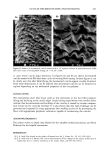
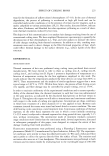
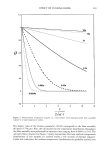
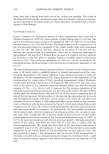
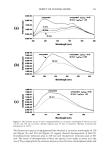
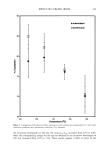
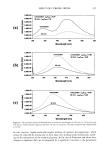
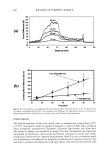
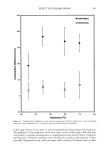
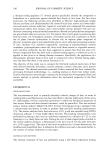
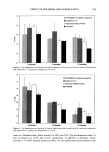
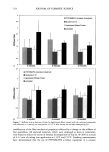
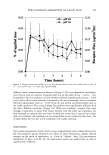
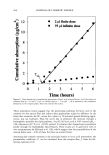
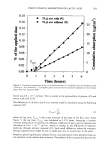
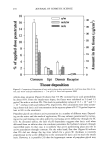
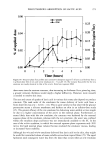
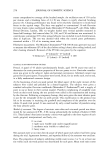
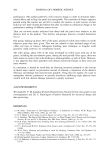
254 JOURNAL OF COSMETIC SCIENCE 3.5 2.5 1.5 0.5 o 2.5 f I ..... 4 minutes 8 minutes B PVP/DMAPA Acrylates Copolymer ß Quaternium 70 [] Hydrolyzed Wheat Protein ß untreated •'s...'.- •, :•8 • .i'i 12 minutes .o_ 1.5 f,o 1 0.5 ß PVP/DMAPA Acrylates Copolymer ß Quaternium 70 [] Hydrolyzed Wheat Protein ß untreated I [ •:• :i 4 minutes 8 minutes :•:• :::::s::.•:::: :• i:i:....... :'• i .. : ..... ::': -•::• Vz•i•.i*•.....!• •i::ii::. . ". ........ 12 minutes Figure 7. Stiffness ratio as function of time for light-brown fibers treated with the indicated compounds and subjected to a curling iron temperature of 152øC after rinsing (a) and after shampooing (b). modification of the fiber mechanical properties reflected by a change in the stiffness of hair assemblies. All analyzed materials, which were employed as leave-in treatments, were found to reduce the extent of thermal decomposition of Trp by 10-20% as a result of 4-12 min of curling iron application at 132øC and 152øC. Combing measurements have demonstrated that the use of PVP/DMAPA acrylates copolymer or a cationic

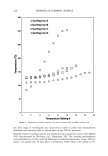
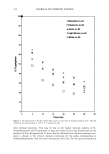
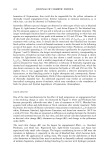
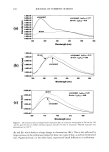
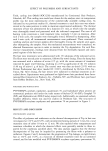
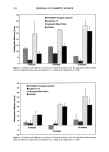
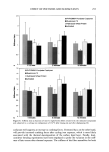
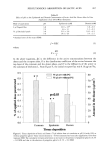
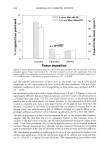
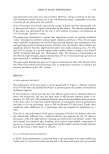
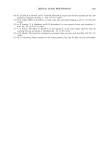
EFFECT OF POLYMERS AND SURFACTANTS 255 2.5 [] PVP/DMAPA Acrylates Copolymer [] Quaternium 70 [] Hydrolyzed Wheat Protein [] untreated 0.5 o 1.8 4 minutes 8 minutes 12 minutes 1.6 1.4 1.2 0.6 0.4 -I• PVP/DMAPA Acrylates Copolymer [] Quaternium 70 [] Hydrolyzed Wheat Protein [] untreated 0.2 f f o b 4 minutes Figure 8. Stiffness male as •uncdon o• time and subjected to a c•]in• iron for light-brown fibers treated with the indicated compounds of 132øC after rinsing (a) and after shampooing (b). surfactant will suppress an increase in combing forces. Untreated hair, on the other hand, will provide increased combing forces after curling iron exposure, which is most likely associated with the thermal decomposition of the surface lipid layer. Finally, dual- cantilever bending experiments have been employed to probe the variation in the stiff- ness of hair tresses after thermal exposure. The stiffness of the fiber assemblies for both
Purchased for the exclusive use of nofirst nolast (unknown)
From: SCC Media Library & Resource Center (library.scconline.org)