256 JOURNAL OF COSMETIC SCIENCE unmodified and polymer-treated hair was found to increase as a result of thermal exposure. This may be a result of structural rearrangements in hair, consisting of (a) an increase in the content of the crystalline phase for intact hair, and (b) the addition of adsorbed amounts of polymer, which produce linkages between fibers. REFERENCES (1) P. Milczarek, M. Zielinski, and M. Garcia, The mechanism and stability of thermal transitions in hair keratin, Colloid Polym. Sci., 270, 1106 (1992). (2) L. Rebenfeld, H. Weigmann, and C. Dansizer, Temperature dependence of the mechanical properties of human hair in relation to structure, J. Soc. Cosmet. Chem., 17, 525 (1966). (3) W. Humphries, D. Miller, and R. Wildnauer, The thermomechanical analysis of natural and chemi- cally modified human hair, J. Soc. Cosmet. Chem., 23, 359 (1972). (4) R. Arnaud, G. Perbet, A. DeFlandre, and G. Lang, ESR study of hair and melanin-keratin mixtures-- The effects of temperature and light, Int. J. Cosmet. Sci., 6, 71 (1984). (5) R. McMullen and J. Jachowicz, Thermal degradation of hair. I. Effect of curling irons,J. Cosmet. Sci., 49, 223-244. (6) R. Crawford, C. Robbins, and K. Chesney, A hysteresis in heat dried hair, J. Soc. Cosmet. Chem., 32, 27 (1981). (7) S. Shah, EP 0 681 826 A2, 1995. (8) Kobayashi Kose KK, JP 3 135 909 A, 1991. (9) Lion Corp.,JP 3 291 211 A, 1991. (10) Sunstar KK, JP 3 157 316 A, 1991. (11) Lion Corp.,JP 57 206 605 A, 1982 Chem. Abstr., 98, 362 (1983). (12) KAO Corp.,JP 6 206 808 A, 1994. (13) Sunstar KK, JP 60 116 624 A, 1983. (14) R. Galleguillos and D. Bhatt, US Patent 5 639 448, 1997. (15) A detailed description of the cantilever bending assembly is included in a manuscript which will be submitted for publication (1998). (16) J. Jachowicz, M. Helioff, C. Rocafort, A. Alexander, and R. Chaudhuri, Photodegradation of hair and its photoprotection by a substantive photofilter, DCI, 157, 28 (1995). (17) M. Garcia and J. Diaz, Combability measurements on human hair, J. Soc. Cosmet. Chem., 27, 379 (1976). (18) L. Wolfram and D. Underwood, The equilibrium between the disulfide linkage in hair keratin and sulfite or mercaptan, Textile Res. J., 36, 947 (1966).

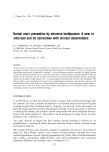
J. Cosmet. Sci., 49, 257-273 (July/August 1998) An in vitro study of the effects of formulation variables and product structure on percutaneous absorption of lactic acid A. SAH,* S. MUKHERJEE, and R. R. WICKETT, Unilever Research US, 45 River Road, Edgewater, NJ 07020 (A. S., S. M.), and University of Cincinnati, College of Pharmacy, 3223 Eden Avenue, Cincinnati OH 45219 (A. S., R. R. W.). Accepted for publication July 15, 1998. Presented in part at the Annual Scientific Seminar of the Society of Cosmetic Chemists, Nashville, May 1-2, 1997. Synopsis The efficacy of lactic acid-containing products is linked to their ability to deliver it to specific skin strata. The penetration of L+ lactic acid to different skin layers of porcine skin from various emulsions was measured in vitro using flow-through diffusion cells. The effects of pH, propylene glycol, product structure, and mode of application on percutaneous absorption of lactic acid were investigated. The absorption of lactic acid from oil-in-water (o/w) emulsions was measured at pH 3.8 and 7.0. The effect of propylene glycol (5%) as a penetration enhancer for lactic acid was also investigated from an o/w emulsion. The emulsion was applied either as a finite-dose 2-pl topical film or as a 75-pl "infinite"-dose occluded patch on a 0.64-cm 2 skin disc. A key finding was that the effects of changes in product compositions such as vehicle pH and propylene glycol on percutaneous absorption of lactic acid depended on the application mode. Increasing the aqueous phase acidity in an oil-in-water emulsion enhanced lactic acid delivery in the finite dose but not in the infinite-dose application. Finite-dose films were significantly more efficient than infinite dose for lactic acid delivery to tissue compartments. The penetration enhancer propylene glycol was more efficacious at the infinite-dose application. However, it also significantly enhanced lactic acid delivery to viable epidermis in the finite-dose application. Finally, the effect of emulsion phase structure on lactic acid uptake was investigated by comparing delivery from oil-in-water (o/w), water-in-oil (w/o), and water-in-oil-in- water (w/o/w) multiple emulsions with identical compositions. The total tissue delivery of lactic acid from the three emulsions was in the order of o/w w/o/w w/o. INTRODUCTION Alpha-hydroxy acids (AHA) such as lactic or glycolic acid are weak organic carboxylic acids in which there is a hydroxyl group at the two or alpha (o0 position along the carbon chain (1). Many AHAs are found in natural products such as fruits and milk that have long been used as ingredients in cosmetic products. For more than thirty years, certain AHAs have been used in cosmetic products as buffering agents at concentrations of 1-2%. More recently, they have been used in cosmetic formulations at concentrations of 2-15% and as superficial chemical peelers by dermatologists at concentrations of 25- * Author for current correspondence. 257
Purchased for the exclusive use of nofirst nolast (unknown)
From: SCC Media Library & Resource Center (library.scconline.org)