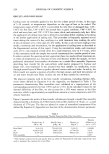
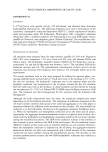
260 JOURNAL OF COSMETIC SCIENCE The w/o/w multiple emulsion was prepared by a two-stage emulsification procedure. In the first step, the w/o primary emulsion was formed at 75øC by adding the aqueous phase, containing unlabeled and labeled lactic acid, to the oil phase containing the hydrophobic surfactant. In the second step, the w/o primary emulsion was dispersed at 50øC in an aqueous solution containing the hydrophilic emulsifier. In this case, two separate oil-water interfaces were created, an inner one with the hydrophobic surfactant and an outer one with the hydrophilic surfactant. EMULSION CHARACTERIZATION The emulsions were characterized using the light microscope at a magnification of 100 (Zeiss M 80, Germany). The emulsion drop size was determined by the Malvern Mas- tersizer using the Mie theory of light scattering. The o/w emulsion was distinguished from the w/o emulsion using the water- and oil-soluble dyes methylene blue and Sudan IV, respectively. The characteristic parameters of the emulsions are shown in Table I. The microscopic aspect of the w/o/w multiple emulsion was characteristic of these systems. The mean diameter of the multiple oil globules observed in the w/o/w emul- sions was determined to be 155 l•m. The globules of the o/w simple emulsion showed a mean diameter of less than 30 •m, and the w/o globules had a mean diameter of less than 35 l•m. SKIN SAMPLES The in vitro percutaneous absorption measurements were carried out with 3-4-week-old female porcine dorsal skin obtained from Buckshire Corp. (Perkasie, PA) and stored at -75øC. The skin was thawed, and adipose tissue and hair were removed. The shaved skin was then dermatomed to 510-1•m thickness using a Padgett Dermatome, and 13-ram discs were cut from the dermatomed skin and mounted on Bronaugh flow-through cells (14). After each skin disc was equilibrated for 30 minutes, transepidermal water loss (TEWL) measurements were carried out using an evaporimeter (Servo-Med AB, Stock- holm, Sweden) to check its barrier integrity. Skins with TEWL values greater than 5 gm/cm2/hour were rejected. TEWL measurements were also carried out to monitor the change in skin hydration after product application. PERCUTANEOUS ABSORPTION MEASUREMENTS The experiments were carried out at two dose levels, 2-1•1 topical film (finite dose) or 75-1•1 "infinite" dose applied on a 0.64 cm 2 skin disc. The product was spread evenly Table I Characteristics of the O/W, W/O, and W/O/W Emulsions Continuous Emulsion Microscopic aspect phase O/W simple emulsion W/O simple emulsion W/O/W multiple emulsion Simple globules 25-30 Simple globules 30-35 Multiple globules 150-160 •rn Aqueous Oily Aqueous

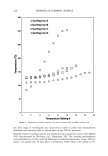
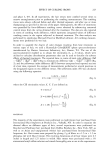
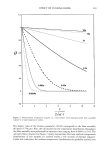
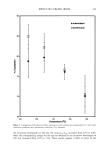
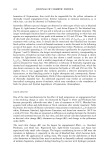
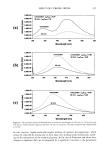
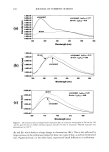
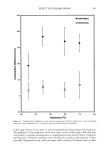
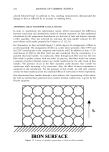
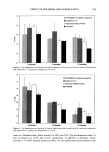
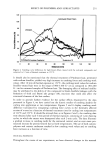
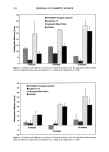
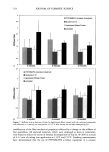
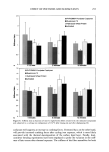
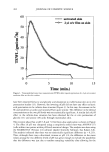
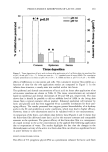
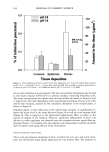
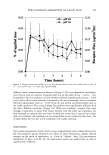
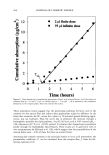
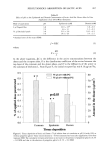
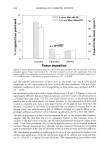
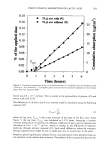
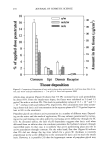
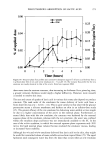
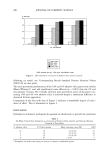
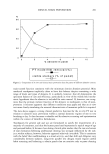
PERCUTANEOUS ABSORPTION OF LACTIC ACID 261 over the entire surface using an applicator. The cells were covered with parafilm in the case of infinite dose to avoid evaporation of the vehicle. Phosphate-buffered saline at pH 7.4 was used as the receptor fluid. The flow rate was controlled at 5 ml/hr. The receptor fluids were sampled every half hour for six hours after dosing the skins. At the end of six hours each flow cell was washed with deionized distilled water three times to remove the excess formulation from the surface. In the case of the infinite-dose application, the excess emulsion was removed with a cotton swab before washing the skin. The skin was dismounted from the cell and carefully swabbed with a Kimwipe TM. The stratum corneum was obtained from the skin disc using nine tape strippings (3M Scotch Magic TM Tape). TEWL measurements indicated that the corneum barrier was com- pletely removed by nine tape strippings. The epidermis was then scraped from the dermis using a scalpel, and the dermis was digested in the tissue solubilizer solution. The applicators, cotton swabs, Kimwipes TM, cell washes, cell ring washes, wash pipets, tape strips, epidermis, dermis, and the receptor fluids were assayed using a Beckman scintillation counter after addition of 15 ml of scintillation cocktail in each vial. RESULTS EFFECT OF pH The percutaneous absorption of lactic acid (pKa = 3.8) from an oil-in-water (o/w) emulsion was measured at aqueous phase pH values of 7.0 and 3.8. The o/w emulsions were applied either as a 2-pl topical film or as a 75-pl "infinite" occluded dose. Evap- orimeter measurements after the application of the topical film on the skin (Figure 1) showed a rapid rise in the water flux followed by a gradual decrease to a steady-state level that was higher than that from an untreated skin. The flux decay curve can be charac- terized by an initial rapid diffusion, which is characteristic of free water followed by a slow diffusion of water that is bound to either the emulsion film and/or the corneum. The TEWL data suggest that the topical 2-pl o/w film hydrated the skin for about 10-15 minutes. In contrast, in the infinite-dose situation, the skin remained hydrated for the duration of the study due to the large reservoir in the donor side and the occlusion provided by the parafilm. The amounts of lactic acid in different tissue compartments after six hours (study duration) are shown in Figure 2 for topical film and in Figure 3 for infinite-dose applications. The results are expressed as the percentage of the applied dose as well as the micrograms of lactic acid per square centimeter (based on a measured skin disc size of 0.64 cm 2) of the skin tissue. Pairwise comparisons were carried out using a two-tailed Student's t-test (17) to obtain the significance of difference in the tissue concentrations at the two pH levels. The effect of pH on the percutaneous absorption of lactic acid depended on the mode of application. When delivered from a topical film, significantly more (p 0.01) lactic acid penetrated the skin at the acidic pH (Figure 2). Decreasing the pH of the 2-pl o/w emulsion film from 7.0 to 3.8 increased the total delivery by four times from 6.5% to more than 25% of the applied dose. The active concentrations in the SC and the epidermis were significantly higher (p 0.01) at the lower pH, and the concentration in the dermis was directionally greater. Similar penetration enhancements at acidic pH
Purchased for the exclusive use of nofirst nolast (unknown)
From: SCC Media Library & Resource Center (library.scconline.org)