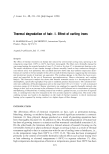
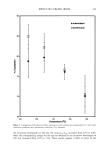
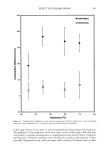
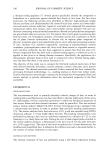
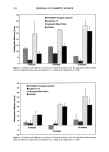
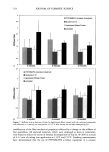
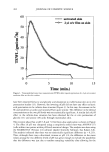
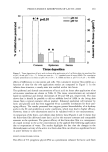
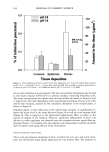
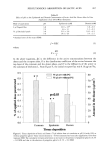
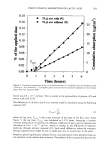
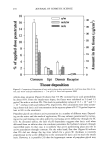
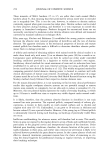
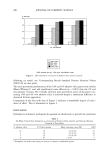
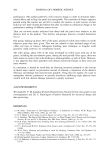
270 JOURNAL OF COSMETIC SCIENCE 18 o • o/w w/o/w w/o - 40 - 35 • Comeurn Epi Dermis Receptor Tissue deposition Figure 9. Comparison of deposition of lactic acid six hours after application of a 2-1al finite-dose film of o/w, w/o, and w/o/w multiple emulsions (n = 7) at pH 3.8. Error bars represent SEM. infinite-dose situation (Figure 8) shows that 5% PG increased lactic acid permeability by about 85%. From the steady-state slopes, the fluxes were calculated as 2.4 and 1.3 lag/cm2/hr with or without PG. This leads to permeability values of 13.5 x 10 -6 and 7.3 x 10 -6 cm/hour with and without PG, respectively. The calculations were done assum- ing a donor-side lactic acid concentration in the aqueous phase of 0.1778 gm/ml (equiva- lent to 8% in the emulsion). Propylene glycol can enhance active penetration in a number of different ways. Depend- ing on the active and the mode of application, PG may enhance penetration by increas- ing active partitioning into skin and/or by increasing active diffusivity through the SC (23). As discussed earlier, the lack of pH dependance suggests that lactic acid when delivered from an infinite-dose o/w emulsion penetrates the hydrated corneum through water-filled pores. In that case, it is unlikely that active partitioning plays any role in active penetration through corneum. On the other hand, flux data (Figure 8) indicate that PG did not change the lag time (which for a given SC thickness is inversely proportional to the active diffusivity in the corneum) for lactic acid to reach the steady state. However, it is possible (24) that the hygroscopic nature of propylene glycol may

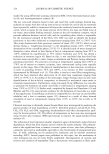
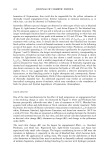
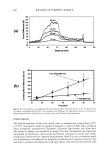
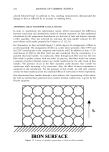
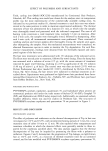
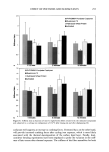
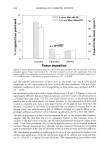
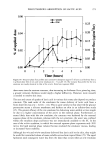
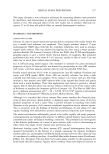
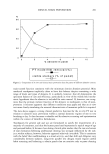
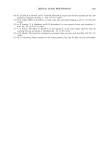
PERCUTANEOUS ABSORPTION OF LACTIC ACID 271 0.06 • w/o/w • o/w 0.25 0.04 0.20 0.15 / 0.00 • - , , • , 0.00 0 I 2 3 4 5 6 Time (hours) Figure 10. Receptor-phase flux profiles and cumulative absorption (pg/cm 2) of lactic acid delivery from a 2-pl finite-dose film of o/w and w/o/w emulsions (n = 7) at pH 3.8. The receptor flux profile for the w/o emulsion was nearly identical to that of the w/o/w. Error bars represent SEM. draw water into the stratum corneum, thus increasing its thickness. For a given lag time, a greater corneum thickness would imply a higher diffusivity. However, more research is needed to resolve this issue. The rate and extent of uptake of lactic acid in various skin strata also depend on product structure. The rank order of the emulsions for tissue delivery of lactic acid from a finite-dose film was o/w w/o/w w/o. This is quite similar to that observed for glucose permeation across a silicone membrane and hairless rat skin in an infinite-dose study (15). The greater efficacy of the o/w emulsion for delivering water-soluble actives might be due to a higher concentration of the active in the external phase. Furthermore, it seems likely that with the o/w emulsion, the corneum was hydrated by the external aqueous phase of the emulsion, whereas with the w/o emulsion, the water was confined within the emulsion drops and hence was not immediately available to the SC. In the case of the w/o/w emulsion, in which the external aqueous phase represents only 20% (w/w), the high internal phase volume fraction rendered the emulsion viscous, leading to decreased water mobility. Although the w/o and w/o/w emulsions delivered less lactic acid to the skin, they might be useful for controlled release of water-soluble actives from topical films (25). The rapid hydration (and consequent water loss from the skin) that occurs when an o/w emulsion
Purchased for the exclusive use of nofirst nolast (unknown)
From: SCC Media Library & Resource Center (library.scconline.org)