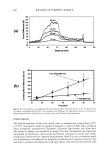
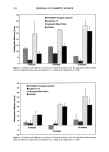
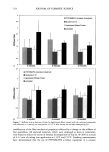
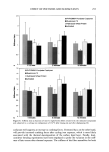
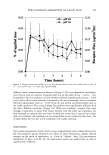
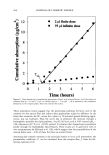
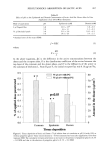
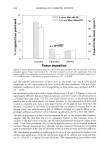
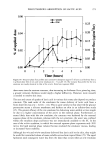
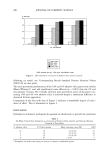
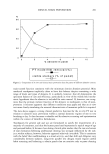
272 JOURNAL OF COSMETIC SCIENCE film is applied to skin often lead to a very high peak ("bolus effect") in the active flux. At low pH, this can cause consumer-perceived negatives such as sting. The lower skin hydration with w/o and w/o/w emulsions should lead to a more controlled skin uptake of lactic acid. The plateauing of the receptor flux for w/o/w and w/o emulsions observed in this study (Figure 10) gives some credence to this hypothesis. ACKNOWLEDGMENTS The authors acknowledge Ms Martha Brown for her generous help in experimental procedures, and thank Unilever Research for permission to publish this work and for providing an industrial fellowship to A. S. REFERENCES (1) A.M. Rosan, The chemistry of alpha-hydroxy acids, Cosmet. DermatoL, 10 (Suppl.), 4-11 (1994). (2) R. Hermitre, Aged skin retinoids and alpha hydroxy acids, Cosmet. Toilerr., 107, 63-67 (1992). (3) L. S. Moy, H. Murad, and R. C. Moy, Glycolic acid peels for the treatment of wrinkles and photoaging, J. Dermatol. Surg. OncoL, 19, 243-246 (1993). (4) E.J. Van Scott and R.J. Yu, Control of keratinization with tx-hydroxy acids and related compounds: I. Topical treatment of ichthyotic disorders, Arch. DermatoL, 110, 586-590 (1974). (5) R. F. Wehr, I. Kantor, E. L. Jones, M. E. McPhee, and L. Krochmal, A controlled comparative efficacy study of 5 % ammonium lactate lotion versus an emollient control lotion in the treatment of moderate xerosis, J. Am. Acad. DermatoL, 25, 849-851 (1991). (6) M.J. Stiller, J. Bartolone, R. Stern, S. Smith, N. Kollias, R. Gilles, and L. Drake, Topical 8% glycolic acid and 8% L-lactic acid creams for the treatment of photodamaged skin, Arch. Dermatol., 132, 631-636 (1996). (7) J. Middleton, Development of a skin cream designed to reduce dry flaky ski n,J. Soc. Cosmet. Chem., 25, 519-534 (1974). (8) R.J. Yu and E. J. Van Scott, Alpha-hydroxy acids: Science and therapeutic use, Cosmet. Dermatol., 10 (Suppl.), 12-20 (1994). (9) W. P. Smith, Comparative effectiveness of tx-hydroxy acids on skin properties, Int. J. Cosmet. Sci., 18, 75-83 (1996). (10) C. M. Ditre, T. D. Griffin, G. F. Murphy, and E.J. Van Scott, Improvement of photodamaged skin with alpha-hydroxy acid (AHA): A clinical, histological and ultra-structural study, Dermatology 2000 Congress, Vienna, May 18-21, 1993, p. 175. (11) M. Goldstein and R. Brucks, Evaluation of glycolic acid permeation through skin, Pharm. Res., 11, S-180 (1994). (12) M. Ohta, C. Ramachandran, and N. D. Weiner, Influence of formulation type on the deposition of glycolic acid and glycerol in hairless mouse skin following topical in vivo application, J. Soc. Cosmet. Chem., 47, 97-107 (1996). (13) M. E. K. Kraeling and R. L. Bronaugh, In vitro percutaneous absorption of alpha hydroxy acids in human skin, J. Soc. Cosmet. Chem., 48, 187-197 (1997). (14) R.L. Bronaugh, "A Flow-Through Diffusion Cell," in In Vitro Percutaneous Absorption: Principles, Fundamentals, and Applications, R. L. Bronaugh and H. I Maibach, Eds. (CRC Press, Boca Raton, FL, 1991), pp. 17-23. (15) L. A.M. Ferreira, M. Seiller, J. L. Grossiord, J.P. Marty, and J. Wepierre, Vehicle influence on in vitro release of glucose: w/o, w/o/w and o/w systems compared, J. Controlled Release, 33, 349-356 (1995). (16) W. C. Griffin, Calculation of HLB values of non-ionic surfactants, J. Soc. Cosmet. Chem., 5,249-256 (1954). (17) P. Armitage and G. Berry, Statistical Methods in Medical Research, 3rd ed. (Blackwell Scientific Pub- lications, Oxford, 1994), pp. 93-153. (18) A. Ruland, U. Rohr, and J. Kreuter, Transdermal delivery of the tetrapeptide hisetal (Melanotropin

PERCUTANEOUS ABSORPTION OF LACTIC ACID 273 (19) (20) (21) (22) (23) (24) (25) (6-9)) and amino acids: Their contribution to the elucidation of the existence of an 'aqueous pore' pathway, Int. J. Pharm., 107, 23-28 (1994). G. L. Flynn, in Topical Drug Bioavailability, V. P. Shah and H. I. Maibach, Eds. (Plenum Press, New York, 1993), pp. 361-391. A. S. Michaels, S. K. Chandrasekharan, and J. E. Shaw, Drug permeation through human skin: Theory and in vitro experimental measurement, AICHE J., 21, 985-996 (1975). G. L. Flynn, "Mechanism of Percutaneous Absorption From Physicochemical Evidence," in Percutaneous Absorption: Mechanism-Methodology-Drug Delivery, 2nd. ed., R.L. Bronaugh and H. I. Maibach, Eds. (Mercel Dekker, New York, 1989), pp. 17-42. R.J. Schuplei• and R. H. Blank, Permeability of the skin, Physiol. Rev., 51,702-747 (1971). B. W. Barry, Mode of action of penetration enhancers in human skin, J. Controlled Release, 6, 85-97 (1984). S. Tara, N. Weiner, and G. Flynn, Relative i•fluence of ethanol and propylene glycol cosolvents on deposition of Minoxidil into the skin, J. Pharm. Sci., 83, 1508-1510 (1994). N. Weiner, personal communication.
Purchased for the exclusive use of nofirst nolast (unknown)
From: SCC Media Library & Resource Center (library.scconline.org)