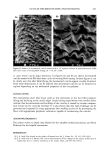
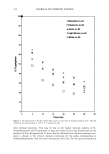
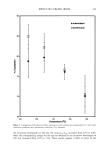
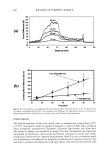
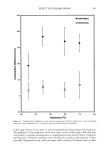
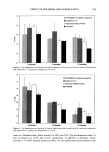
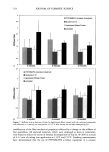
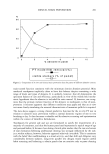
DENTAL STAIN PREVENTION 281 % 80 60 40 20 0 I , I • I , I • I , I 0 2 4 6 8 10 % abrasive in paste FT model film removal (%) visible stainers (% of panel) [] Figure 2. Comparison of in vitro and clinical stain-prevention data for pastes of different abrasive content. stain-control function consistent with the minimum dentine abrasion potential. Most marketed toothpastes implicitly claim to have this balance despite containing a wide range of levels and types of abrasive. It is unlikely, however, that all demonstrate the optimum balance of care and efficiency, particularly in view of the widely held mecha- nistic hypothesis that the abrasive is included for stain removal. If, however, one recog- nizes that the primary realistic function of the abrasive in toothpastes is that of stain- prevention, it becomes apparent that different conditions may apply and that an in vitro test more closely simulating the removal characteristics of immature pellicle is required. The data above suggest a strong clinical predictive function for the in vitro FT test in relation to abrasive stain prevention within a normal domestic regime of one to two brushings a day. It thus becomes a valuable tool for abrasive screening and optimization within the science of dentifrice formulation. Toothpastes for general sale and use are formulated to satisfy the requirements of a majority of consumers, and thus the human panel used represented a typical range of age and personal habits. It became clear during clinical pilot studies that the rate and extent of stain formation following professional cleaning was strongly influenced by the sub- ject within subjects, however, behavior appeared relatively invariable. This is consistent with the belief that toothbrushing is a ritual activity, and that skill and diligence vary considerably between subjects. Long-term parallel test designs would require careful habit screening and balancing to obtain panels that are sensitive only to paste cleaning

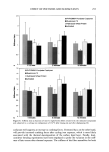
282 JOURNAL OF COSMETIC SCIENCE performance. The authors preferred a full crossover design in order to eliminate habit- related effects and to keep the panel size manageable. The constraint of shorter exposure periods using this regime was not felt to weaken the exercise, as pilot surveys of stain build-up over three months had shown that after six weeks no substantial change in the performance ranking of different pastes occurs. Thus our six-week results indicated that about half the panel were sensitive to the abrasive level in the product. Two distinct sub-groups, however, revealed themselves less so. One group, making up about 20% of the panel, produced visible stain within six weeks whatever paste they were given. This was not related to their declared usage of tea, coffee, red wine, or tobacco. Infrequent brushing, poor technique, or irregular tooth geometry could, however, be contributory factors. The other group, about 30% of the total, developed no visible stain with any of the pastes, including the zero-abrasive paste, during the trial periods. Once again, there was little reason to connect this with drinking or smoking habits, or lack of them. However, it was apparent that these panellists were almost exclusively females in their teens and early twenties. In conclusion, it should be noted that, by directing attention primarily to the concept of dental stain control via prevention instead of removal, a separation of the abrasive efficiency and damage functions becomes possible. Using this test regime, the scope to manipulate abrasive parameters to provide dentifrices exhibiting high physical stain control with low dentine damage potential is greatly increased. ACKNOWLEDGMENTS We thank Dr. P.M. Soparkar (Forsyth Dental Centre, Boston) for his clinical advice and encouragement and Dr. E. Huntington (Unilever Research) for statistical design and data processing. REFERENCES (1) M. Pader, "Surfactants in Oral Hygiene Products," in Surfactants in Cosmetics, M.M. Rieger, Ed. (Marcel Dekker, New York, 1985), pp. 295-296. (2) R. S. Manly, A structureless recurrent deposit on teeth. J. Dent. Res., 22, 479•486 (1943). (3) A. Frandsen, "Mechanical Oral Hygiene Practices," in Dental Plaque Control Measures and Oral Hygiene Practices, H. Loe and D. V. Kleinman, Eds. (IRL Press, Oxford, 1986), pp. 93-116. (4) B. R. Pugh, Toothbrush wear, brushing forces and cleaning performance, J. Soc Cosmet. Chem., 29, 423-431 (1978). (5) P. C. Kitchin and H. B. G. Robinson, How abrasive need a toothpaste be?J. Dent. Res., 27, 501-506 (1948). (6) W.B. Davis, Cleaning and polishing of teeth by brushing. Community Dent. Oral EpidemioL, 8, 237-243 (1980). (7) M. Pader, Oral Hygiene Products and Practice (Marcel Dekker, New York, 1988), pp. 233-239. (8) British Standard Institution, London, Specification for Toothpastes, BS 5136:1981. (9) J. H. Hefferren, A laboratory method for assessment of dentifrice abrasivity,J. Dent. Res., 55, 563-573 (1976).
Purchased for the exclusive use of nofirst nolast (unknown)
From: SCC Media Library & Resource Center (library.scconline.org)