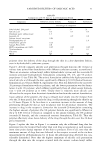
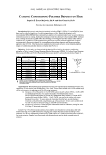
TARGETED DELIVERY OF SALICYLIC ACID 67 Polyolprepolymer-15®, is a hydroxyl-terminated block copolymer of 1,1"-methylene bis-[ 4,isocyanatocyclohexane} and 8 moles of ethylene oxide, which makes the polymer soluble in water. The average molecular weight of the polymer is 1,800. This paper reports on the effect of this polymer on the delivery of salicylic acid into skin from hydroalcoholic solutions typically used in acne treatment formulations. It also studies the effect of other components of the formulation, namely surfactants and salts, on salicylic acid delivery and the interactions between these components to control drug delivery and formulation mildness. The relationship of controlled drug delivery to the irritancy of these hydroalcoholic solutions will be investigated. Studies in this report were thus done to extend our understanding of the relationship of the controlled delivery phenomena of the polyurethane polymer and surfactant type and solution behavior to the irritation potential of salicylic acid hydroalcoholic solutions. MATERIALS Materials include salicylic acid (SA), phosphate-buffered saline (called PBS, Sigma, St. Louis, MO), scintillation fluid, glacial acetic acid (Fisher Scientific, Fair Lawn, NJ), polyethylene glycol-8/SMDI copolymer (polyolprepolymer-15, Bertek, Inc., Foster City, CA), isoceteth-20 (ICI, Wilmington, DE), [1 4 C}SA-56.l mCi/mmol (NEN Products, Boston), and skin-digesting fluid (Solvable, Packard Instrument Company, Inc., Mer iden, CT). METHODS Briefly, the in vitro penetration method used is to place human cadaver skin in a diffusion chamber, apply the drug on top, and measure how much drug goes into the receptor, a buffered receptor solution, at various time points. The skin is separated into its various layers (i.e., epidermis, dermis, and receptor fluid) and the drug content is measured in the various layers. Preparation of the skin. Fresh, excised, human skin was obtained from cadavers. Upon receipt, the skin was washed gently with 1 % (v/v) aqueous dishwashing liquid, rinsed with distilled water, and patted dry with a paper towel. A 250-300-µm-thick layer of the skin was prepared with a Padgett Electrodermatome (Padgett Dermatome, Division of Kansas City Assemblage Co., Kansas City, MO). The dermatomed skin was refrig erated until used. Two hours before each experiment, the skin was placed at room temperature to equilibrate. Circular pieces of the dermatomed skin (about 12 mm in diameter) were cut with a brass punch and placed epidermis-side up on the diffusion cells. Penetration method. The skin discs, 12-mm in diameter, were mounted on flow-through diffusion cells according to Bronaugh (15 ). The diffusion cells (Bronaugh design, Crown Glass Co.) were clamped, and the receptor fluid, phosphate-buffered saline (PBS) con taining 1.5% Oleth and 0.01 % sodium azide, was pumped through, as per Bronaugh (15). Unless otherwise indicated, a clinically relevant dose (5 mg/cm2 ) of a sample of the formula was dispensed and spread evenly on a 0.64-cm2 area of the skin surface using a glass rod or micropipette. The cells' temperature was maintained at 3 7 ° C throughout the experiment using a water bath/circulator (Haake, Paramus, NJ). Fraction collection

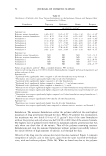
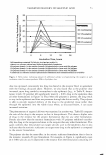
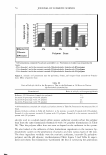
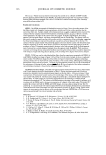
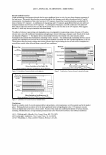
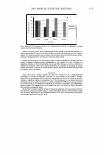
68 JOURNAL OF COSMETIC SCIENCE from the receptor fluid took place (rate of 1 ml per hour) at specified intervals (6, 12, 18, and 24 hours) for salicylic acid quantification throughout the experiment, using a fraction collector (Isco Retriever IV, Isco, Inc., Lincoln, NE). Samples were collected directly into scintillation vials 10 ml of Ready Gel (Beckman, Fullerton, CA) scintil lation fluid was added to each vial. The cells were left uncovered throughout the experiment. All samples were tested in seven replicates for each data point. Skin uptake. The skin was examined for uptake of salicylic acid after 24 hours. Generally seven replicates were tested in each experiment. Before measuring uptake, the skin was wiped with two dry Q-tips® to remove unabsorbed surface material. The skin was then removed from the diffusion cells and tape-stripped one time. The stripping was assayed to determine the amount of active remaining on the skin and analyzed for drug content using a scintillation counter (Beckman Instruments Inc., Fullerton, CA). The epidermis was then separated from the dermis (by heating upside down in water 2 min at 3 7 ° C and scraping off epidermis with a Teflon spatula), and each piece of skin was digested and assayed for drug content. Digestion was performed by adding 2 ml of skin-digesting fluid and incubating the skin for 48 hours in a 40°C incubator (Precision Scientific Co., Chicago, IL). The samples were then removed, brought to room temperature, and 0.1 ml of glacial acetic acid was added to each sample. Drug content was then measured using re scintillation counter. Analysis of penetration data: radiolabeling. Salicylic acid formulations were spiked with 1 µ1/ml of [14CJSA. Each microliter of [1 4 CJSA contained 1.0 µCi (designed to provide DPMs per scintillation vial in the thousands). The receptor fluid from all permeation experiments was collected directly into scintillation vials. Ten milliliters of scintillation fluid was added to each vial and all samples were analyzed in the scintillation counter. Statistical analysis of the penetration data was according to the Student t-test and Student Newman Keuls test. In vivo patch testing. In vivo studies were performed using a 14-day cumulative irritation patch test (16). The backs of 31 subjects were repatched daily with nine different product prototypes. Hydroalcoholic acne treatment pad juices (0.1 ml) were applied to Webril nonwoven cotton pads every day for 14 days. Irritation was also scored every day on a redness scale of O to 7 and on a scaling score of O to 3. The irritation scores of the sites were obtained daily and added to determine a final cumulative score for each product. Statistical methodology used the Friedman rank sum, and mean comparisons used the Friedman least significant difference analysis (LSD). Friedman LSD was tested at p 0.05. RESULTS The studies are reported in two parts: (1) penetration studies to compare the effect of the polymer and ocher formulation components on salicylic acid delivery into various layers of the skin and (2) in vivo human skin irritation studies to determine the relevance of controlling the delivery of salicylic acid in various surfactant systems to the irritation potential of the topical formulations. The polyurethane polymer selected was polyol prepolymer-15 because of its solubility in the hydroalcoholic acne treatment formula tions. The results of Fares and Zatz (12) showed previously that this polymer was able to control delivery of salicylic acid to the skin due to its binding properties.
Purchased for the exclusive use of nofirst nolast (unknown)
From: SCC Media Library & Resource Center (library.scconline.org)