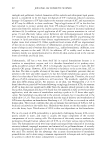
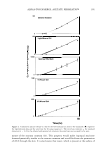
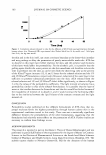
92 JOURNAL OF COSMETIC SCIENCE sunlight and pollutants. Indeed, formation of free radicals and subsequent lipid peroxi dation is considered to be the major mechanism of UV irradiation-induced cutaneous damage (4). Exposure to UV light depletes the stratum corneum of AT, and regeneration of AT may be difficult in these conditions. Topical application of AT to the skin has been reported to protect animal skin from UV-induced damage (5) either by direct protection from free radicals or by indirect protection by means of increased epidermal thickness (6). In addition, topical application of AT may prevent mutations in critical genes (7) and effectively reduce cancer formation and immunosuppression induced by UV irradiation (8). Topical application of AT was far more effective at preventing the increase in lipid peroxidation than dietary supplementation, probably because of the higher tissue level attained (9). Other significant local actions of AT are improvement of skin microcirculation, inhibition of inflammation, promotion of hair growth, treat ment of alopecia and of various skin diseases (e.g., axillar bromidrosis, chilblains, acne vulgaris, mycosis in the nail) (10,11). In addition, AT is widely used in skin care products mainly as a natural moisturizer to relieve dry skin, and as an aid in the conceal ment of wrinkles and facial lines. Unfortunately, AT has a very short shelf life in topical formulations because it is sensitive to atmospheric oxygen, and it is therefore formulated as its prodrug ester, alpha-tocopherol acetate (ATA). ATA is biologically inactive because it lacks the free phenolic OH group. However, ATA is believed to hydrolyze to the active form, AT, in the skin. The skin is capable of many of the same types of metabolic processes that are present in the liver and other organs (12), but the overall metabolizing capacity of the skin is less than that of the liver by nearly two orders of magnitude. Therefore, the actual efficacy of ATA-containing products is still uncertain. The metabolic capability of the skin may differ among species. For instance, in rat skin, van Henegouwen et al. (13) found that after a period of five hours following a single application of AT A, the amount of AT in skin does not significantly differ from the amount already present in the skin. In pig skin, Rangarajan and Zatz (14) found that AT appeared as early as two hours after application, with the extent of metabolism reaching a peak at 6-12 hours after appli cation. No metabolism was detected in the stratum corneum, but it was detected in the viable skin ( 13, 15 ). They also demonstrated that the topical delivery and metabolism of ATA were dependent on formulation. Baschong et al. (15) did an ex vivo study in viable human skin. Their study confirms that also in humans bioconversion of AT A to AT is localized exclusively in the viable skin. Hydrolysis was absent on the skin surface as well as in the horny layer. Distribution of ATA in skin was dependent on the formulation. The in vitro study of ATA permeability is particularly challenging because ATA is very poorly soluble in water, and water is usually the major component of the receiver compartment of in vitro testing cells. The objectives of this study were to evaluate the permeation through human cadaver skin of ATA in vitro from various topical formula tions. The formulations tested were kept simple and ranged from solutions of increasing viscosity (ethanol, isopropyl myristate, and mineral oil) to gel formulations. A recently reported mathematical approach (16) for the determination of membrane permeability was used. The method has the advantage that accurate determinations of membrane permeabilities can be done using a common experimental technique and can be applied to systems in which the donor compartment is unstirred.

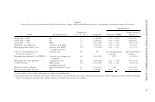
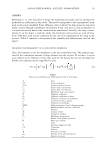
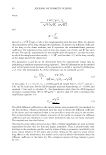
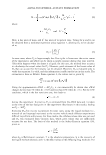
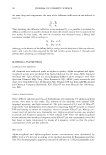
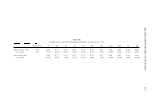
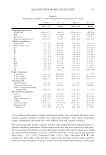
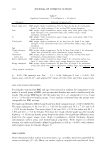
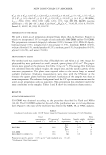
ALPHA-TOCOPHEROL ACETATE PERMEATION 93 THEORY Bellantone et al. (16) described in detail the mathematical model used to estimate the permeability coefficients in this study. The model corresponds to the experimental setup used in this study (modified Franz diffusion cells), in which the drug leaves an unstirred donor, crosses through a membrane of thickness hand cross-area A) and accumulates in a stirred receiver for which sink conditions are maintained. Initially, the drug concen tration C 0 in the donor is uniform, while the membrane and receiver are void of drug. Fick's laws were used to give equations for the rate of accumulation of the drug in the receiver. (Table I contains a description of the symbols and abbreviations used in this paper.) OBTAINING THE PERMEABILITY OF A RATE-LIMITING MEMBRANE Here, the transport across the membrane is the rate-controlling step. The general equa tion for the cumulative amount of drug released into the receiver M at time t is given as an infinite series. However, if the times used for the data points are not too large (see below), the equation can be simplified to give A AT ATA Co Cd cm D Dd Dm g h HPLC K L M N pm r R t T UV V Table I Definitions of Symbols and Abbreviations Used in This Paper Area Alpha-tocopherol Alpha-tocopherol acetate Initial drug concentration Donor drug concentration Membrane drug concentration Diffusion coefficient Diffusion coefficient of donor Diffusion coefficient of membrane Acceleration due to gravity Thickness of membrane High-performance liquid chromatography Membrane/donor partition coefficient Distance Amount release Avogadro's number Membrane permeability Radius of the spherical particle Molar gas constant Time Absolute temperature (K) Ultraviolet Velocity Viscosity of solvent Density of the spherical particle Density of solvent (1)
Purchased for the exclusive use of nofirst nolast (unknown)
From: SCC Media Library & Resource Center (library.scconline.org)