80 JOURNAL OF COSMETIC SCIENCE market for the cosmetic industry, since an increasingly aging population takes care of a healthy appearance, trying to "turn back the clock": more than 30% of the personal care market in 1999 concerned the skin care segment, with almost $20 billion worldwide (4). One of the main causes of aging is a deregulation of the cell respiratory metabolism involving incomplete oxygen reduction with production of superoxide anion 0 2 ·-, hy droxyl radical OH·, hydrogen peroxide H 2 0 2 , etc. (5-7). Skin has different antiradical defense systems to regulate these reactive species, namely enzymes and low-molecular weight antioxidants (8-10). Defection of these preventive mechanisms or excessive production of reactive oxygen species induces so-called oxidative stress ( 11, 12). Numerous methods are available to determine total antioxidant capacity, based on inhibition reactions in solution involving a specific oxidant reagent like Fe3+ (FRAP assay) or ABTS (TEAC assay) (13-16). In this field, electrochemistry appears to be a convenient approach to evaluate the overall antioxidant properties of cosmetics. Recently cyclic voltammetry has been shown to be a suitable electrochemical method to evaluate the global antioxidant capacity of real samples like edible plants, plasma, or wine (17-19): the oxidation signal traduces the ability of the medium to give electrons, i.e., to scavenge the ROS by reducing them. This paper presents preliminary work allowing the evaluation of the total antioxidant properties of a dermocosmetic product by means of electrochemical techniques per formed directly on the bulk of the cream, without any pretreatment of the sample. Cyclic and linear sweep voltammetry were used to show the overall antioxidant capacity of the product. Comparison of the voltammograms with those recorded with antioxidants containing aqueous solutions allowed us to correlate the electrochemical characteristics of the samples with the properties of redox species. Finally, the influence of irradiation and oxygen, as well as the addition of hydrogen peroxide as an oxidant on the global redox status of a depilatory cream, was highlighted. PRINCIPLES OF VOLTAMMETRY (20) Cyclic voltammetry has been one of the most frequently used electrochemical methods for more than three decades. The reason is its relative simplicity and its high information content. Cyclic voltammetry is performed using potentiostatic equipment in experi mental conditions such as that the only mass transport phenomenon to be taken into account is semi-infinite diffusion. Generally, the working electrode on which the oxi dation and reduction reactions are studied is flat so that the mass transport may be considered as unidirectional. The solution contains an electrolyte in large excess com pared to the concentration of the electroactive species the ions of the electrolyte are not involved in the electron transfer reaction at the electrode. This electrolyte decreases the internal cell resistance and enables us to neglect the migration phenomena of the charged electroactive species. There is no forced convection because the electrodes are fixed and the solution is not stirred. Furthermore, the relatively short experimental time scales allow the natural convection to be neglected. The electrode surface area, the volume of the solution, and the concentrations of the electroactive species are such that the ex perimental determination of the oxidation and reduction current (proportional to the heterogeneous electron transfer rate) change the electroactive species concentration in a negligible way. The waveform of the voltage applied to the working electrode versus the

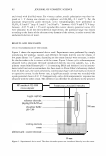
ANTIOXIDANT POWER OF DERMOCOSMETIC CREAMS 81 reference electrode is triangular. The voltage varies linearly with time and the slope is referred to as the scan rate. In a few seconds, a current density-potential curve can be obtained, giving information about the energy level necessary to perform the electrode reactions and the rate of these reactions. If the heterogeneous electron transfer rate is high compared to the diffusion rate, this curve presents a peak, whose current is pro portional to the concentration of the electroactive species present in solution and to the square root of the scan rate. Another important criterion to characterize the electrode reaction is the value of the peak potential, which is independent of the scan rate if the electron transfer is fast in relation to diffusion. If the product of an electrochemical reduction reaction may be reoxidized during the reverse scan rate, the reduction peak is accompanied by an oxidation peak and the difference between the peak potentials is an indication of the reversibility of the heterogeneous electron exchange reaction. Cyclic voltammetry is a very useful method to elucidate the mechanism of electrode reactions in the case where the heterogeneous electron transfer is accompanied by chemical reac tions occurring before or after the electrode reaction. In the present work, cyclic voltam metry is used to compare creams on the basis of the determination of the peak potential, the peak current intensity, and the charge involved in the electro-oxidation process. MATERIALS AND METHODS H 2 SO4 , NaOH, and thiolactic acid were purchased from Acros K2SO4 and H2O2 from Sigma and KH2PO4 and K2HPO4 from Merck. Unless otherwise indicated, all solu tions were prepared in potassium sulphate solution (0.4 mol/1 - 1, pH = 11.0). Creams were either commercially available or made in Pierre Fabre's laboratory. In the later case the samples were gels containing PEG 600, carbopol 980, paraffin, cremophor RH40, sorbic acid, nipagin, sodium hydroxide, and water. Three gels were made: one with pH = 4.86, one with pH = 6.88 and one containing BHT, with pH = 6.95. A depilatory cream from Klorane was chosen as an example. Others creams were studied: a restructuring cream from Nivea Vital a corrective dermatological cream for wrinkles, Active C, from Laroche-Posay a depigmenting emulsion, Trio D, from Laboratoires d'Evolution Dermatologique a whitening day cream from Decleor an emulsion, Ystheal +, from Laboratoires Dermatologigues Avene (Pierre Fabre) an epithelial cream, A Derma, from Laboratoires Dermatologiques Ducray, and an after-sun repair balm, Uriage, from Laboratoires Dermatologiques Uriage. All the electrochemical experiments were carried out in a single compartment cell at room temperature. An airtight cell was used to study the influence of oxidative stress. An air or nitrogen flux was introduced when necessary, and the flow was controlled with a flow meter: Brooks tube (R-2-15-AAA P-072 float: sapphire scale: 0-5 1/h). The electrochemical manipulations were performed with an Autolab Metrohm potentiostat interfaced to an HP omni-book XE 4500 microcomputer and using the GPES software. The working electrodes were platinum (0.03 cm2), gold (0.07 cm2), or vitreous carbon (0.07 cm2) rotating-disc electrodes. A large-surface-area platinum grid was used as counter electrode. All potentials were measured and expressed in reference to a saturated mercurous sulphate reference electrode Hg/Hg2SO4/K2SO4sar (MSE E = 0.656 V/SHE) connected to the cell by a Luggin capillary. Before each experiment, the working electrode surface was polished with abrasive paper (262X imperial lapping film sheets)
Purchased for the exclusive use of nofirst nolast (unknown)
From: SCC Media Library & Resource Center (library.scconline.org)