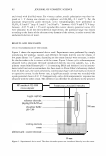
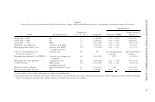
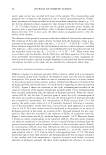
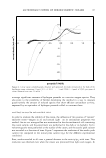
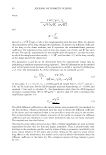
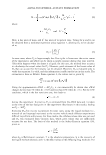
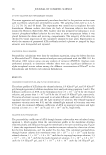
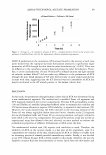
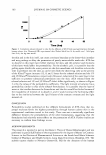
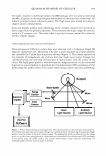
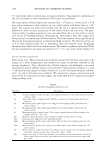
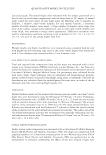
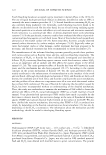
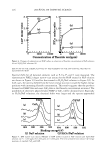
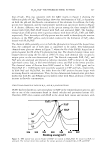
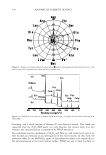
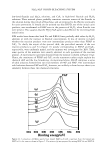
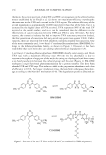
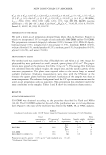
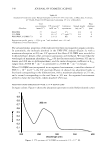
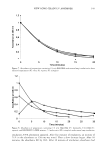
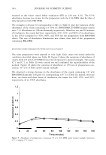
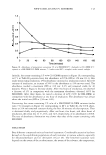
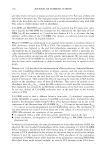
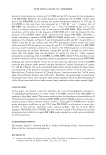
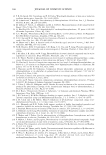
82 JOURNAL OF COSMETIC SCIENCE and rinsed with distilled water. For vitreous carbon, anodic polarization was then im posed at 1 V during one minute in sulphuric acid (H2S04 , 0.1 mol/1-1)_ For the platinum (respectively gold) electrode, cyclic voltammograms were performed in H2SO4 , 0.5 molW 1 (resp. 0.1 molW 1 ) at 50 mV s- 1 between -0.65 V and 0.75 V (resp. between -0.25 V and 1.1 V) until reproducible current density-potential curves (21) were obtained. In all the electrochemical experiments, the potential range was chosen according to the limits of the electroactivity domain of the solvent, in order to avoid the oxidation/reduction of water. RES UL TS AND DISCUSSION CYCLIC VOLTAMMOGRAM IN THE CREAMS Figure 1 shows the experimental device used. Experiments were performed by simply introducing the working, counter, and reference electrodes directly into the creams. A few grams (about 5 to 7 grams depending on the cream density) were necessary, in order for the electrodes to be in contact with the cream. Figure 2 shows cyclic voltammograms obtained with a platinum electrode introduced directly into two samples, e.g., a de pilatory cream from Klorane (pH = 11) containing BHA and thiolactic acid as antioxi dants (solid line) and an antioxidant-free base made in Pierre Fabre's laboratory (dashed line). In both cases, the curve presented a conventional shape with essentially no resistive or capacitive current. In the former case, a significant anodic current was recorded with a peak potential close to 0.31 V. Comparatively, only a little amperometric response was obtained with the other cream. The difference can therefore be attributed to the presence HP omnibook XE 4500 I Potentiostat µAutolab II Metrohm I I microcomputer l 1r,. - - Luggin capillary .... ,,,.- reference electrode -- (Hg/Hg2SOJK2SO4sat) phosphate buffer ... 30 0mm ,, pH=7,00 --- 50mm Figure 1. Experimental device used. The three-electrode system was introduced directly into the cream.

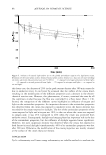
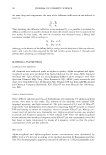
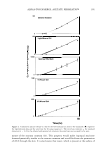
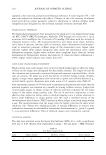
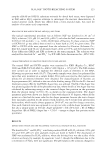
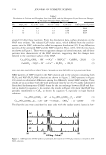
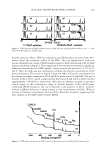
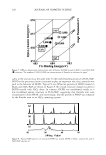
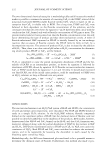
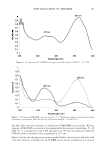
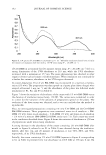
ANTIOXIDANT POWER OF DERMOCOSMETIC CREAMS 83 5.5 -4.5 -+-- - ----- - - -�-- - -�---�--- -� - -�- -�---------, -1.75 -1.25 -0.75 -0.25 0.25 potential (V /MSE) 0.75 1.25 Figure 2. Cyclic voltammograms obtained with platinum electrode introduced into the bulk of the cream: Depilatory cream (-) cream containing no antioxidants ( · · · · ). Potential scan rate: 50 m V/s- 1 . of antioxidant species in the depilatory cream. Figure 3 shows linear sweep voltammo grams performed with the same electrodes immersed in a potassium sulphate solution (pH = 11) containing BHA (5. 5 · 10- 5 molW 1 ) or thiolactic acid (5 · 10- 4 molW 1 ). - N El El .c- ..... = � "Cl = � a.. a.. = (J 0.70 �-- - ---- - - - -- - - - - ----------- - 0.35 0 -0.50 .-·-·-. I' / ,,-- ✓ ..,, I / - . - I"'- . _ _,_;_-__ ____ -0.25 .... •············· 0 0.25 I potential (V /MSE) I I I / � --- .,__ -.... /,, ,,_ .. . . - · - ·- ························· 0.50 0.75 Figure 3. Linear sweep voltammograms obtained with platinum electrode immersed in potassium sulphate solution (0.4 molW 1, pH = 11.0 ( · · · · )} containing H202, 1.96. Hr" mol/1 1 (- · -) thiolactic acid, 5.00 · 10-4 molW 1 (--) and BHA, 5.55 · 10- 5 molW 1 ( - -). Potential scan rate: 50 mV/s- 1 .
Purchased for the exclusive use of nofirst nolast (unknown)
From: SCC Media Library & Resource Center (library.scconline.org)