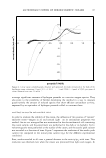
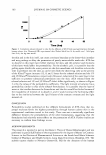
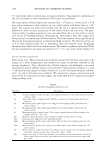
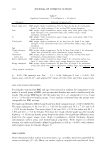
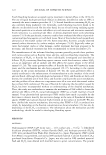
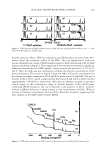
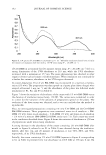
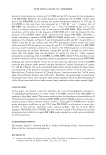
102 10000 Q 5000 D JOURNAL OF COSMETIC SCIENCE 10 20 30 40 50 Time (hl'II) Figure 3. Cumulative amount released vs time for the diffusion of AT A from isopropyl myristate through human cadaver skin. Diamonds ( ♦ ): experimental data. Dashed black line: fit by model case 1. Solid gray line: fit by the lag-time model. the skin and in the skin itself, can create a resistant boundary at the donor-skin interface and may prolong or delay the permeation of poorly water-soluble molecules. AT A has to dissolve in this water layer before reaching the skin, and the presence and thickness of this layer would affect the permeability. For the alcoholic gels, it is possible that the gelling agent absorbs the water present on the skin membrane and therefore reduces the time to permeate into the skin, as can be seen from the shorter lag time as the percent of the Klucel® agent increases (12, 8, and 2 hours for the ethanol solution and the 1 % and 3% Klucel® formulations, respectively). However, reduction of the water layer is not sufficient to promote substantial penetration into the skin. AT A released from the ethanol solution and 1 % and 3% Klucel® didn't differ significantly, as shown in Figure 2 or by the values of the permeability coefficients. The light mineral oil solution has a permeability similar to that of the ethanol formulations. It is possible that the layer of water at the interface between the formulation and the skin would be thicker because of the incapability of mineral oil to absorb it, and it would contrast the facilitating effect due to the similarity between the lipid bilayer of the stratum corneum and the light mineral oil. CONCLUSION Permeability studies performed on five different formulations of ATA show that iso propyl myristate favors the highest permeability through human cadaver skin in the experimental conditions tested in this study. There was not a statistically significant difference between the permeabilities of the other formulations, suggesting that the formulation had relatively minor effects on the permeation of AT A. Further studies are necessary to confirm these findings in vivo. ACKNOWLEDGMENTS This research is reported in part in the Master's Thesis of Hansa Mahamongkol and was performed in partial fulfillment of the requirements for the degree of Master in Cosmetic Sciences in the Division of Pharmaceutical Sciences at the Arnold and Marie Schwartz College of Pharmacy and Health Sciences, Long Island University, Brooklyn, NY. The authors express thanks to Novartis (Somerville, NJ) for the donation of the human

ALPHA-TOCOPHEROL ACETATE PERMEATION 103 cadaver skin. Hansa Mahamongkol was supported by a scholarship from the Division of Pharmaceutical Sciences. REFERENCES (1) M. G. Traber and H. Sies, Vitamin E in humans: Demand and delivery, Annu. Rev. Nutr., 16, 321-347 (1996). (2) J. J. Thiele, C. Schroeter, S. N. Hsieh, M. Podda, and L. Packer, The antioxidant network of the stratum corneum, Curr. Prob!. Dermatol., 29, 26-42 (2001). (3) M. Podda, T. M. Zollner, M. Grundmann-Kollmann, J. J. Thiele, L. Packer, and R. Kaufmann, Activity of alpha-lipoic acid in the protection against oxidative stress in skin, Curr. Prob!. Dermatol., 29, 43-51 (2001). (4) S. R. Pinnell, Cutaneous photodamage, oxidative stress, and topical antioxidant protection,]. Am. Acad. Dermatol., 48, 1-19 (2003). (5) E. S. Krol, K. A. Kramer-Stickland, and D. C. Liebler, Photoprotective actions of topically applied vitamin E, Drug. Metab. Rev., 32, 413-420 (2000). (6) E. F. Ritter, M. Axelrod, K. W. Minn, E. Eades, A. M. Rudner, D. Serafin, and B. Klitzman, Modu lation of ultraviolet light-induced epidermal damage: Beneficial effects of tocopherol, Plast. Reconstr. Surg., 100, 973-980 (1997). (7) M. McVean and D. C. Liebler, Inhibition of UVB induced DNA photodamage in mouse epidermis by topically applied alpha-tocopherol, Carcinogenesis, 18, 1617-1622 (1997). (8) H. L. Gensler and M. Magdaleno, Topical vitamin E inhibition of immunosuppression and tumori genesis induced by ultraviolet irradiation, Nutr. Cancer, 15, 97-106 (1991). (9) A. Tavakkol, Z. Nabi, N. Soliman, and T. G. Polefka, Delivery of vitamin E to the skin by a novel liquid skin cleanser: Comparison of topical versus oral supplementation,]. Cosmet. Sci., 55, 177-187 (2004). (10) M. G. Traber and H.J. Kayden, Preferential incorporation of alpha-tocopherol vs gamma-tocopherol in human lipoproteins, Am.]. Clin. Nutr.1 49, 517-526 (1989). (11) B. W. Barry, "Structure, Function, Disease, and Topical Treatment of Human Skin," in Dermatological Formulations: Percutaneous Absorption, B. W. Barry, Ed. (Marcel Dekker, New York, 1983), pp. 1-48. (12) A. Pannatier, The skin as a drug-metabolizing organ, Drug Metabol. Rev., 8, 319-343 (1978). (13) G. M. Beijersbergen van Henegouwen, H. E. Junginger, and H. de Vries, Hydrolysis of RRR-alpha tocopheryl acetate (vitamin E acetate) in the skin and its UV protecting activity (an in vivo study with the rat),]. Photochem. Photobiol. B, 29, 45-51 (1995). (14) M. Rangarajan and J. L. Zatz, Kinetics of permeation and metabolism of alpha-tocopherol and alpha tocopheryl acetate in micro-Yucatan pig skin,]. Cosmet. Sci., 52, 35-50 (2001). (15) W. Baschong, C. Artmann, D. Hueglin, and J. Roeding, Direct evidence for bioconversion of vitamin E acetate into vitamin E: An ex vivo study in viable human skin,]. Cosmet. Sci., 52, 155-161 (2001). (16) R. A. Bellantone, N. Nicolettos, and F. M. Plakogiannis, Faster determination of membrane perme abilities without using the lag time method, Int.]. Pharm., 248, 81-92 (2002). (17) G. Vamvakas, In Vitro Evaluation of the Simulataneous Tramport of Medroxyprogesterone Acetate and Equilin Through Different Membranes and Their Uptake and Release Through Polymers (Arnold & Marie Schwartz College of Pharmacy, Long Island University, Brooklyn, NY, 2003). (18) R. L. Bronaugh, R. F. Stewart, E. R. Congdon, and A. L. Giles, Jr., Methods for in vitro percutaneous absorption studies. I. Comparison with in vivo results, Toxicol. Appl. Pharmacol., 62, 47 4--480 (1982). (19) R. C. Wester, J. Christoffel, T. Hartway, N. Poblete, H. I. Maibach, and J. Forsell, Human cadaver skin viability for in vitro percutaneous absorption: Storage and detrimental effects of heat-separation and freezing, Pharm. Res., 15, 82-84 (1998). (20) M. Rangarajan and J. L. Zatz, Effect of formulation on the delivery and metabolism of alpha-tocopheryl acetate,]. Cosmet. Sci., 52, 225-236 (2001). (21) A. R. Lee and K. Tojo, An experimental approach to study the binding properties of vitamin E (alpha-tocopherol) during hairless mouse skin permeation, Chem. Phann. Bull. (Tokyo), 49, 659-663 (2001). (22) R. L. Bronaugh and R. F. Stewart, Methods for in vitro percutaneous absorption studies. III: Hydro phobic compounds,]. Pharm. Sci., 73, 1255-1258 (1984). (23) G. L. Flynn, S. H. Yalkowsky, and T. J. Roseman, Mass transport phenomena and models: Theoretical concepts,]. Pharm. Sci., 63, 479-510 (1974).
Purchased for the exclusive use of nofirst nolast (unknown)
From: SCC Media Library & Resource Center (library.scconline.org)