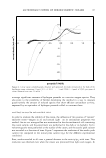
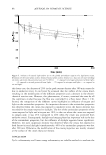
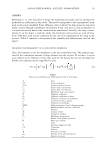
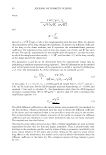
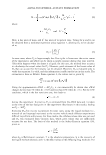
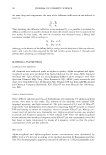
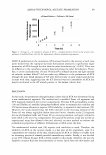
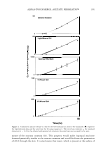
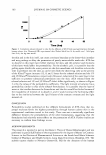
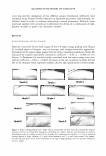
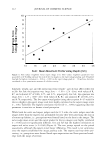
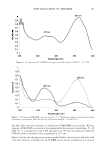
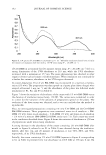
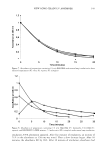
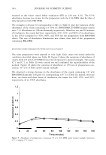
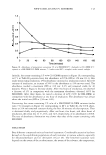
100 JOURNAL OF COSMETIC SCIENCE to artificially increase skin permeability (22). Because this artifact would be common to all the formulations tested in this experiment, it would not affect the relative results. Previous studies showed that ATA is slowly metabolized in the viable part of the skin (20). Therefore, if some metabolic capabilities were left in the skin, AT would be detected in the receiver container. For this reason, the samples collected from the receiver container were analyzed with an assay able to quantify both ATA and AT. However, AT was detected only in a few studies and it didn't increase with time. It is then possible that the AT detected was not a metabolite of ATA but came from AT content already existent in the human cadaver skin. ATA was detected in the receiver medium in a time-dependent way, and cumulative amount perfused curves could be built (Figure 2). The mathematic model proposed by Bellantone et al. (16) was used in this study because the donor compartment is unstirred. A popular method to estimate skin permeability in vitro is the lag-time method (23), which requires that the drug be held at constant concentration in the donor compart ment. However, that method requires a constant concentration at the donor-membrane interface. Because in our experiment the donor is unstirred and possibly substantial depletion of drug occurs due to drugs that cross the skin, the concentration in the donor is not constant and the lag-time analysis does not apply. Figure 3 shows the model fits obtained from the lag-time method (gray line) and equation 1 (black line) for one set of experimental data. It can be seen that equation 1 has a more natural and accurate fit than the lag-time model. In addition, it has been pointed out (16) that the method gives accurate values for the permeability, using experiments that are usually considerably shorter (by half or one-third) than those required by lag time or other steady-state approximation methods. The mathematical model used in this paper to estimate permeability through human cadaver skin (membrane is the rate-limiting step) requires a previous estimate of the diffusion coefficient in the donor compartment D d· For the ethanol solution and the two gel formulations, D d was estimated by permeability studies through a regenerated cellulose membrane. This method was considered appropriate because the similarity between the medium of the donor compartment and the receiver compartment would minimize backflow of fluid to the donor, which could significantly decrease the net release of the drugs into the receiver. A value for D d was obtained for the ethanol donor, and lower limits for D d were obtained for the alcoholic gels. The same approach was attempted for isopropyl myristate and light mineral oil by filling the receiver compart ment with isopropyl myristate and light mineral oil, respectively. However, the experi ment was technically difficult because isopropyl myristate and light mineral oil, used as receiving medium, could not be injected directly into the HPLC. By UV spectropho tometer analysis, the concentration of ATA in the receiver was always below the limit of detection. Hence, the diffusion coefficients of ATA from the isopropyl myristate and light mineral oil solutions were estimated by measurement of the viscosity of the solvents and by calculations. The results of these studies show that, under the experimental conditions used, the formulation of ATA in isopropyl myristate has a permeability though human cadaver skin that is two orders of magnitude larger than those of the other formulations. A possible explanation for this finding is that isopropyl myristate has a blend of polar and non-polar properties, which probably mimic to some extent the complex lipid/polar

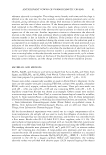
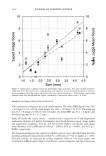
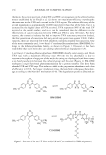
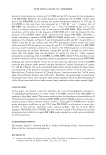
ALPHA-TOCOPHEROL ACETATE PERMEATION 300 0 500 ti .:. Cl) cu Cl) 0 14000 - r:: ( Cl) cu 0 ::::, 0 1000 0 2000 0 Ethanol Solution / / . . /· � Light Mineral Oil � +/· � lsopropyl Myristate T v-� T/.l. ♦ / ♦-....�� 1% Klucel Gel 4 � � .� �•--- 3% Klucel Gel 50 Time (hr) 101 Figure 2. Cumulative amount release vs time for the five formulations tested. The diamonds ( ♦) represent the experimental data and the solid line the fit using equation 1. The error bars represent ± the standard deviation (n = 3). For the ethanol and mineral oil solutions the error bars are too small to be seen. nature of the stratum corneum (11). This property would make isopropyl myristate thermodynamically similar to the stratum corneum and would facilitate the permeation of ATA through the skin. It is also known that water, which is present at the surface of
Purchased for the exclusive use of nofirst nolast (unknown)
From: SCC Media Library & Resource Center (library.scconline.org)