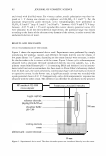
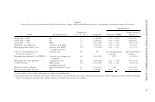
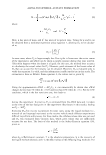
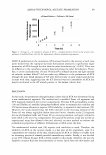
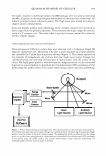
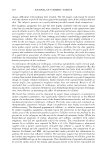
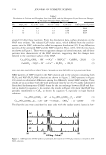
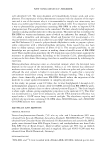
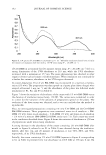
QUANTITATIVE MODEL OF CELLULITE 107 Ten males, matched to the female subjects for BMI and age, were recruited to determine the effect of gender on the morphological and biophysical characteristics of the thigh. All subjects provided written informed consent. The thigh areas were shaved with electric clippers prior to measurements. Sixty-two females without prior knowledge of the cellulite research were recruited as nai"ve judges from the general population. They evaluated the thigh images for severity, using a 0-9 category scale. The study subjects provided written consent for evaluation of their cellulite images. THREE-DIMENSIONAL SKIN SURFACE TOPOGRAPHY Three-dimensional (3D) skin surface data were obtained with a Cyberware Rapid 3D Digitizer (Cyberware, Inc., Monterrey, CA) laser scanner mounted on a linear platform and controlled by CyScan data acquisition software (Figure 1). The scanner operates on the principle of triangulation. As a helium-neon laser light source passes through two cylindrical lenses, the resulting vertical plane of light projects onto the surface of the object. The highlighted profile is reflected from the image mirrors to a video sensor and digitized in a raster fashion to determine the two-dimensional (2D) coordinates of 256 points along the profile surface. The scanner moves along a linear trajectory, performing El■ctranlc Dlgltlzar ECHO R■nga C■mara Calar C■m■ra Laser Light Source Auxiliary Light Source Figure 1. Three-dimensional laser-scanning process. The scanner operates on the principle of triangulation. As a helium-neon laser light source passes through two cylindrical lenses, the resulting vertical plane of light projects onto the surface of the object being scanned. The highlighted profile is reflected from the image mirrors to a video sensor and digitized in a raster fashion to determine the two-dimensional (2D) coordinates of 256 points along the profile surface. The scanner moves along a linear trajectory performing 512 individual surface contour scans in equal increments.

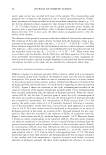
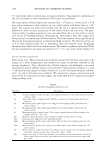
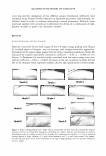
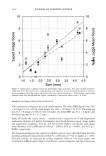
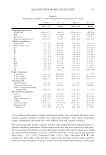
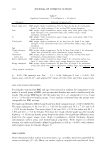
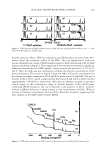
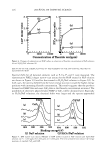
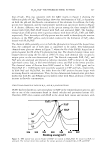
108 JOURNAL OF COSMETIC SCIENCE 5 12 individual surface contour scans in equal increments. Trigonometric calculations of the 2D coordinates to three-dimensional (3D) space are performed. The outer aspects of both thighs were scanned (402 x 170 mm in 40 sec at 0.5 x 0.38 mm planar resolution) while subjects sat on a level surface with knees bent at a 90° angle. The scanner was raised and lowered with the aid of a special motor-controlled platform to allow accurate positioning of the subject within the scan area. The quan titative surface roughness parameters were calculated from the scan data with a custom ized version of TrueMap Software (TrueGage, N. Huntingdon, PA). The images were first processed to remove non-cellulite features. The form removal utility applied an LS third-order polynomial equation to remove the thigh curvature. The filtering utility, set at 0.25 mm, removed noise due to movement, hair, and varicose veins. Remaining anomalies were deleted with an outlier routine. The surface roughness parameters (Table I) were calculated for the region of interest (10.7 x 11.3 cm, center of the thigh) (22). VISUAL SCORING OF CELLULITE Expert image scores. Three research team members reviewed 66 3D laser scans (gray scale images on a black background) that covered the range of severities observed in the general population. They identified the cellulite features and developed a ten-point classification scale of cellulite severity (0-9) wherein 0 represented no cellulite 1, 2, and 3 indicated varying degrees of slight cellulite 4, 5, and 6 indicated moderate cellulite and 7, 8, and 9 indicated severe cellulite. We selected ten images, representing each point (0-9), for evaluation by nai've judges and established the ten images as the expert image grading scale. Table I 3D Surface Roughness Parameters (22) Parameter Description Sa Average roughness (mm): Average of the absolute distances of the surface profile from the reference plane Sq Root-mean-square roughness (mm): Width or variance of the amplitude distribution function Sp Maximum profile peak height (mm): Height of the highest profile peak above the reference plane Sv Maximum profile valley depth (mm): Depth of the lowest profile valley below the reference plane St Maximum height of profile (mm): The vertical distance from the highest peak to the deepest valley (St = Sp + Sv) Ssk Skewness (mm): Symmetry of the roughness profile variation about its mean Sku Kurtosis (mm): Spikiness of the roughness profile Spm Mean maximum profile peak height (mm): Mean height of the highest peaks over the entire surface Svm Mean maximum profile valley depth (mm): Mean depth of the lowest valleys over the entire surface Sz Mean maximum height of profile (mm): Mean vertical distance from the highest peaks to the lowest valleys over the entire surface (Sz = Spm + Svm) Sdr Surface area ratio (% ): The ratio between the roughness surface area and the area of the flat xy plane. For a flat surface, the surface area and the xy plane area are equal, and Sdr = 0%
Purchased for the exclusive use of nofirst nolast (unknown)
From: SCC Media Library & Resource Center (library.scconline.org)