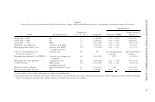
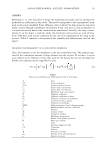
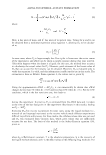
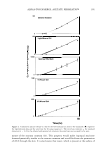
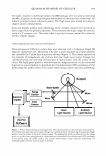
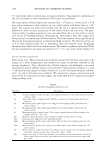
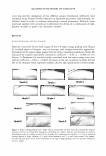
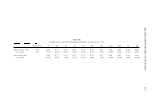
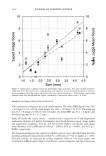
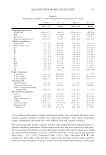
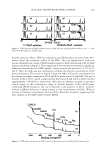
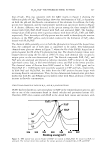
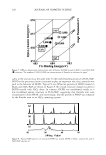
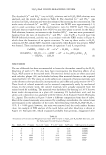
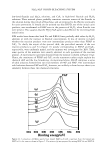
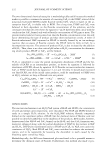
H 2 O 2 /NaF TOOTH-BLEACHING SYSTEM 129 The dissolved Ca2+ and Po/- ions in H2O2 solutions and in H2O2/NaF solutions were analyzed, and the results are shown in Table II. The dissolved Ca2 + and Po/- ions increased in H2O2 solutions and were also enhanced by increasing the concentration. The molar ratios of released Ca2+ and Po/- ions from the DCPD were approximately 1.0, and in good accordance with the stoichiometric ratio for DCPD itself. This result indicates that no transformation from DCPD to any other phase occurred. In the H2O2/ NaF solutions, however, an increase in the dissolved Po/- ions was more pronounced. Judging from the ratio of dissolved Ca2 + and Po/- ions (Ca/P), a Ca-rich layer like FHAP definitely formed, and this was in accordance with the XRD results in Figure 8, which show the formation of an apatite structure. To sum up these results: in H2O2 solutions, DCPD, unlike HAP, dissolved congruently when fluoride was present, FHAP was formed. These mechanisms are shown in equations 5 and 6, respectively: CaHPO4 • 2H2O + H + ➔ Ca2 + + H2PO4 - + 2H2O (5) 10{CaHPO4 • 2H2O} + (4 - n)OH- + nF- ➔ Ca 10 (PO4MOH)2_ n Fn DISCUSSION + 4H 2 PO 4 - + 22H 2 O (6) The use of fluoride has been recommended to lessen the discomfort caused by the H 2 O 2 bleaching of teeth (27). We also have been investigating the bleaching effects of an H 2 O2 /NaF system on the stained teeth. The extrinsic dental stains are often associated with calculus, plaque ( 44), and adsorbed salivary film materials known as the acquired enamel pellicle (45). The stains on tooth surfaces are composed of various materials such as the inherent colors produced by incorporated tea and coffee and aged proteins ( 44-4 7). These kinds of colored materials can be removed comparatively easily by mechanical means. In the present work, the colored materials were actually separated from the stained tooth by scrubbing. The materials were hydrolyzed by heating at l l 0°C for two hours under decompression in a glass cell containing 2% hydrochloric acid, and the amino acid composition was analyzed with the Amino-Acid Analyzer System (Shimadzu Co., Japan). The results in Figure 9 show a different composition from that of saliva. Most of the stained materials were removed by scrubbing nevertheless, the colored stain still remained in the subsurface of the tooth. After bleaching with H 2 0)NaF (H202 = 15% F = 1000 ppm), however, the stain was removed and the tooth surface became clean. An example of XPS analysis of the teeth before and after bleaching is shown in Figure 10. Nitrogen (N), which originated probably from proteins, disappeared after Table II Dissolution of Calcium and Phosphate Ions from DCP Treated in H2O2 and H2O2/NaF Solutions, and the Subsequent Crystal Structure Changes No. H2O2 (%) F (ppm) Ca (x 10- 5 mol) P (x 10- 5 mol) Ca/P ratio XRD pattern of product 1 0 0 1.8 1.9 0.95 DCPD 2 15 0 3.4 3.4 1.00 DCPD 3 30 0 5.5 6.1 0.90 DCPD 4 0 1000 0.5 90.0 0.006 HAP 5 15 1000 3.2 97.0 0.033 HAP 6 30 1000 7.5 130.0 0.058 HAP

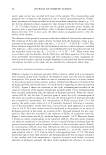
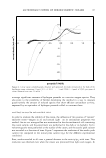
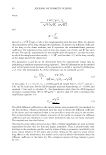
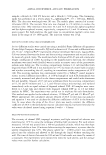
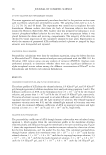
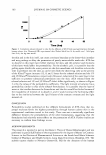
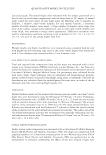
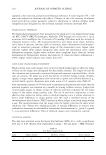
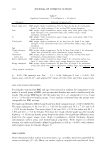
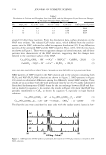
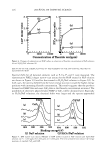
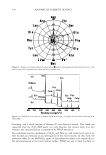
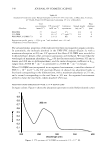
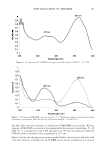
130 JOURNAL OF COSMETIC SCIENCE let Figure 9. Amino acid compositions in human saliva (e) and in stain separated from human teeth (0). The radii of the circles represent the molar percent of amino acid. (a) Ols Cls O(KLL) Nls Ca2p (b) 800 700 600 500 400 300 Binding energy(e V) P2s P2p 200 100 Ca3p 0 Figure 10. XPS wide-scan spectra of human teeth with stain: (a) before and (b) after bleaching with H2O2/NaF. bleaching, and a small amount of fluorine (F) was detected instead. This result has suggested that the H2O)NaF agent not only bleaches the stained teeth, but also enhances the remineralization accompanied by FHAP formation. The individual reaction mechanism of H2O2 and NaF are well understood, and so we have focused our attention on an investigation of the mixed system. In this work, the preventive effect by the NaF/H2O2 agent on discomfort was found to be mainly due to the remineralization at the tooth enamel surface. FHAP was apt to form favorably in
Purchased for the exclusive use of nofirst nolast (unknown)
From: SCC Media Library & Resource Center (library.scconline.org)