]. Cosnzet. Sci. 1 56, 135-148 (March/April 2005) A new long-chain UV absorber derived from 4-tert-butyl-4'-methoxydibenzoylmethane: Absorbance stability under solar irradiation F. WETZ, C. ROUTABOUL, A. DENIS, and I. RICO-LATTES, Laboratoire des Interactions Moleculaires et Reactivite Chimique et Photochimique, CNRS U MR 5623, Universite Paul Sabatier, 31062 Toulouse Cedex 4 (F. W., I.R.-L.), and Bioderma, 75 Cours Albert Thomas, 69447 Lyon Cedex 03 (C.R., A.D.), France. Accepted for publication February 16, 2005 Synopsis A new UV filter, the l-(4-tert-butylphenyl)-2-decanyl-3-(4' -methoxyphenyl)-propane 1,3-dione called ClO DBM, was prepared by grafting a ten-carbon aliphatic chain to the a-carbonyl position of 4-tert-butyl-4' - methoxydibenzoylmethane (BM-DBM). 1 UVA absorption efficiency of a cosmetic preparation containing this new filter, called ClO-DBM, was tested and compared to an identical preparation containing BM-DBM. The two preparations were irradiated under a 150-W xenon lamp or exposed to natural sunlight. The originality of this new filter resided in that its UVA absorbance appeared during the irradiation of the molecule. Moreover, although the molar absorption coefficient of ClO-DBM in the UVA domain was lower than that of BM-DBM, its absorption showed much more photostable behavior under both methods of irradiation. After two hours of sunlight exposure, the preparation containing the BM-DBM lost 85% of its UVA absorbance, whereas the UVA absorbance of the preparation containing ClO-DBM showed a decrease of 3% in comparison to the maximum absorbance obtained after 30 minutes of irradiation. Also, after two hours of exposure to natural sunlight, the UVA absorbance of the preparation containing ClO-DBM remained above its initial value (before the irradiation began). INTRODUCTION Exposure to ultraviolet (UV) radiation plays a causal role in acute and chronic skin damage. Skin photoaging has been connected with UVA light. Moreover, UVA irra diation generates free radicals, inducing different types of degradation to cellular DNA, lipids, and proteins. It is now commonly recognized that UVA as well as UVB irradia tion is involved in the development of skin cancer. This is particularly clear for squamous cell carcinomas (SCCs) and basal cell carcinomas (BCCs) in Caucasian people (1). Fur- Address all correspondence to I. Rico-Lattes. 1 Patent: FR 2 857 663 (17 July 2003, France (PCT request)). 135

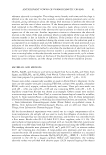
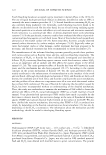
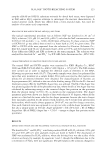
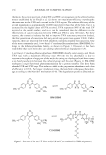
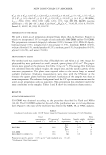
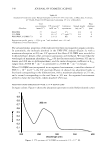
136 JOURNAL OF COSMETIC SCIENCE thermore, the action spectrum of skin SCC and BCC carcinogenesis in the albino hairless mouse established by de Gruijl et al. (2) shows two maximum-efficiency wavelengths: the main one in the UVB and a second in the UV A region. The relative efficiency of the second maximum is approximately 10,000 times lower than that of the first, but it is increased by the higher doses of UVA received. UV A represents 98% of the total UV received at the earth's surface, and so it can be considered that the difference in the effectiveness of cancer induction between UVB and UV A is only 100 times. For these reasons, the cosmetics industry has had to improve UV A sunscreen protection (indeed, the first generation of sunscreens did not provide any protection against UV A). U nfor tunately, there are relatively few UV A absorbers currently available for sunscreens. One of the most commonly used, 4-tert-butyl-4' -methoxydibenzoylmethane (BM-DBM), be longs to the dibenzoylmethane family, as shown in Figure 1. However, it has been established that such molecules can undergo photochemical degradation (3,4). 4-tert-butyl-4' -methoxydibenzoylmethane (BM-DBM) absorbs solar energy and filters UV A rays with a maximum efficiency near 340 nm (5). Its absorbance is due to resonance throughout a large part of the molecule owing to a hydrogen bond that creates a six-bond pseudocycle between the carbonyl group and the enol (Figure 1). BM-DBM undergoes a rapid keto/enol photoisomerization by a proton transfer. The keto form absorbs UVB and UVC rays. This induces a shift in the preparation absorbance and a loss of efficiency in UVA. For longer irradiation times, the keto form undergoes photocleav age according to the N orrish I mechanism ( 6-8). The degradation products obtained are K 0 0 BM-DBM ClO-DBM Figure 1. Structure of the two UV filters studied (H and C are numbered for NMR assignments).
Purchased for the exclusive use of nofirst nolast (unknown)
From: SCC Media Library & Resource Center (library.scconline.org)