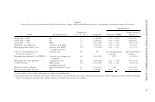
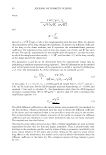
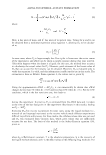
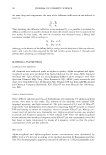
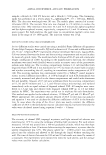
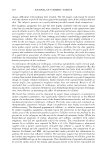
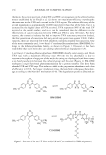
NEW LONG-CHAIN UV ABSORBER 137 well identified (3,9). The most abundant are benzaldehydes, benzoic acids, and aceto phenone. The importance of this phenomenon increases with the duration of the expo sure and is one of the reasons why it is recommended to reapply sun cream every two hours or so (other solar filters present the same drawback (10)). It is important to find a way to photostabilize preparations containing BM-DBM in order to improve UVA photoprotection. Two possibilities can be considered. The first, already widely exploited, consists in adding another molecule to the preparation. This molecule has to stabilize the BM-DBM via various mechanisms, most of which are unknown. For example, Thorel (11) added a trimellitic acid derivative, Allard and Forestier (12) incorporated a 3,5- triazine-derived compound and an alkyl (a.-cyano)-�,13'-diphenylacrylate, and Hansenne and De Chabannes (13) tested a polysaccharide alkylether in order to prepare a photo stable composition with a dibenzoylmethane derivative. Some research has also been done to define synergic mixtures of filters (14, 15 ). The second possibility, to our knowledge not yet explored, consists in making chemical modifications of BM-DBM itself. These modifications must keep the UV absorption capacity but must augment the resistance to photodegradation. According to the literature (3, 16), photodegradation occurs via the keto form. Our strategy was then to avoid ketonization by stabilizing the enol form. Dibenzoylmethane derivatives exist as a keto/enol mixture where the keto/enol ratio depends on the nature of the environment. Tobita et al. (16) showed that dibenzoyl methane exists mainly in the chelated enol form in both non-polar and polar solvents, although the enol content is higher in non-polar solvents. It seems that a non-polar environment would favor strong intramolecular hydrogen bonding. Thus a long ali phatic chain chemically grafted onto BM-DBM should induce the migration of the molecule to a more apolar environment in complex preparations. In this study, we present a new UV filter, the l-(4-tert-butylphenyl)-2-decanyl-3-(4' - methoxyphenyl)-propane-1,3-dione called ClO-DBM, derived from BM-DBM by graft ing a ten-carbon aliphatic chain on the a-carbonyl position (Figure 1). The chain length is above eight carbons, giving amphiphilic properties to the molecule (17). This filter was incorporated in a water-in-oil preparation, and the UVA absorption efficiency was tested under a 150-W xenon lamp or natural sunlight. The absorbance capacity and stability of preparations containing Cl0-DBM alone, BM-DBM alone, and a BM-DBM/ Cl0-DBM mixture were compared. MATERIALS AND METHODS CHEMICAL PRODUCTS Tetra-n-butylammonium fluoride, 75% w/w aq. soln. and 1-bromodecane 98% were obtained from Avocado (Heysham, Lancashire, England). BM-DBM (Parsol® 1789) was obtained from Givaudan-Rome (Switzerland). Dichloromethane and acetonitrile, HPLC grade, were obtained from SDS (Peypin, France), and tetrahydrofuran was from Carlo Erba RPE (Val de Reuil, France). Dodecyl sulfate sodium salt 98% was an Aldrich product (Steinheim, Germany) and used as supplied. Silica gel (0.063-0.200 mm) was obtained from Merck (Darmstadt, Germany). INSTRUMENTATION 1 H N.M.R. and 13 C were recorded with a Bruker ARX-400 MHz. Infrared spectra were

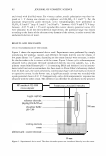
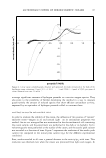
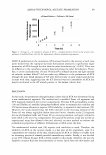
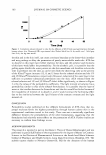
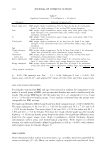
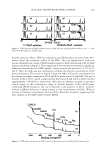
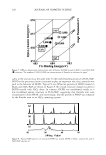
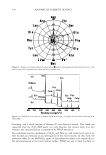
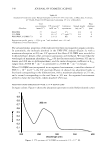
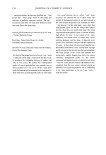
138 JOURNAL OF COSMETIC SCIENCE recorded with a Perkin-Elmer FT-IR 1760 X. UV spectra were recorded on a HP 8452A diode array spectrometer. Irradiance measurements were performed with UV meter 70380 from Oriel Instruments (response between 280 nm and 400 nm, with a maxi mum sensibility at 3 70 nm). Irradiation was carried out (a) using a 150-W xenon lamp (the xenon lamp emits a continuous spectrum of light, ranging from ultraviolet through visible to infrared (Figure 2), and the lamp output was sent through a water filter (5-cm pathlength) to remove most of the radiations), or (b) under natural sunlight from 12:00 h to 15 :30 h (solar time) in May and June 2002 in Toulouse (at latitude 43° North), France. Molecules were modelled by the software Pimms Molecular Modelling SystemVI.47.a. The predicted log (P) values, partitioning ratio between water and octanol, were calculated using Tsar software (Silicon Graphics, Iris Indigo X524/4000). PREPARATION OF ClO-DBM According to the procedure described by Clark and Miller (18,19) and Marzinzik and Felder (20), an aqueous solution of tetra-n-butylammonium fluoride (0.017 mol) was added to BM-DBM (0.010 mol). By heating this mixture to 80°C, under reduced pressure (evaporator) for three hours, water escaped, leaving an anhydrous yellow residue. This residue was dissolved in THF (25 ml), and 1-bromodecane (0.030 mol) was added. Then, the mixture was stirred at 70°C for two hours. The solution was evaporated, giving a yellow viscous residue. This was purified on a silica column, with dichloro methane as eluent (42% yield). 1 H NMR (400 MHz, CDC1 3 ), oppm' J H2 : 8.00 (m, 2H, J = 8.8 H 6 ) 7 .93 (m, 2H, J = 8.4 H 8 ) 7.46 (m, 2H, J = 8.4 H 9 ) 6.94 (m, 2H, J = 8.8 H 1 0) 5.11 (t, lH,J = 6.6 H 11 ) 3.87 (s, 3H, Hu) 2.12 (m, 2H, H 18 ) 1.34 (s, 9H, H 14 ) 1.28 (m, 16H, H 16 and Hp) 0.89 (t, 3H, J = 6.7 H 15 ). 1 3C NMR assignments were ascertained with the help of 1 H-1H COSY, 1 H-13C HSQC and HMBC spectra. 1 3C NMR (100 MHz, CDC1 3 ), oppm: 196.1 (C 2 ) 195.1 (C 1 ) 163.9 (C 3 ) 157.3 (C4) 133.9 "'e -iE E 10 2 10· 1 500 1000 1500 WAVELENGTH (nm) 2000 2400 Figure 2. Spectral irradiance of 150-W xenon lamp, showing percentage of total irradiance in specific UV, visible, and near infrared spectral ranges.
Purchased for the exclusive use of nofirst nolast (unknown)
From: SCC Media Library & Resource Center (library.scconline.org)