234 JOURNAL OF COSMETIC SCIENCE radiation screen, and during emission the lamp might dissipate thermal energy, thereby heating the samples. Both phenomena can influence the formation of conjugated dienes and trienes. Thus, to evaluate the method qualitatively, the photostability study was done in three different ways: 1. The capped Pyrex containers were placed in a closed solar box. 2. The open Pyrex containers were placed in a closed solar box. 3. The capped Pyrex containers were placed in an open solar box, to dissipate thermal energy from the lamp. MALONDIALDEHYDE AND MONOALDEHYDE DETERMINATION (11) Malondialdehyde (MDA) and monoaldehyde (MONO) are formed from oxidative reac tions of unsaturated fatty acids followed by the decomposition of tryglicerides they produce an unpleasant smell. The presence of MDA and MONO, an indication of rancidity, could be revealed through colorimetry with thiobarbituric acid (TBA). TBA reacts with the two aldehydes to give two colors that can easily be determined spectrophotometrically. To detect the presence of MDA and MONO in the oils, samples were prepared as follows: an aqueous solution ( 100 ml) was prepared containing 15 % w /w of trichloroacetic acid (TCA), 0. 3 7 5 % w /w of thiobarbituric acid (TBA) in hydrochloric acid (0.25 mol/1), and 18.8 µl of oil. The solution was placed in a thermostatic water bath (at 100°C), incubated for 15 minutes, and then transferred to an ice bath. Three milliliters of 1-butanol were added under stirring the solution was then transferred to a separating funnel to extract any pink or yellow coloration that had formed from the reaction of TBA with the aldehydes. The reactions are: OHC-CHrCHO + TBA -----t TBA-MDA-TBA (pink) R-CH 2 -CHO + TBA -----t TBA-MONO (yellow) The supernatant organic phase was extracted and analyzed spectrophotometrically at 5 3 5 nm and 450 nm to detect, respectively, the pink and the yellow coloration. DETERMINATION OF CHLOROPHYLL Chlorophyll is a lipophilic yellowish-green pigment present in the non-saponifiable matter of an oil it influences taste and smell and determines color. It is a relatively unstable molecule: it easily degrades under the influence of light and heat. To quantify the chlorophyll content in hemp-seed oil, a calibration curve was made against a reference pigment (a standard solution of 4.0% chlorophyll in maize germ oil). Non-pigmented maize germ oil was used both as a reference for spectrophotometric analysis and as a solvent for dilutions. Three dilutions of the standard pigmented solution were prepared, containing, respectively, 0.0016%, 0.008%, and 0.004% chlo rophyll. The three standard solutions were analyzed spectrophotometrically in the 300- 600 nm range. The same procedure was applied to the 1999 hemp-seed oil and extra virgin olive oil samples to determine their percentage chlorophyll content.

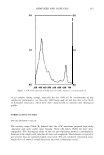
HEMP-SEED AND OLIVE OILS 235 EVALUATION OF THE PHOTOSTABILITY OF CHLOROPHYLL Chlorophyll is a photosensitive molecule that may undergo structural changes on ex posure to light, possibly influencing lipoperoxidation. The formation of conjugated double bonds may be accelerated under the influence of free radicals derived from the photodegradation of chlorophyll. We thus evaluated its photostability by irradiating hemp-seed and extra-virgin olive oils under UV A and under visible light for increasing durations of time. At each scheduled time the irradiated oil samples were examined spectrophotometrically. Oil samples were placed in Pyrex containers 10 cm from the UVA or OSRAM (solar spectrum) lamp. Spectrophotometric analysis was done after 30, 90, and 180 minutes of irradiation, as described above. The radiation intensity emitted by the UV A lamp was measured, as for the UVB lamp, and was 1.89 x 10-- 4 W cm- 2 • Standard solar radiation intensity is 1.1 x 10- 3 W cm- 2 (12), slightly above that of the UVA lamp used. DETERMINATION OF VITAMIN E IN HEMP OIL Vitamin E (tocopherol) is a lipophilic compound contained in small amounts in the non-saponifiable matter of oils. Tocopherols are efficient antioxidants if present in the optimal ratio versus PUFAs (the tocopherol/fatty acid ratio should be above 0.8). Vi tamin E content was determined by HPLC under the following conditions: • Column: Supersphere 100-RP 18 (length 5 cm, internal diameter 4.6 cm) • Eluent: ethanol/water: 92/8 • Flow: 1.2 ml/min • Detector: UV (A. = 295 nm) • Retention time: 12 min Two samples of the 1998 hemp-seed oil and two of the 1999 batch were dispersed in methanol at a 1:2 ratio, stirred on vortex, and centrifuged at 6000 rpm for 10 minutes to promote passage of tocopherols into the alcoholic phase. A calibration curve versus the standard reference substance (a-tocopherol) was made to determine concentration. Standard solutions containing three different concentrations of a-tocopherol were analyzed by HPLC under the above conditions. The calibration curve was linear, indicating low standard error and high correlation coefficients within the concentration range. Oil samples were then analyzed by HPLC under the above condi tions. FORMULATIVE STUDIES DETERMINATION OF APP ARENT VISCOSITY The viscosity of the emulsions was determined at 25 ° C ± 0.1 °C using a Brookfield viscometer with a small SC 029 adapter chamber. The determinations were performed at 5 s- 1 shear stress on 13 g of each sample.
Purchased for the exclusive use of nofirst nolast (unknown)
From: SCC Media Library & Resource Center (library.scconline.org)