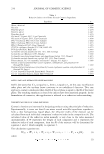
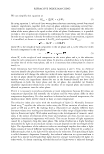
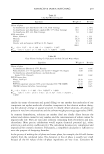
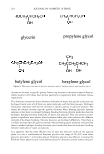
]. Cosmet. Sci. 1 56, 253-265 0uly/August 2005) Refractive index matching and clear emulsions JAMES ZIMING SUN, MICHAEL C. E. ERICKSON, and JAMES W. PARR, Schwarzkopf and Henkel, 1063 McGaw Avenue, Suite 100, lrvine1 CA 92614. Accepted for publication April 4, 2005. Presented at the 2003 IFSCC Conference, Seoul1 Korea, September 24, 2003. Synopsis Refractive index (RI) matching is a unique way of making clear emulsions to meet market trends. However, RI matching has not been sufficiently investigated in terms of physical principles and methodologies. Snell's law (n2 sin r2 = n 1 sin r1 ) is applicable to cosmetic emulsions. When oil phase and water phase have equal RI (n2 = n 1 ) values, light will not bend as it strikes obliquely at the emulsion interface. Instead, light is transmitted through the emulsion without refraction, which produces clarity. Theoretical RI values in solution can be calculated with summation of the product of the weight percentage and refractive index of each ingredient (Rlmix = [Wl X n l + w2 X n2 + W3 X n3 + . . . + wn X nn}!WT). Oil-phase RI values are normally at 1.4 or higher. Glycols are used to adjust the water phase RI, since they typically have larger RI values than water. Noticeable deviations from calculated RI values are seen in experimentally prepared solutions. Three basic deviation types are observed: negative, positive, and slightly negative or positive, which can occur in glycol aqueous solutions at different concentrations. The deviations are attributed to changes in molecular interaction between molecules in solution, which can lead to changes in specific gravity. Negative RI deviation corresponds to a decrease in specific gravity, and positive RI deviation corresponds to an increase in specific gravity. RI values will deviate from calculated values since an increase or decrease in specific gravity leads to a change in optical density. INTRODUCTION Product clarity remains an important aspect in cosmetic formulation as it continues to be a mainstay in current consumer preference. To meet this requirement, chemists have developed two ways of making clear emulsions: via microemulsions (1) and refractive index matching (2). Microemulsions have been thoroughly investigated, leading to many microemulsion-conditioning products in the market. The crucial principle behind mi croemulsion clarity is the size of oil droplets. Microemulsions employ large concentra tions of emulsifiers that compete for limited oil (emollient) ingredients. This ensures small oil-drop particle size (smaller than the wavelength of light) so that light can pass through the product without refraction. However, since large quantities of emulsifiers can lead to skin irritation, this technology is somewhat limited to hair care. Karasssik et al. (3) at the Gillette Company disclosed the propriety technology of clear deodorant or antiperspirant gels that contain water-in-silicone oil emulsion. Deodorant 253

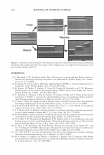
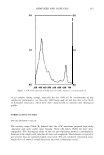
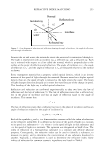
254 JOURNAL OF COSMETIC SCIENCE or antiperspirant emulsion gels exhibit reduced staining while retaining excellent aes thetic attributes and efficacy. The water phase comprises about 75% to 90% of the composition and contains a deodorant or antiperspirant effective amount dissolved therein. The oil phase comprises about 10% to 25% of the composition and contains a silicone oil and silicone emulsifiers. Even though it used refractive index matching methodology in the proprietary disclosure, there is no discussion of detailed physical principles, refractive index, or methodology discussion in the patent. Although refractive index matching is used in the development of cosmetic products, it is mainly a process of trial and error. There is no practical methodology to follow in the discovery of new applications because the physical principle is not well explained. In our exploration of refractive index matching in the formulation of cosmetics, detailed physical principles are revealed and a practical method is developed leading to a series of unique formulations ( 4). Refractive index matching enables chemists to make for mulas that cannot be achieved by other methods. Refractive index matching should become a common technique for formulation chemists. EXPERIMENT AL MATERIALS Trade names of materials used in this study are as follows: glycereth-7 (Liponic EG-7®, Lipo Chemicals) glycereth-26 (Liponic EG-1 ® , Lipo Chemicals) PEG-4 (Carbowax PEG 200®, Union Carbide) PEG-6 (Carbowax PEG 300®, Union Carbide) PPG-9 (Polyglycol P-425®, Dow Chemical) PVP/V A copolymer (Luviskol VA 73W®, BASF AG) PVP (Luviskol K30®, BASF AG) cyclomethicone and dimethicone (DC 1501 ® , Dow Corning) cyclomethicone (Rhodorsil 45V5®, Rhodia) cyclomethicone, phenyltri methicone, and dimethicone (Gelaid 5565®, Chemsil) cyclomethicone and dimethicone copolyol (DC 5225®, Dow Corning) polyacrylamide, Cl3-14 isoparaffin, and laureth-7. (Sepigel 305®, Seppic) sodium acrylate/acryloyldimethyl taurate copolymer, isohexa decane, and polysorbate 80 (Simugel EG®, Seppic) hydroxyethylacrylate/sodium acryl oyldimethyl taurate copolymer, squalane, and polysorbate 60 (Simugel NS®, Seppic) Cl3-14 isoparaffin (Isopar M®, Exxon Mobil Chemical) and Cll-13 isoparaffin (Isopar L ® , Exxon Mobil Chemical). METHODS Refractive indices (n) were measured with an Atago hand refractometer at 25°C under florescent light. Specific gravities were measured at 25°C with a stainless pycnometer. PHYSICAL PRINCIPLES OPTICAL PROPERTIES Consider a beam of light (monochromatic) transmitted through air and directed onto the surface of a body of water (Figure 1). Some of the light is reflected at the interface
Purchased for the exclusive use of nofirst nolast (unknown)
From: SCC Media Library & Resource Center (library.scconline.org)