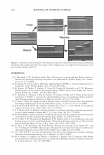
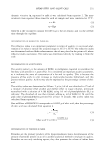
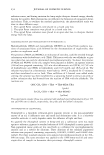
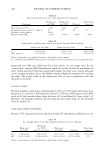
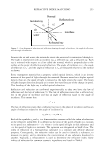
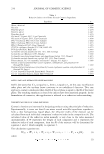
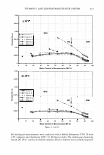
REFRACTIVE INDEX MATCHING 255 Normal Incident ray Reflected ray Interface water I r2 Refracted ray Figure 1. A ray diagram of refraction and reflection showing the angle of incidence, the angle of reflection, and the angle of refraction. between the air and water the remainder enters the water and is transmitted through it. The light is represented with an incident ray, a reflected ray, and a refracted ray. Each ray is oriented with respect to a line called the normal, which is perpendicular to the surface at the point of reflection and refraction. The angle of incidence is r 1 , the angle of reflection is r 1 ', and the angle of refraction is r 2 , all measured relative to the normal as shown. Every transparent material has a property called optical density, which is an inverse measure of the speed of light through the material. Because water has a higher optical density than air, the speed of light is reduced as the light enters the water. The beam of light changes direction abruptly as it enters the water because of the change in speed. This bending of the light ray is called optical refraction. Reflection and refraction are confirmed experimentally to obey two laws: the law of reflection and the law of refraction (5 ). The law of reflection states that a reflected ray lies in the plane of incidence and has an angle of reflection equal to the angle of incidence. This means that The law of refraction states that a refracted ray lies in the plane of incidence and has an angle of refraction related to the angle of incidence by . . n 2 sin r2 = n 1 sin r 1 Each of the symbols n 2 and n 1 is a dimensionless constant called the index of refraction or the refractive index (RI). It is defined as the ratio of the speed of light in a vacuum to its speed in a substance (n = clv1 where v is the speed of light in that substance and c is the speed of light in a vacuum). The equation was designated as Snell's Law. The index of refraction of a homogeneous substance is a constant and definite physical property. Consequently, the refractive index can be used to identify a substance, to measure its purity, and to determine the concentration of one substance dissolved in another. Typically, a refractometer is used to determine the refractive index. Some indices of refraction for common cosmetic ingredients are listed in Table I.

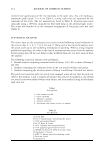
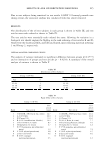
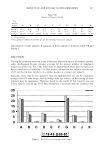
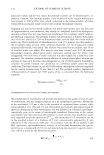
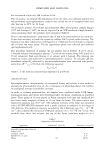
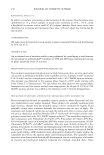
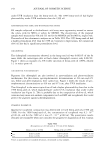
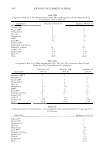
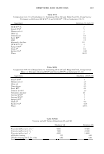
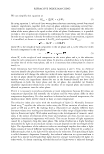
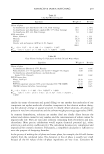
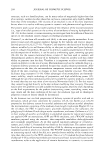
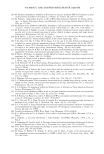
256 JOURNAL OF COSMETIC SCIENCE Table I Refractive Indices (n) of Some Selected Cosmetic Ingredients Water, deionized Glycerin Hexylene glycol Butylene glycol Propylene glycol Ingredient Glycereth-7 (Liponic EG-7, Lipo Chemicals) Glycereth-26 (Liponic EG-1, Lipo Chemicals) PEG-4 (Carbowax PEG 200, Union Carbide) PEG-6 (Carbowax PEG 300, Union Carbide) PPG-9 (Polyglycol P-425, Dow Chemical) PVP/V A copolymer (Luviskol VA 73W, BASF AG) PVP (Luviskol K30, BASF AG) Cyclomethicone and dimethicone (DC 1501, Dow Corning) Cyclomethicone (Rhodorsil 45V5, :Rhodia) Cyclomethicone, phenyltrimethicone, and dimethicone (Gelaid 5565, Chemsil) Cyclomethicone and dimethicone copolyol (DC 5225, Dow Corning) Polyacrylamide, Cl3-14 isoparaffin, and laureth-7 (Sepigel 305, Seppic) Sodium acrylate/acryloyldimethyl taurate copolymer, isohexadecane, and polysorbate 80 (Simugel EG, Seppic) Hydroxyethylacrylate/sodium acryloyldimethyl taurate copolymer, sgualane, and polysorbate 60 (Simugel NS, Seppic) C13-14 isoparaffin (lsopar M, Exxon Mobil Chemical) C 11-13 isoparaffin (lsopar L, Exxon Mobil Chemical) SNELL'S LAW AND REFRACTIVE INDEX MATCHING n 1.3330 1.4680 1.4276 1.4401 1.4355 1.4720 1.4690 1.4582 1.4615 1.4455 1.4275 1.3805 1.3972 1.3960 1.4015 1.3975 1.4460 1.4450 1.4475 1.4380 1.4255 Snell's law states that if n 2 is equal to n 1 , then r 2 is equal to r 1 . In this case, no refraction takes place and the incident beam continues in an undeflected direction. This case applies to cosmetic emulsions when the RI of the oil phase is equal to the RI of the water phase. The resulting emulsion is clear if the indices have been matched properly. In the formulation of cosmetics, this application is referred to as refractive index matching. THEORETICAL DESIGN OF CLEAR EMULSIONS Cosmetic chemists are interested in designing products using the principle of refraction. Experimentally, it turns out that if one mixes several miscible ingredients together to form a clear homogeneous liquid phase, the refractive index of the mixture can be calculated from each individual component's refractive index in the composition (4). The calculated value of the refractive index normally is very close to the value measured instrumentally. If W represents the weight of each component and n represents the refractive index of each component, then the RI of the mixture will be determined by equation 1 and 2, which simplify to equation 3. The calculation equations are: where Rlmix = [Wl X nl + W2 X n2 + W3 X n3 + ... + wn X nn}!Wy (1) (2)
Purchased for the exclusive use of nofirst nolast (unknown)
From: SCC Media Library & Resource Center (library.scconline.org)