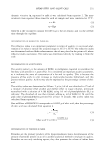
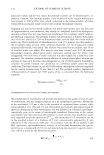
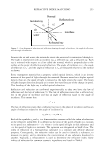
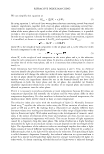
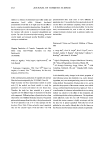
REFRACTIVE INDEX MATCHING We can simplify this equation as: Rlmix = [L(Wi X ni)J/Wy 257 (3) By using equation 3, indices of clear water-phase solutions containing several functional cosmetic ingredients, together with clear oil-phase solutions containing several func tional cosmetic ingredients, can be calculated. It is possible to manipulate the refractive index of the water phase to be equal to that of the oil phase. Furthermore, it is possible to make a clear or opalescent emulsion by combining the water phase and the oil phase. In order to use equation 3 directly for refractive index matching in an emulsion, equation 3 is modified, as shown in equation 4 for Rl oit and equation 5 for Rl water : (4) where W i is the weight of each component in the oil phase and n i is the refractive index for each component in the oil phase. (5) where Wi is the weight of each component in the water phase and ni is the refractive index for each component in the water phase. In practice, emulsifiers have to be dissolved in either the oil or the water phase, and so it is necessary that either phase be clear or nearly so. Some limitations have been found when using equations 4 and 5. First, no chemical reactions should take place between ingredients in either the water or the oil phase. Even neutralization will change the refractive index of some ingredients. Second, ingredients in the oil phase should be physically insoluble in the water phase, and vice versa. In another words, the ingredients chosen for use in the formula should not have dual distribution in both the water phase and the oil phase. An emulsifier (or blended emulsifier ingredients) should stay at the interface of its original phase and cannot be allowed to permeate into the other phase. Third, it is necessary to produce emulsions at room temperature because RI values are temperature-dependent and normally the oil phase and the water phase differ in their temperature dependency. If a clear emulsion is obtained at an elevated temperature, the emulsion most likely will be cloudy or hazy at room temperature. The refractive index also varies with the wavelength of light (5 ). Normally literature listed as nD 20 signifies the refractive index using the D-line emission of sodium, mea sured at 589 nm at 20°C. RI readings from a refactometer are slightly different from literature values since readings are obtained from the visible range of light (either white light or fluorescent light). With index matching in the development of cosmetic emul sions, if the indices of refraction of the water and oil phases are close, but not exact, an opalescent (translucent) appearance will result. This occurs because of light separation caused by a dispersed, drop-like inner phase. The index of refraction n (light bending) encountered by light in any medium except a vacuum depends on the wavelength of the light. The dependence of the refractive index on wavelength implies that when a light beam consists of rays of different wavelengths, the rays will be refracted by a surface at different angles, that is, the light will be spread out by refraction. This spreading of light is called chromatic dispersion. Generally, the index of refraction in a given medium is greater for a shorter wavelength (blue light) than for a longer wavelength (red light). In other words, if a beam consisting of both blue and red light waves is refracted through

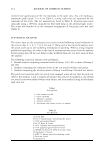
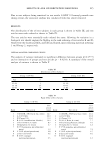
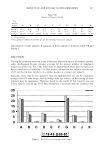
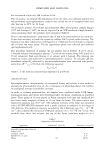
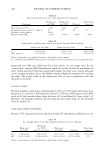
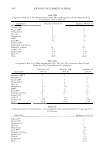
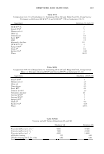
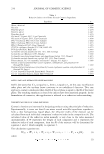
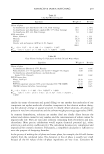
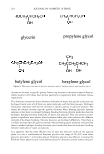
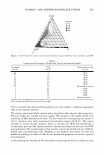
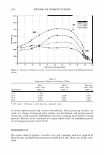
258 JOURNAL OF COSMETIC SCIENCE a surface, such as from air into quartz or vice versa, the blue component bends more than the red component. A beam of white light (or fluorescent light) consists of all (or nearly all) colors in the visible spectrum with near uniform intensity. When white light passes through a solid glass prism with a triangular cross section, all colors of the light are separated into a rainbow. The opalescent appearance of cosmetic emulsions originates from the slight mismatch of the RI between the water and oil phases, which leads to light separation. The opalescent effect has been used to create attractive visual effects in emulsion prod ucts. In fact, most clear emulsions created from RI matching appear to be opalescent, more or less due to the difficulty in completely matching RI values. Chemists can utilize equations 4 and 5 to design formulas that meet specific require ments of appearance and performance. After the RI of the two phases are matched (become equal) and mixed together, the emulsion may initially be cloudy. A longer mixing time is needed to guarantee emulsion homogeneity and clarity. RES UL TS AND DISCUSSION EXAMPLE APPLICATIONS The following two examples demonstrate refractive index matching. These simplified formulas are intended only to describe the process of formulation design they are by no means the best performing. The chemist can design a multitude of formulas with many different ingredients by using the principles already described (6). This method can also be used to design general dual-phase products with two colors. RI matching in skin-care products: A clear AHA gel. Alpha hydroxy acids (AHAs) have been determined to have antiaging and antiwrinkle effects. AHAs have been widely used in skin-care formulations (7 ,8). However, AHAs are also skin irritants. By incorporating an AHA complex (glycolic acid and arginine) into a water-in-silicone oil emulsion, it is possible to reduce potential irritation and obtain a clear eye-gel product. The following example shows a preliminary formula with the corresponding RI. The related RI cal culation is also given for Ri oit (1.3967) and Ri water (1.3966) as an example when using equations 4 and 5. The clear eye-moisturizing gel example is shown in Table II. RI matching in hair-care products: An 0/W hair silicone styling gel. Silicone oil is often used to deliver shine, a luxurious feel, anti-frizziness, and manageability to hair-care products (9,10). Hair fixative ingredients (such as PVP/VA or PVP) are commonly used in carbopol gels, giving styling effects to hair. Interestingly, if one can combine silicone oil and hair fixatives into a clear gel-like product, the new product will impart both hold and the aforementioned properties of silicone. As shown in Table III, the principle of RI matching can be used to make a clear silicone styling gel, with a value of 1.4060 calculated for both the RI0it and the Riwa t e r · DEVIATIONS AND PRACTICAL RI ADJUSTMENT Actual refractive index values often deviate from theoretical values. In theory, calcula tions in the summation of the refractive index for solutions apply only to ideal solutions or ideally dilute solutions. In ideal solutions, the molecules of various species are so
Purchased for the exclusive use of nofirst nolast (unknown)
From: SCC Media Library & Resource Center (library.scconline.org)