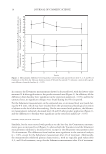
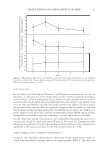
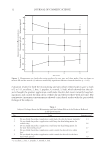
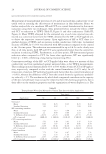
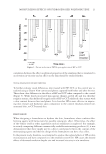
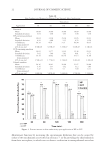
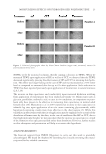
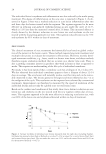
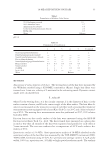
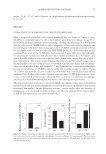
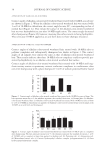
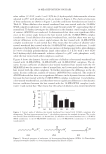
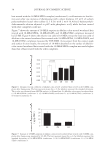
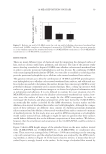
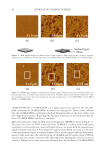
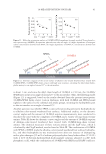
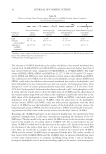
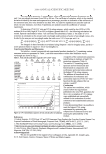
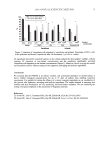
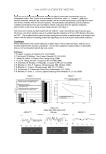
MOISTURIZING/ANTI-SEBUM EFFECTS ON SKIN 13 DISCUSSION For human skin, water content is an important physiological factor for the skin condition, and moisturizing is the basic function for skin care. In our experiments, the product ap- plication showed increased Corneometer and decreased Tewameter measurements during the 8-h test period on the fi rst and last days. The situation was maintained for the later three weeks, which indicated a favorable moisturizing effect provided by product applica- tion on human facial skin. After three weeks of application, the measurements for the 8-h kinetics test on the last day became uniform, with no typically peak values, which also indicated the amelioration effect on human skin after three weeks of treatment. The per- ceivable feelings of the subjects refl ected in the questionnaire showed that the subjective evaluation of the moisturizing effect of product application was satisfying too, which coincided with the Corneometer and Tewameter measurement results. One reason for the moisturizing effect might be hyaluronic acid, an important ingredient in product formulation accounting for the moisturizing effect. It is a glycosaminoglycan composed of alternating N-acetyl-D-glucosamine and D-glucuronic acid moieties. It is also a ubiquitous component of connective tissue where it forms a matrix and plays an important role in the maintenance of matrix structure and water balance (13,14). When included in the test products and applied directly to the subjects’ skin surface, hyaluronic acid hydrates the skin as a humectant. It literally attracts airborne water vapor into the skin and retains water delivered to the skin by circulation. It also provides another key benefi t by preventing the evaporation of water from the skin surface, which could de- crease the TEWL of the skin on clinical research. Just ameliorating the hydration state of the skin is not enough, and skin sebum secretion control is also an important factor for skin care. Cosmetics should be applied upon consid- ering both the moisturizing and the anti-sebum effects on human facial skin, which is the scientifi c and advisable personal skin care method. In our experiments, product application showed a satisfying anti-sebum effect 4 and 8 h after application on the fi rst and last days, and the situation was maintained for the following three weeks, indicated by decreased Sebumeter measurements. In the 8-h kinetics test on the fi rst day, the anti-sebum effect was achieved 4 h after product application, which was coincident with the beginning time of the best moisturizing effect. Our results indicated the favorable anti-sebum effect pro- vided by product application was concurrent with the moisturizing effect. In addition, the Sebumeter measurement results were coincident with the perceivable feelings of the sub- jects about the anti-sebum effect of product application refl ected in the questionnaire. One ingredient, possibly accounting for the anti-sebum effect, is nicotinamide (niacin- amide, Vitamin B3), a physiologically active form of niacin (nicotinic acid), which has been assessed in clinical studies and found effective for lowering the sebum secretion on the skin surface and in some infl ammatory skin diseases such as acne vulgaris and bullous pemphigoid. It is theorized that the niacinamide possibly alters the movement of sebum to the skin surface by altering the reservoir in the duct connecting the sebaceous gland to the skin surface at the follicular ostia and encourages sebum to fl ow to the skin surface more quickly. This depletion of the reservoir eventually translates into decreased sebum excretion on the skin surface (15,16). It exhibits a satisfying anti-sebum effect when included as an active ingredient in the test products. Nevertheless, there may be other active ingredients that may contribute to skin benefi ts, especially integrated prescrip- tions and technologies.

JOURNAL OF COSMETIC SCIENCE 14 It could be concluded that product application could provide some moisturizing effect and at the same time some anti-sebum secretion effect on human facial skin. Our results might provide a scientifi c personal care regimen for human facial skin to prompt the balance for the hydrolipid fi lm on skin. ACKNOWLEDGMENTS This work was supported by a grant from the Inspection Technology Key Research Proj- ect for Cosmetics Safety and Compatibility (No. 2008IK257) from the General Admin- istration of Quality Supervision, Inspection and Quarantine of the People’s Republic of China (AQSIQ). REFERENCES (1) P. W. Wertz, The nature of the epidermal barrier: Biochemical aspects, Adv. Drug. Deliv. Rev., 18, 283–294 (1996). (2) U. Jappe, Pathological mechanisms of acne with special emphasis on Propionibacterium acnes and related therapy, Acta. Derm. Venereol., 83, 241–248 (2003). (3) H. Gollnick, Current concepts of the pathogenesis of acne, Drugs, 63, 1579–1596 (2003). (4) S. W. Youn, S. J. Kim, I. A. Hwang, and K. C. Park, Evaluation of facial skin type by sebum secretion: Dis- crepancies between subjective description and sebum secretion, Skin Res. Technol., 8, 168–172 (2002). (5) M. Lodén, Biophysical methods of providing objective documentation, Skin Res. Technol., 1, 101–108 (1995). (6) E. Berardesca, EEMCO guidance for the assessment of stratum corneum hydration: Electrical methods, Skin Res. Technol., 3, 126–132 (1997). (7) V. Zuang, C. Rona, F. Distante, and E. Berardesca, The use of a capacitance device to evaluate the hydra- tion of human skin, J. Appl. Cosmetol., 15, 95–102 (1997). (8) V. Rogiers, EEMCO guidance for the assessment of transepidermal water loss in cosmetic sciences, Skin Pharmacol. Appl. Skin Physiol., 14, 117–128 (2001). (9) F. Kompaore, C. Dupont, and J. P. Marty, In vivo evaluation in man by two non-invasive methods of the stratum corneum barrier function after physical and chemical modifi cation, Int. J. Cosmet. Sci., 13, 293–302 (1991). (10) G. E. Piérard, C. Piérard-Franchimont, R. Marks, M. Paye, V. Rogiers, and the EEMCO Group, EEMCO guidance for the in vivo assessment of skin greasiness, Skin Pharmacol. Appl. Skin Physiol., 13, 372–389 (2000). (11) A. Zlotogorski, B. Glaser, B. Bercovici, and S. Dikstein, Sebum measurements or rapid identifi cation of hyperandrogenysm due to an ovarian Leydig cell tumor, Int. J. Dermatol., 30, 276–277 (1991). (12) Y. Cheng, Y. Y. Dong, M. M. Dong, C. Wang, N. Su, Y. T. Sun, J. Liu, H. Y. Zheng, A. Schrader, M. Rohr, and W. Liu, Protection effect of cosmetics on human skin under simulated rigorous environment, Skin Res. Technol., 14, 45–52 (2008). (13) O. Kajimoto, W. Odanaka, W. Sakamoto, K. Yoshida, and T. Takahashi, Clinical effects of hyaluronic acid diet for dry skin—Objective evaluation with microscopic skin surface analyzer, J. New Rem. Clin., 50(5), 548–560 (2001). (14) G. Kogan, L. Soltes, R. Stern, and P. Gemeiner, Hyaluronic acid: A natural biopolymer with a broad range of biomedical and industrial applications, Biotechnol. Lett., 29(1), 17–25 (2007). (15) Z. D. Draelos, A. Matsubara, and L. Smiles, The effect of 2% niacinamide on facial sebum production, J. Cosmet. Laser Ther., 8(2), 96–101 (2006). (16) D. P. Fivenson, The mechanisms of action of nicotinamide and zinc in infl ammatory skin disease, Cutis, 77(Suppl. 1), 5–10 (2006).
Purchased for the exclusive use of nofirst nolast (unknown)
From: SCC Media Library & Resource Center (library.scconline.org)