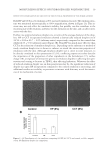
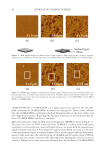
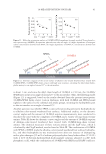
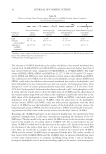
J. Cosmet. Sci., 60, 15–24 (January/February 2009) 15 Skin moisturization by hydrogenated polyisobutene— Quantitative and visual evaluation NAVA DAYAN, RAJARAJESWARI SIVALENKA, and JOHN CHASE, Lipo Chemicals Inc., 207 19th Avenue, Paterson, NJ 07504. Accepted for publication September 29, 2008. Synopsis Hydrogenated polyisobutene (HP) is used in topically applied cosmetic/personal care formulations as an emollient that leaves a pleasing skin feel when applied, and rubbed in after application. This effect, although distinguishable to the user, is diffi cult to defi ne and quantify. Recognizing that some of the physical proper- ties of HP such as fi lm formation and wear resistance may contribute, in certain mechanisms, to skin mois- turization, we designed a short-term pilot study to follow changes in skin moisturization. HP’s incorporation into an o/w emulsion at 8% yielded increased viscosity and reduced emulsion droplet size as compared to the emollient ester CCT (capric/caprylic triglyceride) or a control formulation. Quantitative data indicate that application of the o/w emulsion formulation containing either HP or CCT signifi cantly elevated skin moisture content and thus reduced transepidermal water loss (TEWL) by a maximal ~33% against the control formu- lation within 3 h and maintained this up to 6 h. Visual observation of skin treated with the HP-containing formulation showed fi ne texture and clear contrast as compared to the control or the CCT formulation, con- fi rming this effect. As a result of increased hydration, skin conductivity, as measured in terms of corneometer values, was also elevated signifi cantly by about tenfold as early as 20 min after HP or CCT application and was maintained throughout the test period. Throughout the test period the HP formulation was 5–10% more effective than the CCT formulation both in reduction of TEWL as well as in increased skin conductiv- ity. Thus, compared to the emollient ester (CCT), HP showed a unique capability for long-lasting effect in retaining moisture and improving skin texture. INTRODUCTION The upper layer of the skin, the stratum corneum (SC), holds fairly low levels of water (10–20%) some is bound and some is free to evaporate. While the interface of the SC and the live epidermis is well hydrated in normal skin, the upper layer of the skin is signifi cantly drier because of its unique structure and exposure to ambient air (1). The gradient of water through skin layers from top to lower levels plays a role in numerous skin biochemical functions. Although moisture, like nutrition to the skin, is mainly provided by deep skin layers and the circulation, one can affect moisture retention in the skin either by covering it with a fi lm to reduce TEWL (2) or by enhancing the ca- pacity of the skin to hold water when humectants are applied (3). Reduction of TEWL Address all correspondence to Rajarajeswari Sivalenka.

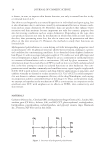
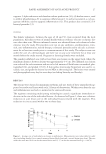
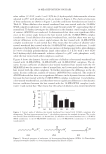
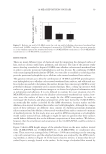
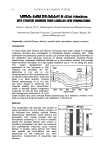
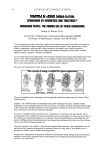
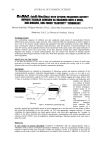
JOURNAL OF COSMETIC SCIENCE 16 is shown, in turn, to improve skin barrier function, not only in normal but also in dry or irritated skin (2,4,5). Dry skin occurs frequently as a natural disposition in individuals and upon aging, but is also oftentimes due to irritation caused by environmental factors or disease condi- tions such as atopic dermatitis (6). Therefore, skin care products that enhance water retention and skin moisture become important not only for cosmetic purposes but also for treating conditions such as atopic dermatitis. Depending on the type, skin care products function not only by mechanisms in which they form an inert layer on the skin, thus preventing water loss, but also in some cases by penetration and their effect on the skin structure (7). However, the methods to study their functions are limited (8,9). Hydrogenated polyisobutene is a non-drying oil with waterproofi ng properties used in moisturizers (10). Its physical structure allows water retention, making it a poten- tial candidate for a moisturizing emollient. It is a branched-chain aliphatic hydrocar- bon (Figure 1) with an average molecular weight of 370, stable over wide pH ranges and even at temperatures as high as 260°C. Despite its use as a constituent in varied proportions in commercial formulations such as moisturizers (10) and lip gloss treatments (11), information about the actual effects of HP by itself on skin is not fully understood and this is the fi rst attempt to study its isolated functions on skin hydration. For com- parison we tested another commonly used emollient ester, capric/caprylic triglyceride (CCT). CCT is used in food, cosmetic and drug delivery applications, is non-toxic, and exhibits virtually no dermal or ocular irritation (12). Use of CCT in solid nanoparti- cles was shown to enhance entrapment effi ciency of the drug Nimodipine, and varying its proportion aided in controlled release of the drug (13). Thus, in the present study, we attempt to hypothesize the mechanism of HP as a moisturizer in comparison to the emollient ester CCT, with emphasis on its effects on TEWL, skin conductivity, and skin texture. MATERIALS Carbomer (Noveon Inc., Cleveland OH) triethanolamine (Ruger Chemical Co., Linden, NJ) xanthan gum (CP Kelco, Atlanta, GA) and HP, CCT, phenoxyethanol, methylparaben, butylparaben, propylparaben, isobutylparaben, and glyceryl stearate (Lipo Chemicals Inc., Paterson, NJ) were used in this study. Figure 1. Structure of hydrogenated polyisobutene.
Purchased for the exclusive use of nofirst nolast (unknown)
From: SCC Media Library & Resource Center (library.scconline.org)