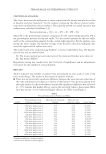
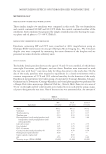
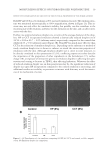
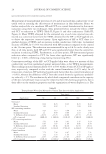
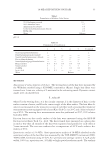
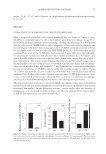
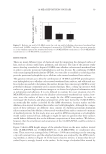
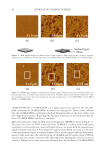
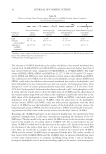
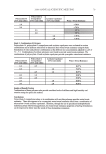
MOISTURIZING EFFECTS OF HYDROGENATED POLYISOBUTENE 17 METHODOLOGY PREPARATION OF SEMI-SOLID FORMULATIONS Three similar simple o/w emulsions were compared in this study. The test formulation and control contained 8% HP and 8% CCT, while the control contained neither of the emollients. Each emulsion was prepared by simple emulsifi cation after heating the aque- ous phase and oil phase to 75°–80°C (Table I). MICROSCOPIC OBSERVATION OF EMULSIONS Emulsions containing HP and CCT were visualized at 400´ magnifi cation using an Olympus BX60 transmission microscope (Olympus Micro Imaging Inc., PA). Emulsion droplet sizes were compared by measuring the mean diameter of the droplets and are presented in terms of relative arbitrary units. STUDY DESIGN Ten healthy female panelists between the ages of 35 and 54 were enrolled, of which there were eight Caucasians, one Hispanic, and one Asian. Panelists were instructed to wash the test sites with Ivory® soap twice daily for three days prior to the study date. On the day of the study, panelists were required to equilibrate in a closed environment with a constant temperature of 70°F and 30% relative humidity for the duration of the study. Biophysical measurements were taken using a Corneometer (Courage-Khazaka, Cologne, Germany) and a Tewameter (Courage-Khazaka), and visual photography was performed by a Charm View video microscope (Moritex USA Inc., Natick, MA). Four test site areas of 50 cm2 on the right and left volar forearms were marked (two on each arm) by using a surgi- cal pen to designate the test sites. One of the test sites was untreated skin. An amount of Table I Composition of Tested Formulations Ingredient HP (% w/w) CCT (% w/w) Control (% w/w) Water 85.12 85.12 93.12 Carbomer 0.11 0.11 0.11 Triethanolamine 0.17 0.17 0.17 Xanthan gum 0.10 0.10 0.10 Phenoxyethanol (and) methylparaben (and) butylparaben (and) propylparaben (and) isobutylparaben 1.00 1.00 1.00 Glyceryl stearate 2.75 2.75 2.75 Cetyl alcohol 1.25 1.25 1.25 PEG-40 stearate 1.00 1.00 1.00 Cetearyl alcohol (and) polysorbate 60 0.50 0.50 0.50 Hydrogenated polyisobutene 8.00 — — Capric/caprylic triglyceride — 8.00 — pH 6.56 6.54 6.60 Viscosity in cps. (LV4@12RPM) 20,000 21,000 15,000

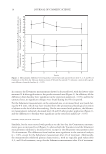
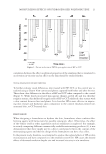
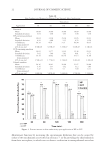
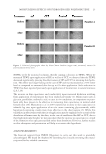
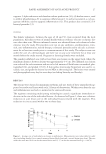
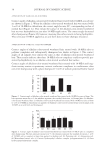
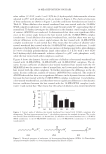
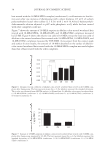
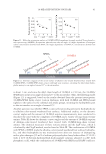
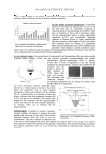
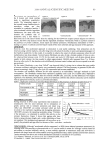
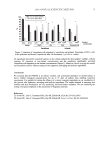
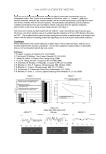
JOURNAL OF COSMETIC SCIENCE 18 0.2 ml of each test product was dispensed to each test site using a 1-ml volumetric sy- ringe. This amount was evenly applied by a technician using a fi nger and rubbed until absorbed into the skin. Measurements were taken on the sites prior to product application and at intervals of 20, 60, 120, 180, and 360 minutes. MEASUREMENT OF TRANSEPIDERMAL WATER LOSS (TEWL) The rate of water evaporation from the skin surface was measured using a Tewameter (Courage-Khazaka). This instrument is designed to follow water evaporation from the skin by applying the principle of water diffusion in an open chamber. The density of wa- ter gradient within the skin surface is analyzed indirectly by two pairs of sensors, for temperature and relative humidity. Data measured are analyzed by a microprocessor. MEASUREMENT OF SKIN CONDUCTANCE Moisture content in the skin was measured using a Corneometer CM 825 (Courage-Khazaka) This instrument is designed to measure skin surface hydration via capacitance measure- ment of a dielectric medium. This measurement can capture minor changes in hydration levels, with relatively high reproducibility in a short measurement time of around 1 sec. DATA COMPUTATION AND STATISTICAL ANALYSIS Sorted data for TEWL and conductance were tabulated for each time point of application of the control emulsion, HP-containing emulsion, and CCT-containing emulsion, respec- tively, and the means were recorded in each case. Statistics were calculated using an analysis package provided by Microsoft Excel 2003, following the recommendations of the International Federation of the Society of Cosmetic Chemists in their monograph Principles of Product Evaluation: Objective Sensory Methods (14). In this approach statistical signifi cance was evaluated using a one-tailed T-test to assess net change from the baseline. Statistical signifi cance was defi ned at p £ 0.05 (corresponding to a 95% or greater confi - dence level). EFFECT OF MOISTURIZATION ON SKIN TEXTURE The visual effect of moisturization was observed using a Charm View video microscope (Moritex). This instrument is designed to visually magnify the skin on a video screen, allow- ing the monitoring of minor changes in skin texture. It is equipped with a 1/3-inch CCD color-image sensor with three polarizing fi lters that allow for skin texture to be observed clearly. RESULTS We here analyzed for the fi rst time and compared formulations consisting of HP with CCT or a control formulation, for their physical properties and their effect on TEWL and skin conductivity as a measure of skin moisturization. The results are shown below.
Purchased for the exclusive use of nofirst nolast (unknown)
From: SCC Media Library & Resource Center (library.scconline.org)