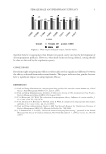
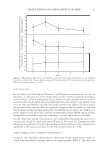
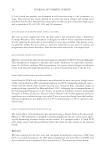
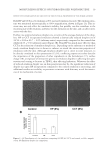
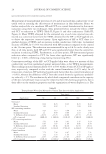
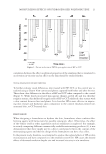
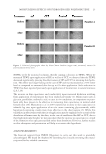
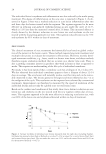
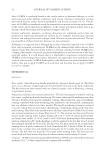
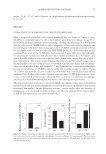
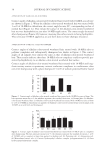
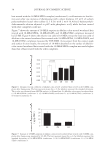
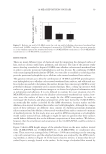
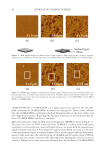
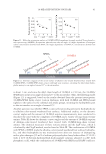
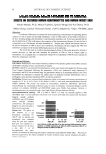
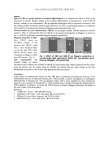
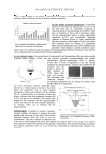
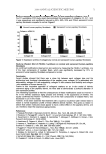
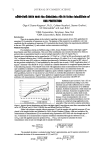
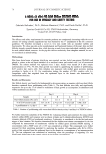
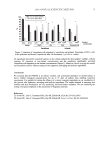
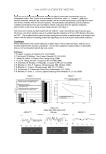
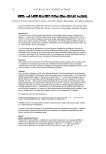
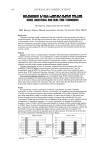
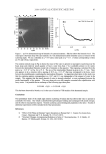
MOISTURIZING EFFECTS OF HYDROGENATED POLYISOBUTENE 21 correlation between the effect on physical properties of the emulsion that is translated to an elevation in viscosity and an effect on the skin should be studied further. VISUAL EVALUATION OF SKIN TEXTURE To further evaluate visual differences, skin treated with HP, CCT, or the control was vi- sualized using a Charm View camera and photos captured both before and after the test. These show clear difference in the effects of HP and CCT when compared to the control (Figure 5). While dried pre-treated skin appears thinner, peeled off, and was therefore rough in texture, skin hydrated by application of HP or CCT exhibited a fi ne texture with a clear contrast between lines and planes. It is clear that HP is more effective in improv- ing skin texture and hydration upon comparison to the control emulsion-treated site, untreated skin, or CCT-treated skin. DISCUSSION When designing a formulation to hydrate the skin, formulators often combine fi lm- forming agents with humectants for possible synergistic effect. Oftentimes, the effect of the vehicle itself or other ingredients such as emollients is neglected. For example, in a study comparing different commercially available moisturizing products (1), it was demonstrated that there might not be a direct correlation between the content of the moisturizing agents and that the design of the formulation can have a key effect. In the present study, therefore, we attempted to analyze the isolated effects of HP on skin moisturization and have compared it to the emollient ester CCT. HP causes the desired effects of decreased emulsion droplet size and increased viscosity in o/w emulsions. Figure 3. Percent reduction in TEWL upon application of HP or CCT.

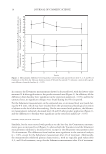
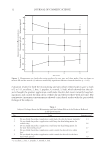
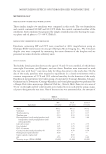
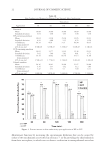
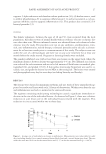
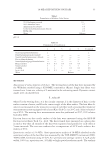
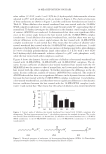
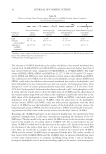
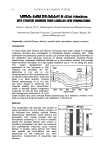
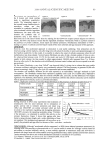
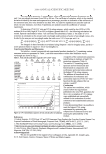
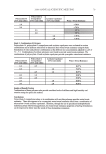
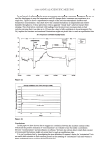
JOURNAL OF COSMETIC SCIENCE 22 Table III Skin Conductivity Measured at Various Time Intervals After Application Time (min) Application 20 60 120 180 360 Untreated Mean 20.89 20.09 20.09 20.09 20.09 Standard deviation 4.64 4.58 4.54 3.98 4.36 HP-containing emulsion Mean 30.64 34.18 35.16 34.05 30.43 Standard deviation 4.91 4.88 5.13 4.35 8.59 % Difference from untreated 49.35 66.6 71.4 65.98 48.34 p(Tt) one-tail 9.58E-05 9.35E-07 3.53E-07 5.19E-07 4.44E-04 CCT-containing emulsion Mean 30.02 32.77 34.45 32.46 29.33 Standard deviation 5.02 5.09 5.41 6.81 6.71 % Difference from untreated 45.35 58.62 66.76 57.13 41.98 p(Tt) one-tail 3.59E+01 1.77E-01 3.74E-01 2.41E-01 3.20E-01 Control emulsion Mean 20.36 20.41 20.68 21.07 20.88 Standard deviation 4.76 4.37 4.42 4.12 4.85 % Difference from untreated 3.47 3.71 5.1 7.09 6.11 p(Tt) one-tail 1.86E-04 5.82E-06 2.64E-06 1.55E-06 2.15E-03 Figure 4. Percent increase in skin conductivity upon application of HP or CCT. Moisturizers function by increasing the epicutaneous hydration that can be caused by either of two mechanisms as reviewed in reference 7: (a) by providing the skin hydration from their water phase, in which case we observe a reduction in transepidermal water loss
Purchased for the exclusive use of nofirst nolast (unknown)
From: SCC Media Library & Resource Center (library.scconline.org)