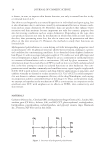
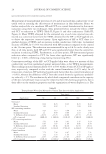
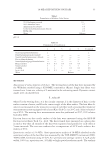
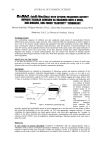
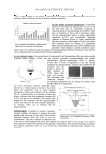
JOURNAL OF COSMETIC SCIENCE 32 Since 18-MEA is covalently bound to the cuticle surface via thioester linkages, it can be easily removed under alkaline conditions, such as hair coloring or permanent waving, after which the hair surface becomes hydrophilic and friction increases (14,15). The ab- sence of 18-MEA is considered one of the reasons for an increase in friction on the surface of the cuticle, and it may have an infl uence on the sensory perception of hair, such as in- ducing a dried-out feeling and being hard to fi nger/comb (10). Cationic surfactants, polymers, or silicone derivatives are commonly used in hair care products for improving damaged hair surfaces by, for example, moisturizing, reducing friction, and making hair easier to fi nger/comb. Silicones in particular are used. The im- proving effects of these chemicals, however, are not permanent. Although it is expected that a damaged hair surface should be repaired if the 18-MEA layer can be repaired, restoration of 18-MEA on the damaged hair surface has not been reported so far. The objective of this study is to develop a method to bind 18-MEA onto a damaged hair surface to provide persistent hydrophobicity and low friction to the dam- aged hair surface. It is well known that it is impossible to regenerate covalently bound 18-MEA on the damaged hair surface. Therefore, two approaches were examined in this study in order to make 18-MEA bind tightly to the alkaline-color-treated weathered hair surface. One was to apply 18-MEA as an acid form and the other was to apply 18-MEA as a salt or complex. EXPERIMENTAL MATERIALS Hair samples. Hair fi bers were kindly provided by a Japanese female aged 30. The fi bers were cut at a distance of approximately 20 cm from the root end on the back of the head. The hair had never been treated with any chemical agents, such as bleaching, coloring, or permanent waving. Preparation of alkaline-color-treated weathered hair. The hair was exposed to alkaline coloring four times, coupled with model weathering 360 times, where model weathering was done 90 times, between every interval of alkaline coloring. This resulted in a process of alkaline coloring combined with daily weathering that simulated a one-year period, assuming the hair was alkaline colored every three months. The model weathering treatment consisted of a series of daily hair care procedures: shampooing, conditioning, drying with a hot drier, and brushing. Hair fi bers were treated with an alkaline-colored lotion (Table I) for 20 min- utes at room temperature at a liquor:fi ber ratio of 1:1. The solution was then rinsed for one minute under running water. A plain shampoo [0.5 ml 15 wt% of sodium polyoxyethyl- ene lauryl ether sulfate (2.5 E.O.) with 2 wt% N,N-bis(2-hydroxyethyl)-dodecanamide solution, adjusted to pH 7 with phosphoric acid] was applied to the wet hair tress (5 g) and was massaged by hand for 30 seconds. The hair tress was then rinsed for 30 seconds under running water. A plain conditioner (0.5 ml formulation No. 6 listed in Table II) was ap- plied to the wet hair tress and distributed manually for 30 seconds, then left on for one minute. The hair tress was rinsed for 30 seconds under running water. The hair tress was towel dried and dried using a hot dryer for three minutes with brushing 20 times. Chemicals. 18-MEA and stearoxypropyldimethylamine (SPDA) were obtained by chemical synthesis (16,17). Other chemicals were commercially available.

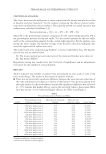
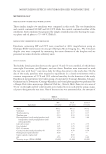
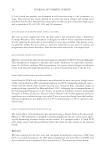
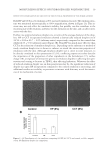
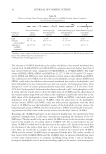
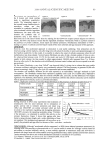
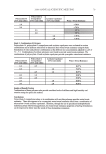
18-MEA DEPOSITION ON HAIR 33 METHODS Measurement of surface properties of the hair. The wetting forces of the hair were measured by the Wilhelmy method using a K100MK2 tensiometer (Kruss). Single hair fi bers were scanned over 3 mm at a velocity of 2 mm/min for the advancing mode. Dynamic contact angles were calculated from F = πdγcosθ where F is the wetting force, π is the circular constant, d is the diameter of hair, γ is the surface tension of water, and θ is the contact angle of the fi ber surface. The hair fi ber di- ameter was measured on the transverse section of each fi ber with a rotating fi ber diameter measurement system equipped with a laser (Kato Tech Co.) at 20°C and a relative humid- ity of 65%. The wetting force measurements were also performed at 20°C, 65% relative humidity (RH). Friction forces on the cuticle surface of the hair were measured using the KEF-SE friction tester (Kato Tech. Co., Ltd). The hair strands were mounted on a glass plate in such a way that all strands of the hair were separated and parallel to each other at 5-mm intervals. The test was conducted at a temperature of 20°C and a relative hu- midity of 65%. Quantitative analysis of 18-MEA. Semi-quantitative analysis of 18-MEA adsorbed on the outermost surface of the hair fi ber was measured by the TOF-SIMS IV instrument (ION- TOF GmbH, Germany) using 25-keV Au+ primary ions (average current, 0.3 pA pulse width, 100.0 ns repetition rate, 10 kHz) at high-spatial-resolution mode. The analysis Table I Formulation of Alkaline-Color Lotion 35% Hydrogen peroxide 10 28% Ammonia water 2.7 Ammonium bicarbonate 5.6 Cethyl trimethylammonium chloride 2.0 EDTA/2Na 0.5 Water Balance pH 9.0 Table II Formulation of Conditioners 1 2 3 4 5 6 (control) Stearoxypropyldimethylamine 2 — — — — 2 Dimethylaminopropylstearamide — 2 — — — — Stearyltrimethylammonium chloride — — 2 — — — Docosyldimethylamine — — — 2 — — Stearoxyhydroxypropyldimethelamine — — — — 2 — Benzyl alcohol 0.5 0.5 0.5 0.5 0.5 0.5 Stearyl alcohol 3 3 3 3 3 3 18-MEA 1 1 1 0.3 0.3 0.6 Lactic Acid 0.3 0.3 — — — 0.3 Water Balance
Purchased for the exclusive use of nofirst nolast (unknown)
From: SCC Media Library & Resource Center (library.scconline.org)