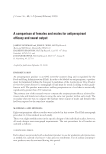
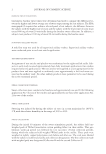
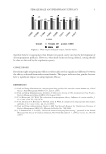
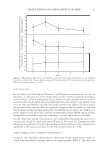
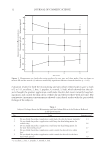
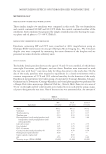
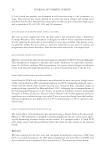
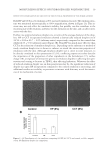
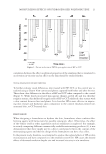
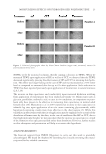
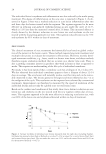
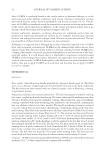
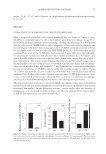
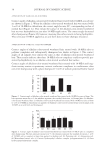
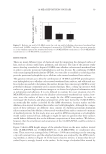
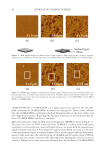
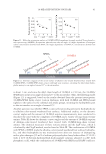
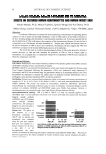
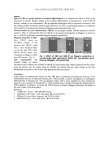
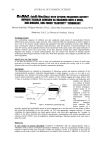
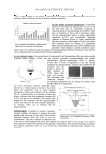
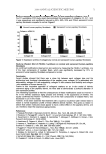
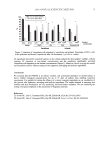
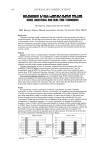
JOURNAL OF COSMETIC SCIENCE 36 APPLICATION OF 18-MEA AS AN ACID FORM Contact angles of alkaline-color-treated weathered hair treated with 18-MEA as acid type are shown in Figure 2. When the alkaline-color-treated weathered hair was treated with 1 wt% of 18-MEA in chloroform, the contact angle became 90°, corresponding to that of normal hair (Figure 2c). That means the surface of the alkaline-color-treated weathered hair recovers hydrophobicity just after 18-MEA application. The contact angle decreased after shampooing (Figure 2d), however, meaning the surface reverts to being hydrophilic. This is because 18-MEA applied as an acid form does not have shampoo resistance. APPLICATION OF 18-MEA AS A SALT OR COMPLEX Contact angles of alkaline-color-treated weathered hair treated with 18-MEA salts or polymer complexes and subsequently shampooed are shown in Figure 3. The contact angles of all samples were almost the same as that of alkaline-color-treated weathered hair. These results indicate that these 18-MEA salts or complexes could not provide per- sistent hydrophobicity to an alkaline-color-treated weathered hair surface. Contact angles of alkaline-color-treated weathered hair treated with 18-MEA and long- chain tertiary amine or quaternary cationic surfactant complexes in conditioners, after one-time shampooing with a plain shampoo [15 wt% of sodium polyoxyethylene lauryl Figure 2. Contact angle of alkaline-color-treated weathered hair treated with 18-MEA as an acid form. The bars represent means for n=5 the whiskers represent the standard deviations. (a) Normal hair. (b) Alkaline- color-treated weathered hair. (c) Alkaline-color-treated weathered hair treated with 18-MEA as an acid form (1 wt% of 18-MEA in chloroform was applied). (d) Alkaline-color-treated weathered hair treated simply with 18-MEA as an acid form and shampooed. Figure 3. Contact angle of alkaline-color-treated weathered hair treated with 18-MEA salts or complexes after shampooing. The bars represent means for n=5 the whiskers represent the standard deviations. 1 wt% of 18-MEA salt or complex in water was applied. (a) Sodium salt. (b) Potassium salt. (c) Ammonium salt. (d) Monoethanol amine salt. (e) Cationic hydroxyethyl cellulose complex (polyquaternium-10). (f) Guar hydroxypropyltrimonium complex.

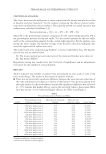
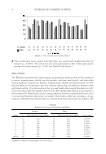
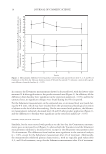
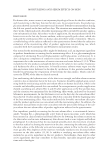
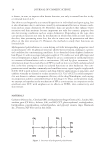
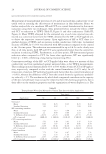
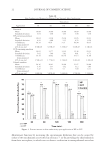
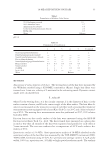
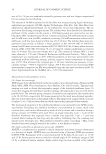
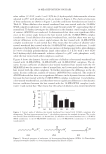
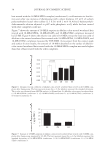
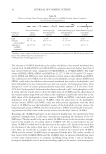
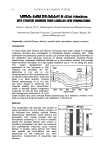
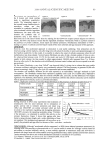
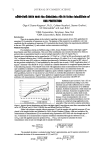
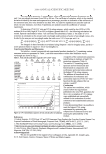
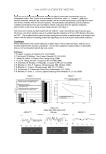
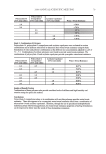
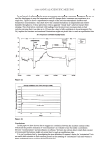
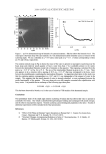
18-MEA DEPOSITION ON HAIR 37 ether sulfate (2.5 E.O.) with 2 wt% N,N-bis (2-hydroxyethyl)-dodecanamide solution adjusted to pH 7 with phosphoric acid], are shown in Figure 4. The chemical structures of these surfactants are shown in Figure 5, and the conditioner formulations are listed in Table II. When alkaline-color-treated weathered hair was treated with the 18-MEA/ SPDA complex (conditioner 1), the contact angle became nearly 90°, approaching that of normal hair. To further investigate the differences in the dynamic contact angles, analysis of variance (ANOVA) was conducted. It demonstrated that there were signifi cant differ- ences in the contact angle between the hair treated with the 18-MEA/SPDA complex (conditioner 1) and alkaline-color-treated weathered hair, and that there were not sig- nifi cant differences in the contact angle between the hair treated with 18-MEA/SPDA complex (conditioner 1) and normal hair. This means that the surface of alkaline-color- treated weathered hair treated with the 18-MEA/SPDA complex (conditioner 1) could maintain its hydrophobicity even after one instance of shampooing with a plain shampoo [15 wt% of sodium polyoxyethylene lauryl ether sulfate (2.5 E.O.) with 2 wt% N,N- bis(2-hydroxyethyl)-dodecanamide solution adjusted to pH7 with phosphoric acid], while the hair treated with other complexes could not. Figures 6 shows the dynamic friction coeffi cient of alkaline-color-treated weathered hair treated with 18-MEA/SPDA, 18-MEA/DAPS, and 18-MEA/STAC complexes. The dy- namic friction coeffi cient of alkaline-color-treated weathered hair treated with the 18- MEA/SPDA was the nearest to that of normal hair, and it was much lower than that of hair treated with the other complexes. To further investigate the differences in the dy- namic friction coeffi cient, analysis of variance (ANOVA) was conducted. The results of ANOVA showed that there was a signifi cant difference in the dynamic friction coeffi cient between the hair treated with the 18-MEA/SPDA complex (conditioner 1) and alkaline- color-treated weathered hair, and that there were no signifi cant differences in the dynamic friction coeffi cient between the hair treated with the 18-MEA/SPDA complex (condi- tioner 1) and normal hair. That means that the surface of alkaline-color-treated weathered Figure 4. Contact angle of alkaline-color-treated weathered hair treated with 18-MEA complexes after shampooing. The bars represent means for n=7 the whiskers represent the standard deviations. The p-value was obtained from ANOVA analysis. (a) Normal hair. (b) Alkaline-color-treated weather hair. (c) 18-MEA/ SPDA (conditioner 1). (d) 18-MEA/DAPS (conditioner 2). (e) 18-MEA/STAC (conditioner 3). (f) Control (conditioner 6). Figure 5. Chemical structures of surfactants. (a) Stearoxypropyldimethylamine (SPDA). (b) Dimethylam- inopropylstearamide (DAPS). (c) Stearyltrimethylammonium chloride (STAC).
Purchased for the exclusive use of nofirst nolast (unknown)
From: SCC Media Library & Resource Center (library.scconline.org)