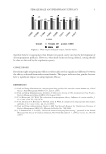
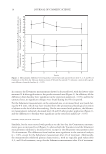
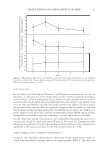
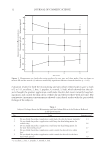
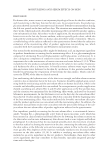
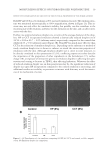
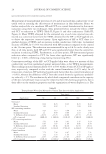
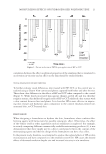
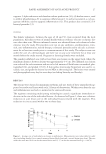
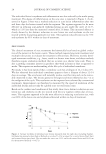
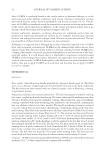
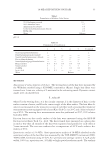
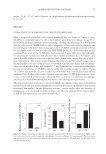
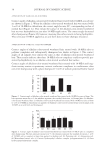
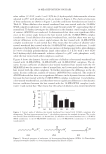
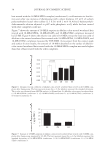
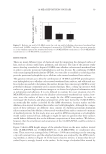
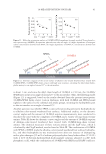
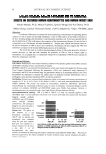
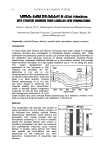
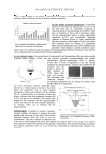
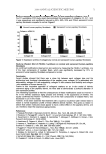
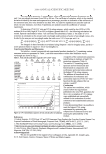
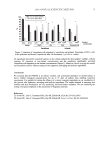
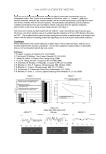
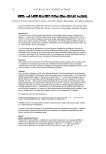
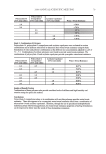
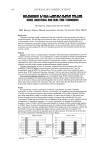
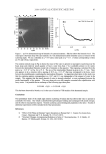
JOURNAL OF COSMETIC SCIENCE 38 hair treated with the 18-MEA/SPDA complex (conditioner 1) could maintain its low fric- tion even after one instance of shampooing with a plain shampoo [15 wt% of sodium polyoxyethylene lauryl ether sulfate (2.5 E.O.) with 2 wt% N,N-bis(2-hydroxyethyl)- dodecanamide solution adjusted to pH7 with phosphoric acid], while the hair treated with other complexes could not. Figure 7 shows the amount of 18-MEA sorption in alkaline-color-treated weathered hair treated with 18-MEA/SPDA, 18-MEA/DAPS, and 18-MEA/STAC complexes measured by LC-MS. Figure 8 shows the relative ion yield of 18-MEA versus the total ion yield of alkaline-color-treated weathered hair treated with 18-MEA/SPDA, 18-MEA/DAPS, and 18-MEA/STAC complexes measured by TOF-SIMS. As we expect from the contact angle and surface friction results, the amount of 18-MEA absorbed on the surface of alkaline- color-treated weathered hair treated with the 18-MEA/SPDA complex was much higher than that of hair treated with the other complexes. Figure 6. Dynamic friction coeffi cient of alkaline-color-treated weathered hair treated with 18-MEA com- plexes after shampooing. The bars represent means for n=5 the whiskers represent the standard deviations. The p-value was obtained from ANOVA analysis. (a) Normal hair. (b) Alkaline-color-treated weathered hair. (c) 18-MEA/SPDA (conditioner 1). (d) 18-MEA/DAPS (conditioner 2). (e) 18-MEA/STAC (conditioner 3). (f) Control (conditioner 6). Figure 7. Amount of 18-MEA sorption of alkaline-color-treated weathered hair treated with 18-MEA com- plexes after shampooing, measured by LC-MS. The bars represent means for n=3 the whiskers represent the standard deviations. (a) 18-MEA/SPDA (conditioner 1). (b) 18-MEA/DAPS (conditioner 2). (c) 18-MEA/ STAC (conditioner 3).

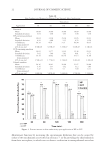
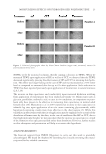
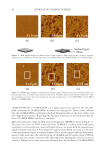
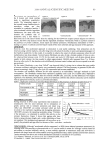
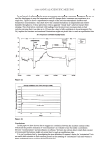
18-MEA DEPOSITION ON HAIR 39 DISCUSSION There are many different types of chemicals used for improving the damaged surface of hair, such as cationic surfactants, polymers, and silicones. The aim of the present study was to develop a method to deposit 18-MEA onto alkaline-color-treated weathered hair in order to provide persistent hydrophobicity and low friction. By combining 18-MEA with stearoxypropyldimethylamine (SPDA), we were able to establish a technology that provides persistent hydrophobicity to alkaline-color-treated weathered hair surfaces. The question remains as to why the combination of 18-MEA and SPDA provides persis- tent hydrophobicity to alkaline-color-treated weathered hair surfaces, and additional sur- face studies are needed to determine the answer. Atomic force microscopy (AFM) is a very powerful technique commonly used in nanotechnology. Here, a sharp tip interacts with surfaces to generate high-resolution images or to obtain local physical information such as indentation and adhesion. It is very diffi cult to examine the exact situation of an 18- MEA/SPDA layer adsorbed onto the alkaline-color-treated weathered hair surface, how- ever, since the surface of hair is too rough for the AFM investigation. In order to investigate the thickness and physical properties of the layer formed by 18-MEA/SPDA, an atomically fl at surface is needed for the AFM observation. A mica surface and the alkaline-color-treated weathered hair surface are both hydrophilic, although the compo- nents of these substance are different: mica consists of a hydrous potassium aluminum silicate mineral and the alkaline color-treated weathered hair surface consists of a mixture of modifi ed proteins. In this study, mica was used for AFM investigation as a hydrophilic model surface instead of hair, although it might be open to question that these surfaces would behave differently due to the different compositions of these surfaces. We believe, however, that the attachment and orientation of the 18-MEA/SPDA could be similar in human hair. Figure 9 shows AFM height images of the adsorbed layers on the mica surfaces treated with 18-MEA/SPDA (a), 18-MEA/DAPS (b), or 18-MEA/STAC (c) conditioner solu- tions. These areas were reimaged after 1000 nm × 1000 nm scratching tests by rastering a tip with constant force, and the adsorbed membrane was analyzed by the AFM scratch- ing method, as shown in Figure 10. If the layer is hard to remove, it means that the ad- sorbed layer is strongly bound to the surface. In the image of adsorbed fi lm treated by Figure 8. Relative ion yield of 18-MEA versus the total ion yield of alkaline-color-treated weathered hair treated with 18-MEA complexes and shampooed, measured by TOF-SIMS. The bars represent means for n=3 the whiskers represent the standard deviations. (a) 18-MEA/SPDA (conditioner 1). (b) 18-MEA/DAPS (conditioner 2). (c) 18-MEA/STAC (conditioner 3).
Purchased for the exclusive use of nofirst nolast (unknown)
From: SCC Media Library & Resource Center (library.scconline.org)