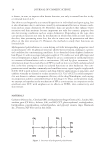
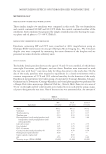
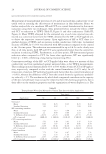
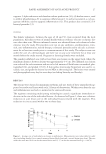
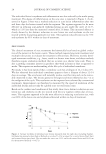
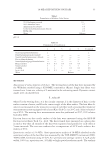
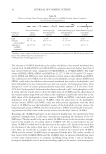
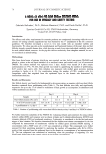
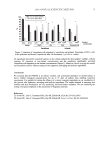
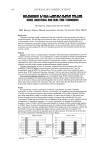
JOURNAL OF COSMETIC SCIENCE 42 The amount of 18-MEA absorbed on the surface of alkaline-color-treated weathered hair treated with 18-MEA/DSDA or18-MEA/SPDA complexes was much higher than that of hair treated with the other complexes (18-MEA/SHDA or 18-MEA/DAPS). The logP values of DSDA, SPDA, SHDA, and DAPS are 11.127, 9.496, 8.393 and 8.255, respec- tively. DSDA and SPDA are more hydrophobic tertiary amines than SHDA and DAPS. The combination of 18-MEA with the relatively hydrophobic tertiary amines (DSDA and SPDA) could make the alkaline-color-treated weathered hair surfaces hydrophobic, and their hydrophobicity was maintained even after one instance of shampooing with a plain shampoo [15 wt% of sodium polyoxyethylene lauryl ether sulfate (2.5 E.O.) with 2 wt% N,N-bis(2-hydroxyethyl)-dodecanamide solution adjusted to pH 7 with phosphoric acid]. It seems that the results relate to how the alkyl chain of 18-MEA and the alkyl chain of the tertiary amines align with each other in the complexes in molecular order, that is, the alkyl chain of the hydrophobic tertiary amines, DSDA and SPDA, could make packed alignments with the alkyl chain of 18-MEA, while the alkyl chain of the hydrophilic tertiary amines, SHDA and DAPS, could not make packed alignments with the alkyl chain of 18-MEA because the hydrophilic moiety of the hydrophilic tertiary amines, the hydroxypropyl group in SHDA and the amide group in DAPS, would hinder closer pack- ing between the alkyl chain of the tertiary amines and the alkyl chain of 18-MEA. Regarding the 18-MEA lipid layer on the untreated healthy hair, two models have been proposed, although there is still some contradiction regarding the thickness of the 18- MEA layer. The fi rst model is the one in which 18-MEA orients to the air interface straight, based on the length of a 20-carbon chain of 18-MEA (18). The second model is the one where 18-MEA is folded back in the direction of the surface (19), based on the result that the thickness of the surface lipid layer is 0.9 nm, as obtained by Ward et al. using XPS (20). Here, we would like to compare the surface model of hair treated with 18-MEA/ SPDA and the natural 18-MEA layer on untreated healthy hair. The surface models of hair treated with 18-MEA/SPDA and the 18-MEA layer on untreated healthy hair seem to have some characteristics in common, including being about 1 nm in thickness, having the hydrophilic area of molecules binding tightly to the surface, and orienting the Table III Effects of a Long-Chain Tertiary Amine Structure in 18-MEA/Tertially Amine Complexes for a Persistent Hydrophobicity Chemical structure Docosyldimethyl- amine (DSDA) Stearoxypropyl- dimethylamine (SPDA) Stearoxyhydroxypropyl- dimethylamine (SHDA) Dimethylaminopropyl- stearamide (DAPS) logP 11.127 9.496 8.393 8.255 Dynamic contact angles* 87.2 ± 2.5° 87.6 ± 3.7° 71.1 ± 4.1° 70.6 ± 5.6° Amount of 18-MEA sorption** 18.9 ± 0.6 18.7 ± 6.0 2.7 ± 0.1 4.0 ± 2.3 *Dynamic contact angels of alkaline-color-treated weathered hair treated with 18-MEA/tertiary amine com- plexes after shampooing were measured (n=7). **Measured by LC/MS (μg/g-hair) (n=3).

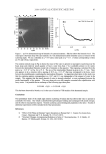
18-MEA DEPOSITION ON HAIR 43 hydrophobic part to the air interface. Therefore, it seems reasonable that 18-MEA/SPDA could provide persistent hydrophobicity to the alkaline-color-treated weathered hair surface. CONCLUSIONS The main conclusions are as follows: 1. The application of a combination of 18-MEA with relatively hydrophobic tertiary amines (DSDA or SPDA) made damaged hair surfaces hydrophobic, and the hydro- phobicity was maintained ever after one instance of shampooing with a plain shampoo [15 wt% of sodium polyoxyethylene lauryl ether sulfate (2.5 E.O.) with 2 wt% N,N- bis(2-hydroxyethyl)-dodecanamide solution adjusted to pH 7 with phosphoric acid]. 2. AFM and ARXPS analysis revealed that 18-MEA/SPDA attaches to a mica surface and forms a layer with high wear resistance, with the alkyl chain (hydrophobic moiety) oriented at an angle of around 25° to the air interface. We believe this attachment and orientation could be similar in human hair. 3. The mechanism of sustainable hydrophobicity of the hair surfaces generated by 18- MEA/SPDA has some characteristics in common with the natural 18-MEA layer formed on untreated healthy hair, including being about 1 nm in thickness, having the hydrophilic area of molecules binding tightly to the surface, and orienting its hydrophobic part to the air interface. ACKNOWLEDGMENTS The authors express their sincere thanks to Mr. Hiroyuki Saijo, Dr. Yoshinori Masukawa, and Mr. Masayuki Okamoto of Kao Corporation for their helpful and fruitful discussions for this study. Our sincere thanks are also due to Dr. Osamu Yamashita of Kao Corpora- tion for this technical support in the logP calculations. REFERENCES (1) D. J. Evans, J. D. Leeder, J. A. Rippon, and D. E. Rivett, Separation and analysis of the surface lipids of the wool fi ber, Proc. 7th Int. Wool Text. Res. Conf., Tokyo, Japan, I, 135–142 (1985). (2) P. W. Wertz and D. T. Dowing, Integral lipids of human hair, Lipids, 23, 878–881 (1988). (3) P. W. Wertz and D. T. Dowing, Integral lipids of mammalian hair, Comp. Biochem. Physiol., 92B, 759– 761 (1989). (4) A. P. Negri, H. J. Cornell, and D. E. Rivett, The nature of covalently bound fatty acids in wool fi bers, Aust. J. Agric. Res., 42, 1285–1292 (1991). (5) A. P. Negri, H. J. Cornell, and D. E. Rivett, Effects of proceeding on the bound and free fatty acid levels in wool, Text. Res. J., 62, 381–387 (1992). (6) S. Naito, M. Ooshika, N. Yorimoto, and Y. Kuroda, The structure of bound lipids of human hair fi bers and its physical properties, Proc. 9th Int. Wool Text. Res. Conf., Biella, Italy, II, 367–374 (1996). (7) D. J. Evans and M. Lanczki, Cleavage of integral surface lipids of wool by aminolysis, Textile Res. J., 67, 435–444 (1997). (8) U. Kalkbrenner, H. Koener, H. Hoecker, and D. E. Rivett, Studies on the composition of the wool cuticle, Proc. 8th Int. Wool Text. Res. Conf., Christuchurch, New Zealand, I, 398–407 (1990). (9) C. M. Carr, I. H. Leaver, and A. E. Hughes, X-ray photoelectron spectroscopic study of the wool fi ber surface, Textile Res. J., 56, 457 (1986).
Purchased for the exclusive use of nofirst nolast (unknown)
From: SCC Media Library & Resource Center (library.scconline.org)