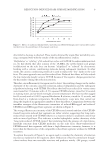
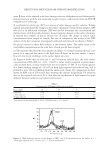
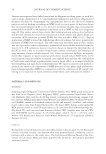
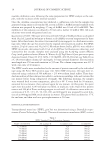
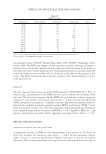
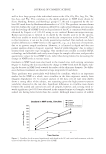
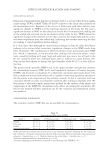
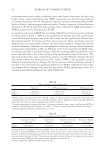
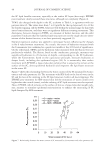
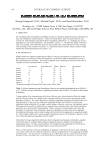
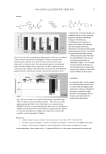
JOURNAL OF COSMETIC SCIENCE 28 pre-perturbation levels within a relatively short time frame is necessary for basic skin health. Some studies hypothesize that NMF components are directly responsible for acid mantle formation (18,19). We found a negative correlation between pH and NMF levels in Study 1, which supports this conclusion. Clearly, a sequence of events has been initiated in the SC by this brief soak, perhaps due to removal of NMF and leading to NMF generation and a rebalancing of SC pH. A signifi cant reduction in MAT due to soaking (Table IV) was found to persist until the four-hour point in Study 1. MAT was not signifi cant 15 minutes post-soak, possibly due to residual moisture from the soak itself. The control site was signifi cantly different from the soaked site both 30 minutes and four hours post-soak. These conclusions were not duplicated in our second study however, the fi rst study took place in September and the second in February. Differences in environmental conditions (average relative humidity in Cincinnati in September is 88% in February, 71%) led to extremely low MAT values for all times in Study 2, possibly leading to diffi culty resolving differences between treat- ments and times due to use of the extremes of the measurement range of the device. The data from both studies were combined for analysis, but the difference between the fi rst and second studies was directional (p=0.07, t-test). TEWL is the generally accepted method of measuring barrier damage (20). In our previous studies involving soaking of the skin (14), consistently non-signifi cant differences in TEWL validated the lack of bar- rier damage due to soaking of the skin. For this reason, TEWL measurements were dis- continued and pH measurements were added (Table III). Table III Effect of Soaking on Skin Surface pH Baseline .25 Hours post-soak 4 Hours post-soak Study 1 5.46 ± 0.13 6.14 ± 0.14* 5.53 ± 0.13* Study 2a 5.68 ± 0.07 6.02 ± 0.08 5.79 ± 0.08 Soaking caused a signifi cant elevation in SC pH in Study 1, which returned to normal after four hours. pH was measured for each site prior to any treatment (baseline), and 15 minutes and four hours after the fresh- water soak. The values are mean ± standard error (Study 1, Study 2). a Covariates appearing in the model for Study 2 (the model contained time, subject, logTotal, and SDT) are evaluated at the following values: logTotal = 3.0 SDT = 7740.0 (no covariates were used in analysis of Study 1). *Indicates signifi cant difference from baseline, p ≤ 0.05. Table IV Moisture Accumulation Test (MAT) Control site 4 hours post-soak Soaked site at baseline Soaked site 0.5 hours post-soak Soaked site 4 hours post-soak Study 1 0.60 ± 0.08 0.65 ± 0.47 0.24 ± 0.09* 0.31 ± 0.09* Soaking produced a signifi cant decrease in MAT values that persisted for the study duration. The rate of moisture accumulation (MAT) (cru/sec) was measured for each site prior to any treatment (baseline), and 15 minutes, 30 minutes and four hours after the fresh-water soak. The data collected 15 minutes after the soak are omitted, as the arms were still wet. The values are reported as estimated slope of the regression line as gener- ated by univariate GLM procedures and are mean ± standard error (Study 1). *Indicates signifi cant difference from control, p ≤ 0.05.

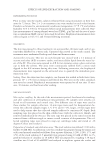
REGENERATION OF NMF 29 These studies confi rm the conclusions previously drawn (14) as to the effects of soaking on the NMF that is to say, a simple ten-minute fresh-water soak can remove signifi cant amounts of the free amino acid components of the stratum corneum. No clear correlation was observed between NMF levels and skin hydration as measured by the MAT, but it appears likely that NMF (as free amino acid levels) relates to SC pH. These results are consistent with studies showing that hydration measurements relate mainly to extremely superfi cial layers of the SC (21), from which the NMF has already been almost completely lost and cannot be replaced without shedding of the uppermost cells. Our results confi rm that SC recovery to its baseline condition after soaking is relatively slow and complex in its kinetics. ADDITIONAL INFORMATION Complete numerical NMF data are available by correspondence. ACKNOWLEDGMENTS This work was supported by an SCC Graduate Fellowship. REFERENCES (1) A. M. Kligman, in Bioengineering of the Skin: Water and the Stratum Corneum, P. Elsner, K.-P. Wilhelm, and H. I. Maibach, Eds. (CRC Press, Boca Raton, FL, 1994), pp. 251–255. (2) D. W. Ramsing and T. Agner, Contact Dermatitis, 34, 258–262 (1996). (3) T. F. Tsai and H. I. Maibach, Contact Dermatitis, 41, 311–314 (1999). (4) R. R. Warner, K. J. Stone, and Y. L. Boissy, J. Invest. Dermatol., 120, 275–284 (2003). (5) A. M. Allen and D. Taplin, Lancet, 1185–1189 (1973). (6) I. Willis, J. Invest. Dermatol., 60, 166–171 (1973). (7) I. M. Stender, C. W. Blichmann, and J. Serup, Clin. Exp. Dermatol., 15, 206–209 (1990). (8) E. Berardesca, G. P. Vignoli, F. Distante, P. Brizzi, and G. Rabbiosi, Contact Dermatitis, 32, 83–87 (1995). (9) W. K. Loke et al., J. Appl. Toxicol., 19, 285–290 (1999). (10) R. Gfatter, P. Hackl, and F. Braun, Dermatology, 195, 258–262 (1997). (11) Y. Hatano et al., J. Invest. Dermatol., 129, 1824–1835 (2009). (12) E. H. Choi et al., J. Invest. Dermatol., 127, 2847–2856 (2007). (13) K. P. Ananthapadmanabhan et al., Int. J. Cosmet. Sci., 25, 103–112 (2003). (14) M. O. Visscher, G. T. Tolia, R. R. Wickett, and S. B. Hoath, J. Cosmet. Sci., 54, 289–300 (2003). (15) R. R. Wickett, G. Tolia, B. Fugitt, M. O. Visscher, and S. B. Hoath, Bioengineering evaluation of the water handling capacities of stratum corneum in vivo, Proc. 2001 IFSCC Intl. Conf., Taipei, Taiwan, 37–46 (2001). (16) G. B. Jemac and J. Serup, Acta Derm. Venereol. (Stockh.), 70, 245–247 (1990). (17) P. Treffel and B. Gabard, Arch. Dermatol. Res., 287, 474–479 (1995). (18) I. R. Scott, C. R. Harding, and J. G. Barrett, Biochim. Biophys. Acta, 719, 110–117 (1982). (19) P. M. Krien and M. Kermici, J. Invest. Dermatol., 115, 414–420 (2000). (20) P. G. M. van der Valk, M. Kucharekova, and R. A. Tupker, in Bioengineering of the Skin: Water and the Stratum Cornuem, J. Fluhr, P. Elsner, E. Berardesca, and H. I. Maiboch, Eds. (CRC Press, Boca Raton, FL, 2004), pp. 97–104. (21) L. Brancaleon, M. P. Bamberg, T. Sakamaki, and N. Kollias, J. Invest. Dermatol., 116, 380–386 (2001).
Purchased for the exclusive use of nofirst nolast (unknown)
From: SCC Media Library & Resource Center (library.scconline.org)