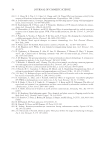
JOURNAL OF COSMETIC SCIENCE 54 (63) C. C. Chien, M. L. Tsai, C. C. Chen, S. J. Chang, and C. H. Tseng, Effects on tyrosinase activity by the extracts of Ganoderma lucidum and related mushrooms, Mycopathologia, 166, 2 (2008). (64) A. D. Katsambas and A. J. Stratigos, Depigmenting and bleaching agents: Coping with hyperpigmen- tation, Clinics Dermatol., 19, 483–488 (2001). (65) D. Roshchupkin, M. Y. Pistov, and A. Y. Patapenlo, Inhibition of UV induced erythema by antioxi- dants, Arch. Dermatol. Res., 266, 91–94 (1979). (66) N. Muizzuddin, A. R. Shakoori, and K. D. Marenus, Effect of antioxidants and free radical scavengers on protection of human skin against UVB, UVA and IR irradiation, Skin Res. Technol., 5, 260–265 (1999). (67) A. Pompella, A. Visvikis, A. Paolicchi, V. De Tata, and A. F. Casini, The changing face of glutathione, a cellular protagonist, Biochem. Pharmacol., 66, 1499–1503 (2003). (68) Z. D. Draelos, Novel topical therapies in cosmetic dermatology, Curr. Prob. Dermatol. (Elsevier, New York, 2000). (69) T. Aburjai and F. M. Natsheh, Plants used in cosmetics, Phytother. Res., 17, 987–1000 (2003). (70) A. M. Kligman and I. Willis, A new formula for depigmenting human skin, Arch. Dermatol., 111, 40 (1975). (71) K. Yoshimura, A. Momosawa, E. Aiba, K. Sato, D. Matsumoto, Y. Mitoma, K. Harii, T. Aoyama, and T. Iga, Clinical trial of bleaching treatment with 10% all trans-retinol gel, Dermatol. Surg., 29, 2155–2160 (2003). (72) A. M. Kligman, The growing importance of topical retinoids in clinical dermatology: A retrospective and prospective analysis, J. Am. Acad. Dermatol., 39, S2–S7 (1998). (73) T. Hokazaki, L. Minwalla, and J. Zhuang, The effect of niacinamide on reducing cutaneous pigmenta- tion and suppression of melanosomal transfer, Br. J. Dermatol., 147, 20–31 (2002). (74) W. Gehring, Nicotinic acid/niacinamide and the skin, J. Cosmet. Dermatol., 88–93 (2004). (75) J. Franchi, M. C. Coutadeur, C. Marteau, M. Mersel, and A. Kupferberg, Depigmenting effects of calcium D-pantetheine-S-sulfonate on human melanocytes, Pigment Cell Res., 13, 165–171 (2000). (76) J. R. Ros, J. N. Rodriguez-Lopes, and F. Garcia-Canovas, Effects of L-ascorbic acid on the monopheno- lase activity of tyrosinase, Biochem. J., 295, 309–312 (1993). (77) K. Kameyama, C. Sakai, and S. Kondoh, Inhibitory effects of magnesium 1-ascorbyl-2-phosphate (VC-PMG) on melanogenesis in vitro and in vivo, J. Am. Acad. Dermatol., 34, 29–33 (1996). (78) K. E. Burke, J. Clive, G. F. Combs Jr., J. Commisso, C. L. Keen, and R. N. Nakamura, The effects of topical and oral vitamin E on pigmentation and skin cancer induced by ultraviolet irradiation in skh: 2 hairless mice, J. Nutr. Cancer, 2887–3897 (2001). (79) K. E. Burke, Interaction of vitamins C and E as better cosmeceuticals, Dermatolog. Ther., 20, 314–321 (2007). (80) G. R. Kantharaj, Skin lightening agents: New chemical and plant extracts—Ongoing search for the Holy Grail, Ind. J. Dermatol. Venerol. Leperol., 76, 3–6 (2010). (81) E. R. Sharlow, C. S. Paine, L. Babiarz, M. Eisinger, S. Shapiro, and M. Seiberg, J. Cell Sci., 113, 3093–3101 (2000). (82) B. M. Hantash, US Patent application 2009/099093 A1. (83) H. Yamada, N. Fuwa, and M. Nomura, US Patent 6,165,982. (84) M. Sieberg, Keratinocyte–melanocyte interactions during melanosome transfer, Pigment Cell Res., 14, 236–242 (2001). (85) J. E. Fulton and S. Porumb, Chemical peels: Their place within the range of resurfacing techniques, Am. J. Clin. Dermatol., 5, 179–187 (2004).

J. Cosmet. Sci., 63, 55–79 ( January/February 2012) 55 Papers Presented at the 2011 Annual Scientifi c Meeting and Technology Showcase (Thursday’s Program) December 8–9, 2011 New York Hilton New York, NY
Purchased for the exclusive use of nofirst nolast (unknown)
From: SCC Media Library & Resource Center (library.scconline.org)