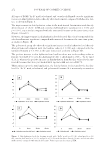
JOURNAL OF COSMETIC SCIENCE 242 as a whitening ingredient. The optimal conditions to retain the best stability were suc- cessfully determined using a RSM regression model. Because changes in pH signifi cantly affected the stability of 3-O-ethyl ascorbic acid, buffers would be required to maintain the optimal pH (5.46). This ascorbic acid derivative is a stable and effective component that could be safely used in most cosmetics. REFERENCES (1) M. Yoshimura, Y. Watanabe, K. Kasai, J. Yamakoshi, and T. Koga, Inhibitory effect of an ellagic acid- rich pomegranate extract on tyrosinase activity and ultraviolet-induced pigmentation, Biosci. Biotech. Bioch., 69, 2368–2373 (2005). (2) P. G. Humbert, M. Haftek, P. Creidi, C. Lapière, B. Nusgens, A. Richard, D. Schmitt, A. Rougier, and H. Zahouani, Topical ascorbic acid on photoaged skin. Clinical, topographical and ultrastructural eval- uation: double-blind study vs. placebo, Exp. Dermatol., 12, 237–244 (2003). (3) J. Y. Lin, M. A. Selim, C. R. Shea, J. M. Grichnik, M. M. Omar, N. A. Monteiro-Riviere, and S. R. Pinnell, UV photoprotection by combination topical antioxidants vitamin C and vitamin E, J. Am. Acad. Dermatol., 48, 866–874 (2003). (4) Y. Nihro, S. Sogawa, T. Sudo, T. Miki, H. Matsumoto, and T. Satoh, 3-O-Alkylascorbic acids as free radical quenchers. II inhibitory effects on some lipid peroxidation models, Chem. Pharm. Bull., 39, 1731–1735 (1991). (5) J. Hsu, 3-O-Ethyl ascorbic aci d: a stable, vitamin C-derived agent for skin whitening, Cosm & Toil, 128, 676 (2013). (6) N. P. J. Stamford, Stability, transdermal penetration, and cutaneous effects of ascorbic acid and its de- rivatives, J. Cosmet. Dermatol., 11, 310–317 (2012). (7) G. C. Yen, P. D. Duh, and H. L . Tsai, Antioxidant and pro-oxidant properties of ascorbic acid and gallic acid, Food Chem., 79, 307–313 (2002). (8) F. Solano, S. Briganti, M. Pic ardo, and G. Ghanem, Hypopigmenting agents: an updated review on biological, chemical and clinical aspects, Pigment Cell Res., 19, 550–571 (2006). (9) C. Olivares and F. Solano, New insights into the active site structure and catalytic mechanism of ty- rosinase and its related proteins, Pigm. Cell Melanoma. R. 22, 750–760 (2009). (10) Y. S. Chen, S. M. Lee, C. C. Lin, C. Y. Liu, M. C. Wu, and W. L. Shi, Kinetic study on the tyrosinase and melanin formation inhibitory activities of carthamus yellow isolated from Carthamus tinctorius L, J. Biosci. Bioeng., 115, 242–245 (2013). (11) L. G. Fenoll, M. J. Penalver, J. N. Rodriguez-Lopez, R. Varon, F. Garcia-Canovas, and J. Tudela, Ty- rosinase kinetics: discrimination between two models to explain the oxidation mechanism of monophe- nol and diphenol substrates, Int. J. Biochem. Cell Biol., 36, 235–246 (2004). (12) W. C. Liao, W. H. Wu, P. C. T sai, H. F. Wang, Y. H. Liu, and C. F. Chan, Kinetics of ergothioneine inhibition of mushroom tyrosinase. Appl. Biochem. Biotechnol., 166, 259–267 (2012). (13) T. Pillaiyar, M. Manickam, an d V. Namasivayam, Skin whitening agents: medicinal chemistry perspec- tive of tyrosinase inhibitors. J. Enzym. Inhib. Med. Chem., 32, 403–425 (2017). (14) N. P. J. Stamford, Stability, transdermal penetration, and cutaneous effects of ascorbic acid and its de- rivatives, J. Cosmet. Dermatol., 11, 310–317 (2012). (15) W. Y. Huang, P. C. Lee, L. K. Huang, L. P. Lu, and W. C. Liao, Stability studies of ascorbic acid 2-glucoside in cosmetic lotion using surface response methodology, Bioorg. Med. Chem. Lett., 23, 1583– 1587 (2013). (16) N. Singh and P. S. Rajini, Fr ee radical scavenging activity of an aqueous extract of potato peel, Food Chem., 85, 611–616 (2004). (17) C. F. Chan, C. Y. Lien, Y. C. Lai, C. L. Huang, and W. C. Liao, Infl uence of purple sweet potato extracts on the UV absorption properties of a cosmetic cream, J. Cosmet. Sci., 61, 333–341 (2010). (18) L. S. Lai, S. T. Chou, and W. W. Chao, Studies on the antioxidative activities of Hsian-tsao (Mesona procumbens Hemsl) leaf gum, J. Agric. Food Chem., 49, 963–968 (2001). (19) Y. L. Lee, M. T. Yen, and J. L. Mau, Antioxidant properties of various extracts from, Hypsizigus mar- moreus, Food Chem., 104, 1–9 (2007). (20) I. Kubo, Q. X. Chen, K. I. Ni hei, J. S. Calderon, and C. L. Cespedes, Tyrosinase inhibition kinetics of anisic acid, Z. Naturforsch. C, 58, 713–718 (2003).

ANTIOXIDANT ABILITY AND STABILITY STUDIES OF 3-O-ETHYL ASCORBIC ACID 243 (21) M. Y. Kang, S. H. Kim, Y. K. Sung, M. Kim, J. C. Kim, and I. Han, Enhanced iontophoretic delivery of magnesium ascorbyl 2-phosphate and sodium fl uorescein to hairless and hairy mouse skin, J. Cosmet. Dermatol. Sci. Appl., 2, 283–287 (2012). (22) P. Nandhasri and S. Suksangpleng, Application of high performance liquid chromatography to determi- nation of seven water-soluble vitamins in white sauce, J. Sci. Soc. Thail., 12, 111–118 (1986). (23) G. Battaini, E. Monzani, L. Casella, L. Santagostini, and R. Pagliarin, Inhibition of the catecholase ac- tivity of biomimetic dinuclear copper omplexes by kojic acid, J. Biol. Inorg. Chem., 5, 262–268 (2000). (24) G. Nohynek, E. Antignac, T. Re, and H. Toutain, Safety assessment of personal care products/cosmetics and their ingredients, Toxicol. Appl. Pharmacol., 243, 239–259 (2010). (25) C. L. Burnett, W. F. Bergfeld, D. V. Belsito, R. A. Hill, C. D. Klaassen, D. C. Liebler, J. G. Marks, Jr., R. C. Shank, T. J. Slaga, P. W. Snyder, and F. A. Andersen, Final report of the safety assessment of kojic acid as used in cosmetics, Int. J. Toxicol., 29, 244S–273S (2010).
Purchased for the exclusive use of nofirst nolast (unknown)
From: SCC Media Library & Resource Center (library.scconline.org)