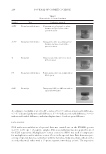
J. Cosmet. Sci., 69, 245–255 ( July/August 2018) 245 The Infl uence of Packaging on Cosmetic Emulsion during Storage Assessed by FT-NIR Spectroscopy and Color Measurements ANNA GLISZCZYŃSKA-ŚWIGLO, PATRYCJA NOWAK, RENATA DOBRUCKA, and KATARZYNA PAWLAK-LEMAŃSKA, Faculty of Commodity Science, Poznań University of Economics and Business, al. Niepodleglości 10, Poznań 61-875, Poland Accepted for publication June 10, 2018. Synopsis FT-NIR spectroscopy and color measurements were applied to evaluate the infl uence of packaging on cosmetic cream stored at room and refrigerated conditions. Commercial cosmetic cream was stored for 2 and 4 mo in fi ve containers intended for cosmetics: aluminum jar with polypropylene thermos (Al/PP), acrylic jar with polypropylene thermos (Ac/PP), glass (G) jar, polypropylene (PP) jar, and styrene acrylonitrile (SAN) jars. Principal component analysis (PCA) of the FT-NIR spectra showed the effect of time on tested samples stored in all applied packagings separate groups were formed by fresh samples and samples stored for 2 and 4 mo. The changes in samples stored in the cold for 2 mo were similar for all applied packagings as compared with fresh samples, although samples stored in SAN jars formed a separate group. After 4 mo, a separate group was formed by samples stored in G jars. For samples stored at room temperature, the infl uence of packaging material on cosmetic emulsion was clearly visible four separate groups (Al/PP with PP, Ac/PP, G, and SAN) were created by samples stored for 4 mo. Using partial least squares (PLS1) regression, it was found that the FT-NIR spectra of tested samples correlated with their lightness L*, a* parameter, and total color difference ΔE*ab. FT-NIR spectroscopy is a rapid technique which could be useful to make the best choice of packaging for cosmetics protecting the original quality of products during long-term storage. INTRODUCTION Cosmetic products are commodities commonly used by people for skin maintenance, beauty, and treatment of skin diseases in their daily life (1). The use of appropriate pack- aging system is not only intended for passive protection against humidity, light, and oxygen, but also to improve the overall quality characteristics of their contents, e.g., to ex- tend the shelf-life and enhance the safety or protect sensory properties of products (2–4). Because of the dynamics of the changes on cosmetic market, development of new prod- ucts should be fast, and accordingly, stability prediction is usually performed by acceler- ated storage conditions (5). Temperature variation is the main parameter used to induce Address all correspondence to anna.gliszczynska-swiglo@ue.poznan.pl.
Purchased for the exclusive use of nofirst nolast (unknown)
From: SCC Media Library & Resource Center (library.scconline.org)