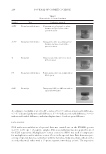
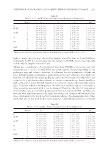
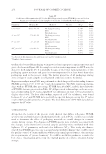
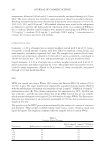
JOURNAL OF COSMETIC SCIENCE 270 Sea products use the power of Dead Sea minerals, specifi cally magnesium ion, which has been shown to play a key role in the anti-infl ammatory effect of Dead Sea water in both in vitro and in vivo studies (4,5). Dead Sea mud (DSM) masks are also popular at spa body sessions at Dead Sea spa centers and are a well-known component of a number of facial and body mask products manufac- tured by the cosmetic industry in Jordan. Dead Sea black mud is a blend of Dead Sea minerals and organic matters naturally formed over thousands of years on the bed of the Dead Sea (6). This unique product is rich in various minerals including magnesium, potassium, calcium, and chloride. DSM, whether from the Dead Sea shore or as an over-the-shelf product, is applied directly on skin for a designated period of time. To our knowledge, there is no published work regarding the effect of DSM on skin barrier properties. This fact, coupled with the wide- spread use of DMS, prompted us to initiate this study to evaluate, noninvasively, the short-term effects of various types of DMS on various skin properties (barrier integrity, hydration, pH, and erythema and melanin levels). MATERIALS AND METHODS MATERIALS Native DSM was generously provided by Numeira Mixed Salts & Mud Company Ltd. (Amman, Jordan) it was treated at our laboratory by removing stones. Three types of DMS were used in the study: 1. “As Is” mud was prepared by mixing 15 kg of the native mud (after removing stones) with 1,500 ml of distilled water to improve its spreadability. The mud was then auto- claved for 15 min at 121°C. 2 . Salted DSM was prepared by mixing 30 kg of the native mud (after removing stones) with 2,000 ml of Dead Sea water, followed by autoclaving the mud for 15 min at 121°C. 3. Over-the-shelf mud was bought from a well-known shopping mall in Jordan. The list of its ingredients is presented in Table I. Natrosol® 250 HHX (hydroxyethyl cellulose) was provided by Ashland, Inc. (Covington, KY) and used to prepare a gel at 2% w/w concentration in distilled water to serve as control in this study to account for the occlusion effect of the mud on skin barrier properties. STUDY DESIGN Healthy female adult volunteers (n = 75), aged 18–45 years (22.1 ± 5.8 years), participated in this short-term study after giving their informed consent. The study was approved by the Institutional Review Board (IRB) of the Hashemite University. The participants were divided randomly into three groups of 20 subjects and one group of 15 subjects. Each group (n = 20) Table I In gredient List for Over-the-Shelf Mud DSM, water, aluminum silicate, glycerin, monopropylene glycol, ethanol, PEG-40 hydrogenated castor oil, preservatives, and fragrance.

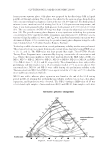
CUTANEOUS EFFECTS OF DEAD SEA MUD 271 was used to test one type of the aforementioned DSM types and the fourth group (n = 15) was used as a control group to test the occlusion effect of the prepared Natrosol® gel. The exclusion criteria were as follows: subjects with dermatitis, erythema, psoriasis, skin cracking, or any lesions on their forearms subjects receiving any local or systemic treat- ments and subjects who were pregnant or lactating. Before baseline measurements, sub- jects were asked to refrain from using moisturizers on their volar forearms 1 week before the study and to wash their forearms during this week in a prescribed manner twice daily (morning and evening) with a regular soap supplied by the researcher to start with dry skin on both forearms. On the measurement day, subjects were asked to relax for 20 min in a controlled ambient temperature (22°C ± 2°C) and controlled relative humidity (45% ± 5%). Three circles were marked on the ventral aspect of each forearm. Circles on both forearms were used to measure the following skin barrier properties using the Multi Probe Adapter System from CK Electronics GmbH (Koln, Germany): (a) Skin hydration level using the Corneometer® CM 825 (CK Electronics GmbH) (b) Skin m elanin and erythema levels using the Mexameter® MX 18 (CK Electronics GmbH) (c) Transep idermal water loss (TEWL) as an indicator of barrier integrity using the Tewameter® TM 300 (CK Electronics GmbH) (d) Skin pH using the Skin pH-Meter® PH 905 (CK Electronics GmbH) Each volunteer served as her own control, and mud treated and untreated forearms were randomized among subjects in each group. On the study day, following the washout period, baseline values of the aforementioned skin barrier properties were measured. Then, 10 ml of the mud was applied using a feeding syringe and spread gently using a tongue depressor on the ventral aspect of the assigned forearm and left for 30 min. The amount of DSM applied in the study was found to be satisfactory to achieve good distribu- tion and a thick layer over the whole ventral aspect of the forearm on trials by the authors during study protocol development. The mud was then removed by gently washing the forearm with warm water and drying by gentle tapping with medical gauze. The same washing procedure and tapping with gauze were carried out for the untreated control forearm. The skin barrier properties on the predeter- mined circular areas were then measured directly, 30 min, and 60 min after mud removal. DATA ANALYSIS The measurements made for each parameter in each group were summarized as mean ± SEM. The data were subjected to statistical analysis in SigmaPlot version 11.0 (Systat Software GmbH, Erkrath, Germany) using repeated measures ANOVA to determine if there were differences among mud-treated versus untreated forearms then, multiple comparison procedures were used to isolate these differences. Values of p 0.05 were considered sta- tistically signifi cant. RESULTS AND DISCUSSION All volunteers reported that they had refrained from using topical products on both fore- arms 1 week before baseline measurements and washed them twice daily with the given regular soap according to the instructions.
Purchased for the exclusive use of nofirst nolast (unknown)
From: SCC Media Library & Resource Center (library.scconline.org)