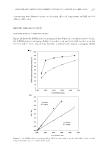
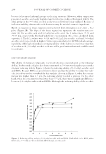
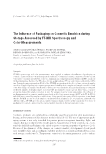
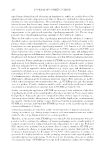
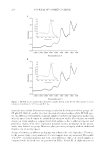
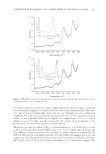
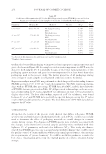
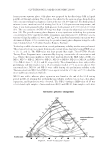
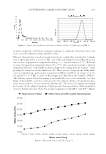
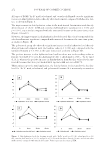
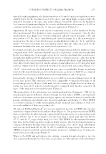
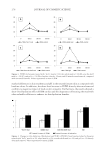
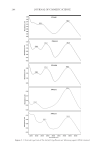
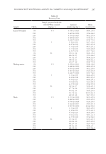
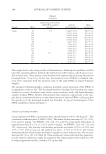
JOURNAL OF COSMETIC SCIENCE 272 Figure 1. Skin hydration levels for forearms tre ated with “As Is” mud (n = 20) (A), salted mud (n = 20) (B), over-the-shelf mud (n = 20) (C), and gel (n = 15) (D) at the baseline, directly, 30 min, and 60 min after mud removal, compared with untreated forearms. Values represented as mean ± SEM. All types of DSM (“As Is” mud, salted mud, and over-the-shelf mud) caused a signifi cant increase in skin hydration values directly after mud removal compared with baseline val- ues, as shown in Figure 1. The improvements in skin hydration values in the mud-treated forearm measured directly after removal of “As Is” DSM and over-the-shelf mud were signifi cant (p = 0.002 and p 0.001, respectively) compared with the untreated forearms at the same time points (Figure 1A and C). However, the improvement in skin hydration level observed directly after removal of the salted mud was not signifi cant compared with untreated forearms at the same time point, as shown in Figure 1B. The gel-treated group also showed a signifi cant increase in skin hydration level directly after gel removal compared with the baseline value (p 0.001) and compared with the untreated forearm (p 0.001) at the same time point, as shown in Figure 1D. The positive increase in skin hydration from baseline values was in descending orders as follows: Gel (Δ18.45) over-the-shelf mud (16.41) salted mud (11.88) ~ “As Is” mud (11.11), whereas the positive increase in skin hydration from baseline values for the un- treated forearms that were just washed with tap water did not exceed Δ8.71. Thirty minutes post the mud application, the skin hydration level retuned to the baseline level for “As Is” mud, salted mud, and gel-treated forearms. It is noteworthy to mention

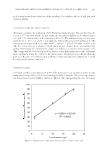
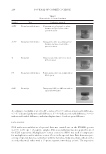
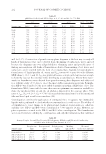
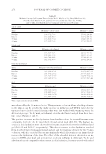
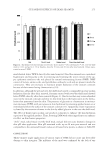
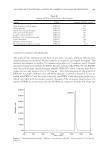
CUTANEOUS EFFECTS OF DEAD SEA MUD 273 that although insignifi cant, the hydration values at 30 and 60 min post-application were slightly lower for the forearms treated with “As Is” and salted muds compared with the untreated forearms at the same time points (Figure 1A and B). However, the hydration level remained signifi cantly higher for over-the-shelf mud–treated forearms (p 0.001) as compared with the untreated one 30 min post-application (Figure 1C). Apparently, all types of the mud caused a temporary increase in skin hydration shortly after mud removal. Skin hydration values measured by the Corneometer® directly after mud removal were highest for over-the-shelf mud and gel-treated forearms (~44) and were lowest (~37) for “As Is” and salted mud–treated forearms. It is also noteworthy to mention that the direct short-lived increase in skin hydration value for “As Is” and salted mud (~37)–treated forearms was just slightly higher than the values measured for the untreated forearms that were just washed with tap water (~33). It is highly probable that the Natrosol® gel caused higher measured skin hydration value compared with “As Is” and salted mud because of its high water content that was absorbed by the skin during the 30-min application. As for over-the-shelf mud that caused a simi- lar high skin hydration level, apparently the presence of humectant (i.e., glycerin) in the mud infl uenced its short-term hydration effect as shown by both the high skin hydration value directly after mud removal and the enhanced skin hydration level 30 min after mud removal compared with the untreated forearm at the mentioned time points (Figure 1C). “As Is” salted and over-the-shelf mud did not cause a considerable change in melanin levels for the treated forearms at all tested time points, as shown in Table II, as compared with both baseline values and the untreated forearm values at each time points. Interestingly, all types of DSM showed no noticeable increase in erythema levels at all tested time points. The erythema levels were comparable to untreated forearms at all tested time points for all types of the mud. On the contrary, a slight decrease in skin ery- thema was noticed 60 min after mud removal as compared with baseline values for all types of the mud and gel-treated forearms (Figure 2). The permeability of the skin barrier was determined with the Tewameter® TM 300 by measuring the passive diffusion of water through the skin surface. TEWL is an important indicator of stratum corneum functioning as a protective barrier for water loss and for the passage of allergens and irritants into the lower epidermis and dermis (7). Thus, TEWL is a useful technique to study various physical and chemical skin irritants as well as to assess the mildness of skin care products (8). All types of DSM and Natrosol® gel caused a signifi cant increase in TEWL directly after removal as compared with their baseline values (Figure 3). The positive increase in TEWL that occurred directly after removal compared with baseline values in a descending order was as follows: Gel “As Is” mud over-the-shelf mud salted mud (Δ15.18, Δ8.08, Δ7.25, and Δ6.37, respectively) with p 0.001. The TEWL for the untreated forearms that were washed with tap water showed a slight increase directly after mud removal as compared with their baseline values for all tested groups: Gel, “As Is” mud, salted mud, and over-the-shelf mud (Δ2.16, Δ3.58, Δ2.99, and Δ1.83, respectively). The increase in TEWL in both treated and untreated forearms returned to normal values 30 min post- removal for all tested groups (Figure 3). Water in the DSM and gel hydrates the stratum corneum through absorption into the skin as previously known for other skin care products (9). This amount of absorbed water
Purchased for the exclusive use of nofirst nolast (unknown)
From: SCC Media Library & Resource Center (library.scconline.org)