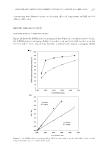
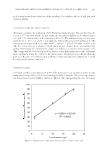
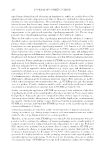
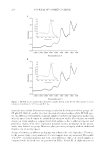
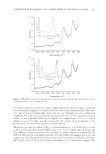
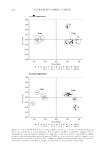
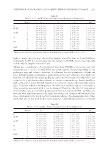
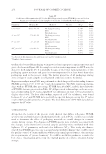
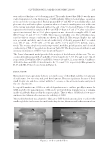
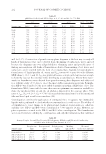
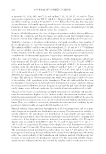
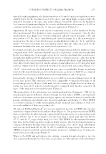
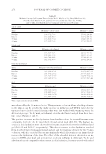
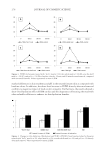
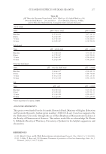
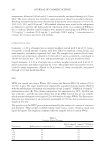
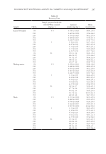
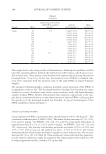
JOURNAL OF COSMETIC SCIENCE 274 was enhanced by the 30-min occlusion. Thirty-minute occlusion allows a buildup of water in the skin as can be seen by the slight increase in hydration and TEWL values for the untreated un-occluded control forearms that were just washed with warm tap water for all treated groups: “As Is” mud, salted mud, over-the-shelf mud, and gel from their base- line values (Figures 1 and 3). The positive increases in skin hydration from baseline values for treated forearms were comparable for both “As Is” mud (Δ11.11) and salted mud (Δ11.88). The highest in- creases in skin hydration were observed for forearms treated with over-the-shelf mud and gel (Δ16.41 and Δ18.45, respectively). This direct increase in skin hydration resulted from absorbed water from applied mud and gel and the trapping of water by the 30-min occlusion, which is considered as one mechanism by which moisturizers can immediately increase the hydration of the skin. The effect of the absorbed water is observed as an in- crease in TEWL after mud and gel removal, as shown in Figure 4. Although “As Is” and salted mud caused comparable enhancement in skin hydration, forearms treated with salted Table II Melanin Content for Forearms Treated with “As Is” Mud (n = 20), Salted Mud (n = 20), Over-the-Shelf Mud (n = 20), and Gel (n = 15), at Baseline, Directly, 30 Min, and 60 Min after Mud Removal, Compared with Untreated Forearms “As Is” mud Time Melanin—“As Is” mud Melanin—control Baseline 168.35 ± 7.66 170.31 ± 8.48 Direct 172.21 ± 8.10 172.62 ± 8.41 30 min 176.81 ± 7.64 174.43 ± 8.32 60 min 179.21 ± 7.60 175.09 ± 8.09 Salted mud Time Melanin—salted mud Melanin—control Baseline 173.91 ± 9.25 180.51 ± 9.70 Direct 178.48 ± 9.49 182.99 ± 9.67 30 min 180.74 ± 8.82 179.41 ± 9.11 60 min 182.63 ± 8.59 183.01 ± 8.82 Over-the-shelf mud Time Melanin—over-the-shelf mud Melanin—control Baseline 202.39 ± 25.01 203.59 ± 25.64 Direct 201.49 ± 25.52 205.76 ± 24.79 30 min 205.91 ± 25.39 204.98 ± 24.71 60 min 207.34 ± 25.50 207.25 ± 25.44 Gel Time Melanin—gel Melanin—control Baseline 188.02 ± 16.74 184.12 ± 15.19 Direct 178.88 ± 16.67 187.65 ± 14.70 30 min 191.88 ± 16.74 186.83 ± 14.89 60 min 192.38 ± 16.91 187.83 ± 14.82 Values represented as mean ± SEM.

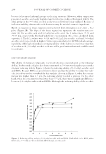
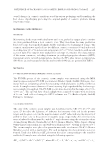
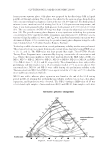
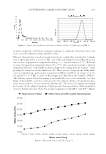
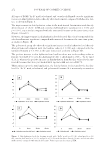
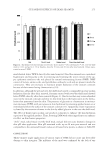
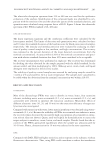
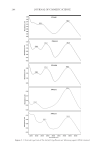
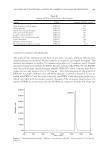
CUTANEOUS EFFECTS OF DEAD SEA MUD 275 mud showed lower TEWL directly after mud removal. Dead Sea minerals are considered hygroscopic and may play a role in attracting and retaining the water content of the up- per epidermis similar to the role played by natural moisturizing factors (NMF). NMF consist of lactate, amino acids, and pyrollidone carboxylic acid and are present inside the corneocytes. They are necessary to maintain proper hydration of the stratum corneum because of their water-loving characteristics (10). In addition, although the gel and over-the-shelf mud caused a comparable increase in skin hydration directly after their removal, forearms treated with over-the-shelf mud showed lower TEWL directly after their removal (Figure 4). One factor that may retain absorbed water in the stratum corneum and slow its loss from skin is the humectants in the formu- lation that penetrated into the skin. The presence of glycerin as a humectant in moistur- izers decreases TEWL with an increase in skin hydration by retaining applied water on or immediately below the surface of the stratum corneum (11). Apparently, water evaporation is slowed by the retention of water in the skin by added glycerin in the over-the-shelf mud. The effect of humectants on skin care products is known to enhance the skin hydration capacity of the applied product. Thus, boosting DSM with other ingredients can enhance its effect on skin barrier properties. “As Is” mud, salted mud, over-the-shelf mud, and gel did not cause dramatic changes in skin pH after application. Skin pH remained acidic up to 60 min post-removal and was comparable to the untreated forearm values at all tested time points, as shown in Table III. CONCLUSION Thirty-minute single application of various types of DSM did not cause any detectable damage to skin integrity. The mildness of the mud was confi rmed by the lack of any Figure 2. Erythema levels for forearms treated with “As Is” mud (n = 20), salted mud (n = 20), over-the-shelf mud (n = 20), and gel (n = 15) at baseline, directly, 30 min, and 60 min after mud removal. Values repre- sented as mean ± SEM.
Purchased for the exclusive use of nofirst nolast (unknown)
From: SCC Media Library & Resource Center (library.scconline.org)