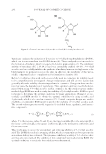
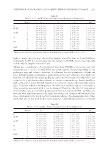
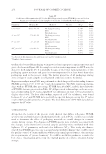
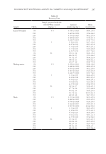
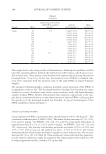
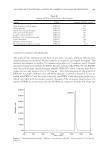
JOURNAL OF COSMETIC SCIENCE 280 in detergent becomes more and more extensive. Its function cannot be replaced by any other additives. FWAs has been listed in the industry standard of detergent raw materials in some countries (5), and almost 40% of the world’s FWAs production is used in the deter- gent industry (6). Because there is no requirement to label FWAs in detergent labels according to the regulation, very few manufacturers state that their products contain FWAs. Compared with detergents, the application of FWAs in cosmetics is less, but it has been applied in some brands of products, e.g., Clinique (Estee Lauder, New York, NY), Estee Lauder (Estee Lauder, New York, NY), Essence Studio Nails (Irvine, CA). FWA351 and FWA184 are included in International Nomenclature Cosmetic Ingredients. FWAs may make the appearance of cosmetics more white and crystal clear. As a fashion product, pleasant color is an important factor to attract consumers to buy. The possible toxicity of FWAs is not currently settled, with some studies suggesting that FWAs pose no risk to human, whereas other fi ndings indicate potential for allergic and even carcinogenic effects. According to Shu’s report (4), toxic effects of FWAs have not yet been observed and the toxicological information available on specifi c types of FWAs is rather limited, which indicates that contact with FWAs or even FWAs that migrate into food from plastic packaging containers does not represent a risk to human health. However, in other reports, FWAs have been considered to be a public health concern because of their poten- tially allergic and carcinogenic effect to humans, and the abuse of FWAs has aroused special concern recently (7,8). The Environmental Working Group indicated that FWAs could cause skin allergies or pruritus in sunlight, and the light-sensitive consumers should avoid contact with such substances (9). Moreover, FWAs are diffi cult to be degraded in terms of their special chemical stability (10), whose overuse could contribute to environmental pol- lution and further threaten human health as a result of their accumulation in the body. Because information on the contents of FWAs in most cosmetics and detergent is unclear and unavailable, toxicologists cannot evaluate the possible health effects of FWAs in these products. The increasing public health concern regarding the usage of FWAs in various consumer products has stimulated our interest to investigate the content and distribution of FWAs in cosmetics and detergent, especially the most widely used distyryl-type FWAs. In the past, determination of FWAs was performed by whiteness method (11), thin-layer chromatography (12), and direct spectrophotometric method (13). These approaches lack specifi city to individual FWAs and are affected by various interfering compounds. Later, quan- titation of FWAs by high-performance liquid chromatography (HPLC) has been applied to food and environmental samples (8,14–17). Recent years, combining HPLC and tandem mass spectrometry (tandem MS) with ionspray or electrospray ionization has been reported as a powerful method for determining FWAs in some materials (10,18,19). The current applica- tions of these methods include paper, water, textile, food, etc. However, to our knowledge, analytical methods have been rarely reported for the determination of FWAs in cosmetics and detergent. Because quantitation of individual FWA concentration is critical in investigating the risk assessment of FWAs because of their different toxic effects, it was necessary to establish a specialized method for the FWAs in cosmetics and liquid detergent because of the varying sample composition and ensure quality control during manufacture and market supervision. In the present study, a rapid and simple HPLC protocol is reported for the determination of fi ve distyryl-type FWAs (FWA85, FWA210, FWA220, FWA351, and FWA353 name and structure are shown in Figure 1) in cosmetics and detergent. Diode array detector (DAD) in tandem with fl uorescence detector (FLD) is employed to improve the confi rmatory ability

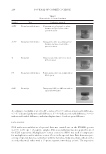
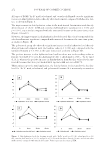
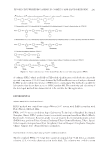
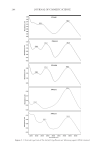
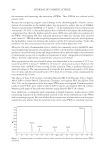
FLUORESCENT WHITENING AGENTS IN COSMETICS AND LIQUID DETERGENT 281 of ordinary HPLC which use DAD or FLD solely. Qualifi cation with both the ultraviolet spectral comparison (210–400 nm) obtained by DAD and fl uorescence of analytes ob tained by FLD would confi rm the presence of FWAs more convincingly. The method is suitable for laboratories that do not have access to HPLC-tandem MS. The sensitivity and selectivity of the developed method was demonstrated to be suitable for this application. EXPERIMENTAL INSTRUMENTATION AND REAGENTS HPLC method was carried out using a Waters 2695 system with DAD in tandem with FLD (Waters, Milford, MA). FWAs ( 95%) was received from Anpel Laboratory Technologies (Shanghai) Inc (Anpel, Shanghai, China). HPLC-grade solvents (acetonitrile) were purchased from Merck (Merck, Darmstadt, Germany). Reagent-grade ion-pair reagent di-n-hexylammonium acetate (DHAA) was got from Tokyo Chemical Industry (Tokyo Chemical Industry, Tokyo, Japan). Other reagents were purchased from Sinopharm Chemical Reagent (Sinopharm, Shanghai, China). Samples were obtained from local markets. PREPARATION OF STANDARDS AND QUALITY CONTROL SAMPLES The fi ve standard FWAs (50.0 mg) were separately suspended in 90 ml water–acetonitrile solution (2:1, v/v) with ultrasonication in the dark. The solution was cooled to room Figure 1 . Name and structure of fi ve distyryl-type fl uorescent whitening agents (FWA).
Purchased for the exclusive use of nofirst nolast (unknown)
From: SCC Media Library & Resource Center (library.scconline.org)