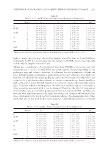
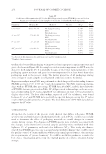
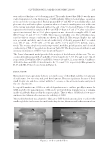
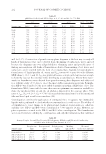
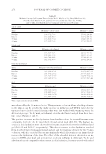
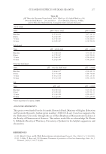
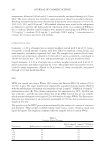
JOURNAL OF COSMETIC SCIENCE 282 temperature, diluted to 100 ml with 2:1 water–acetonitrile, and passed through a 0.22-μm fi lter. The stock solution was mixed by equal amount of these fi ve standard solutions. Working standard solutions were obtained by diluting the stock solution to 0.10, 0.50, 2.00, 10.0, 50.0, and 100 μg·ml-1. All standard solutions were stored in the refrigerator in darkness to prevent the light-induced conversion of the trans isomers of FWAs to the cis isomers. Quality control samples were prepared containing each FWAs at low (5.0 mg·kg-1), medium (50.0 mg·kg-1), and high (500.0 mg·kg-1) concentrations to evaluate the accuracy, precision, and stability. EXTRACTION OF FWAS Cosmetics: a 1.00 g of sample was accurately weighed, treated with 8 ml of 2:1 water– acetonitrile (a small amount of quartz sand were added to emulsion, cream, lotion, and mask samples), and shaken vigorously for 1 min. The samples were sonicated for 10 min, cooled to room temperature, diluted to 10 ml with 2:1 water–acetonitrile, centrifuged at 10,000 revolutions·min-1 for 5 min, and passed through a 0.22-μm membrane fi lter. Liquid detergent: A 0.20 g of sample was accurately weighed, treated with 8 ml of 2:1 water–acetonitrile, and shaken vigorously for 1 min. The samples were sonicated for 10 min, cooled to room temperature, diluted to 10 ml with 2:1 water–acetonitrile, and passed through a 0.22 μm membrane fi lter. HPLC HPLC was carried out using a Waters 2695 system and Shiseido MG C18 column (250 × 4.6 mm, 5 μm). The target analytes were separated by a gradient elution program (Table I) with the mobile phase of a mixture of acetonitrile (A) and 2 mmol·l-1 DHAA in 10 mmol·l-1 ammonium acetate (B). The column temperature was maintained at 40°C, the fl ow rate was 1 ml·min-1, and the injection volume was 10 μl. DAD detector was set at a compro- mised optimal absorption wavelength of 210–400 nm for all target FWAs. The fl uorescence detection was monitored at an excitation wavelength of 350 nm and an emission wave- length of 432 nm. The specifi city of the HPLC protocol was evaluated by the analysis of a variety of cosmetics and detergent. These samples included makeup water, lotion, cream, emulsion, mask, and liquid detergent. The suppliers confi rmed that the samples did not contain FWAs. Table I Gradien t Elution Program Time (min) Mobile phase A: acetonitrile (%) Mobile phase B: 2 mmol·l-1 DHAA in 10 mmol·l-1 ammonium acetate (%) 0.0 35 65 12.0 35 65 24.0 45 55 25.0 35 65 35.0 35 65

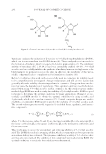
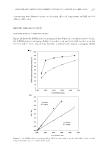
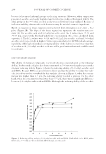
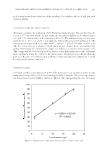
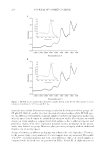
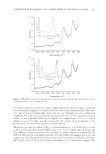
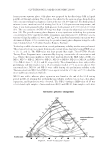
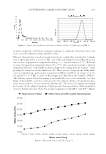
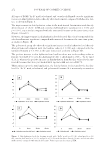
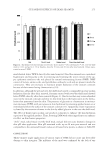
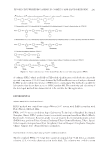
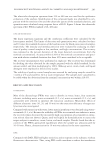
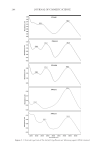
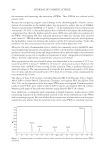
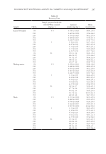
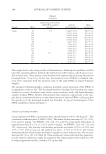
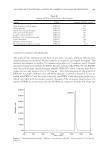
FLUORESCENT WHITENING AGENTS IN COSMETICS AND LIQUID DETERGENT 283 The ultraviolet absorption spectrum from 210 to 400 nm was used for the qualitative evaluation of the analytes. Qualifi cation of the compound peaks was identifi ed by com- parison with the retention time and the ultraviolet spectra of the standard solutions, and quantities were calculated using response factor of FLD. Figure 2 shows the ultraviolet spectrum of fi ve FWAs standard (210–400 nm). HPLC METHODOLOGY The linear regression equations and the correlation coeffi cients were calculated by the least squares method. The limits of detection and quantization were calculated as three and 10 times the standard deviation of the baseline noise for blank extractions of samples, respectively. The intraday and interday precision were evaluated by analyzing six repli- cates of quality control samples at low, medium, and high concentrations. The accuracy was evaluated as the percent deviation of the mean detected concentrations from the nominal concentrations. Accuracy within ±10% of the nominal concentration and preci- sion with relative standard deviation less than 10% were considered to be acceptable. The recovery measurements were performed in triplicate. The recovery was determined by dividing the value obtained for the sample prepared with the added standard, by the amount added, and then multiplying by 100%. Makeup water, cream, mask, and liquid detergent were employed in the recovery studies. The stability of quality control samples was assessed by analyzing samples stored for 1 week at 4°C and stored for 24 h at room temperature. The samples were considered to be stable when the deviation from the nominal concentration was within ±10.0%. RESULTS AND DISCUSSION EXTRACTION Most of the distyryl-type FWAs were easy to dissolve in water hence, four extraction solvents, including water, water–acetonitrile (2:1, v/v), water–acetonitrile (1:2, v/v), and acetonitrile were selected to optimize the extraction conditions. Meanwhile, effects of different ultrasonic time (10, 20, and 30 min) on the extraction effi ciency of target ana- lytes were also investigated. Compared with extraction with water, lower matrix interference was obtained using water– acetonitrile (2:1, v/v). Because the solubility of FWAs in acetonitrile was inferior to water, the recovery values decreased for excessively high concentration of acetonitrile in extrac- tion solvent (data not shown). Quartz sand was helpful for demulsifi cation to extract the target analytes in emulsion, cream, lotion, and mask samples. Results found that the re- coveries of the FWAs approached equilibrium when the sample was ultrasonicated for 10–30 min. Hence, ultrasonication for 10 min was selected in the next experiment. HPLC Compared with DAD, FLD had higher sensitivity and no response to the substance without fl uorescence characteristics. Thus, using FLD could contribute to reduce the interference
Purchased for the exclusive use of nofirst nolast (unknown)
From: SCC Media Library & Resource Center (library.scconline.org)