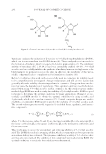
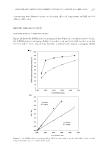
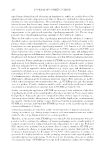
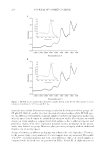
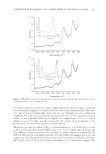
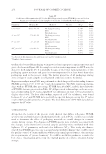
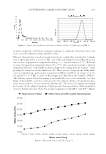
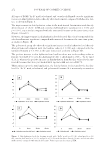
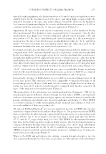
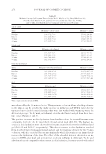
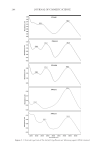
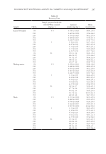
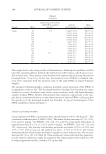
JOURNAL OF COSMETIC SCIENCE 284 Figure 2. Ultraviolet spectrum of fi ve distyryl-type fl uorescent whitening agents (FWA) standard.

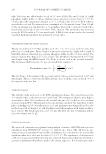
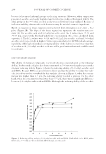
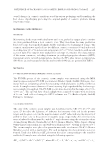
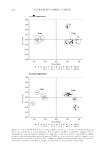
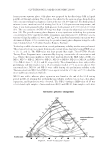
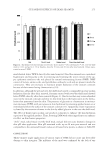
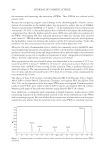
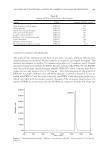
FLUORESCENT WHITENING AGENTS IN COSMETICS AND LIQUID DETERGENT 285 of the matrix. Figure 3 shows that some impurities which had ultraviolet absorption at 350 nm could not interfere in the determination of FWAs in samples by FLD. However, the retention time was the solely qualitative basis of FLD method, whereas both retention time and ultraviolet spectrum of analytes were the qualitative basis of DAD method. There- fore, these two detectors were combined to use their respective advantages. If impurity peaks were present near the retention time of the analytes in the chromatogram of FLD, they might be distinguished by comparing the ultraviolet spectrum using the DAD. The method was suitable for laboratories that did not have access to HPLC-tandem MS. Com- pared with ordinary HPLC that use DAD or FLD sole, the confi rmatory ability of this method was improved. Moreover, the limits of detection and quantization were close to HPLC-tandem MS method. The distyryl-type FWAs in aqueous solution were in the form of anion, the molecular struc- ture of analyte steric showed weak retention and could not be completely separated on a reversed-phase chromatographic column. Hence, it was necessary to use ion-pairing reagent to enhance the binding ability of the object to be measured and the stationary phase. To use the mobile phase in the further research of HPLC-tandem MS method with slight improvement, a suitable ion-pairing reagent was needed. Ordinary ion-pairing reagents suppressed the ESI signal and cause contamination of the ion source, especially nonvolatile tetraalkylammonium salts (20,21). Volatile di- and trialkylammonium acetates provide similar separation selectivity to that of tetraalkylammonium salts but greatly reduce ESI signal suppression. Among them, DHAA was compatible with MS detection, increasing Figure 3. Chromatography of cosmetic sample which contained fi ve fl uorescent whitening agent (FWA) standards by fl uorescence detector (upper) and diode array detector (below).
Purchased for the exclusive use of nofirst nolast (unknown)
From: SCC Media Library & Resource Center (library.scconline.org)