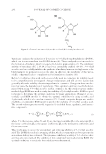
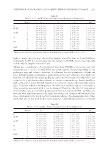
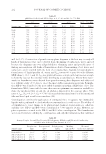
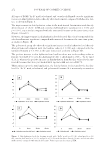
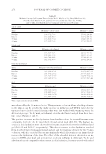
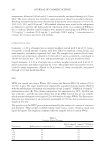
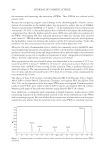
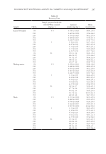
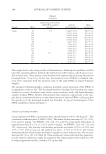
JOURNAL OF COSMETIC SCIENCE 288 This might lead to the wrong results of determination. Although the problem could be solved by standard addition method, the method was rather tedious, which was not suit- able to batch tests. The situation could be effectively improved by decreasing the amount of sample from 1.0 to 0.2 g. In this case, the retention time of FWAs in standard solu- tions were consistent with the retention time of the same FWAs in liquid detergent samples. The optimized chromatographic conditions provided a good separation of fi ve FWAs in an appropriate analysis time. The developed method was adopted to determine the target analytes in a variety of makeup water, lotion, cream, emulsion, mask, and liquid detergent samples without FWAs. Results demonstrated that impurity compositions in the sam- ples had no interferential effects on the determination of the fi ve FWAs, indicating that the specifi city of the developed method was favorable. A typical chromatogram of fi ve FWAs standards is shown in Figure 4. ANALYTICAL FIGURES OF MERIT Linear responses to FWAs concentration were obtained from 0.100 to 100.0 μg·ml-1. The correlation coeffi cients were 0.9988–0.9995. The limits of detection were 0.1, 0.1, 0.05, 0.01, and 0.1 mg·kg-1 for FWA85, 210, 220, 351, and 353, respectively. The limits of quantifi cation were 0.4, 0.4, 0.2, 0.04, and 0.4 mg·kg-1 for FWA85, 210, 220, 351, and 353, respectively. The intraday and interday precisions were from 3.01% to 6.76% and 3.03–7.21%. The accuracy of the method was from -5.31% to +5.47%. The results demonstrated that the procedure provided acceptable accuracy and precision. The recovery was from 80.7% to 103.3% (Table II). These satisfactory values indicated that quantifi ca- tion by external calibration might be employed. The target analytes were stable for 24 h at room temperature and for 1 week at 4°C in the dark. Sample FWAs Sample prepared with the added FWAs standard (mg·kg-1) Analysis results (mg·kg-1) Mean recovery (%) Cream 85 0.5 0.440 ± 0.027 88.0 ± 5.4 210 0.412 ± 0.033 82.4 ± 6.6 220 0.452 ± 0.028 90.4 ± 5.6 351 0.505 ± 0.020 101.0 ± 4.0 353 0.463 ± 0.022 92.6 ± 4.4 85 5 4.04 ± 0.26 80.7 ± 5.2 210 4.22 ± 0.23 84.3 ± 4.6 220 4.30 ± 0.18 86.0 ± 3.6 351 4.55 ± 0.22 91.0 ± 4.4 353 4.64 ± 0.12 92.7 ± 2.4 85 50 44.6 ± 2.9 89.2 ± 5.8 210 44.4 ± 1.5 88.7 ± 3.0 220 45.0 ± 1.6 90.0 ± 3.2 351 47.9 ± 2.3 95.8 ± 4.6 353 44.6 ± 2.0 89.2 ± 4.0 Table II Continued

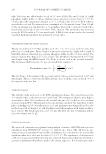
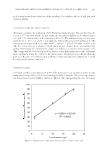
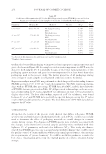
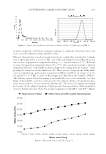
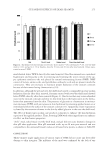
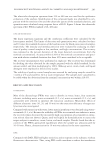
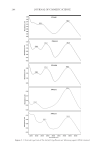
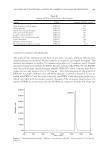
FLUORESCENT WHITENING AGENTS IN COSMETICS AND LIQUID DETERGENT 289 Table III Content of FWAs in Nine Positive Real Samples Sample FWAs Content of FWAs (mg·kg-1) Plant laundry liquid detergent FWA351 231 White photofl o FWA351 1,130 Quick effect liquid detergent FWA351 368 Full-care liquid detergent FWA351 187 Laundry liquid detergent FWA351 203 Brilliant color and white photofl o FWA351 1,105 Liquid detergent FWA85 400 Laundry liquid detergent FWA351 194 Revitalizing antiwrinkle eye cream FWA351 19.4 ANALYSIS OF COSMETICS AND DETERGENT The protocol was validated on the basis of precision, accuracy, stability, and recovery, demonstrating its suitability for the analysis of cosmetics and liquid detergent. The method was adopted to analyze 50 commercial products (35 cosmetics and 15 liquid detergents) from local markets for FWAs. Results indicated that FWA351 and FWA85 were detected in eight liquid detergent samples (Table III), whose contents were deter- mined to be in the range of 187–1,130 mg·kg-1. The chromatogram for the analysis of FWA351 in sample “brilliant color and white photofl o” is shown in Figure 5. It was re- vealed that FWA351 was the most commonly used FWA in the detergent productions, which coincided with the market research. Because of the increasing doubts about the safety of FWAs in recent years, the use of FWAs in cosmetics became few. Only one Figure 5. Ch romatography of sample “brilliant color and white photofl o” which contained 1,105 mg·kg-1 FWA351.
Purchased for the exclusive use of nofirst nolast (unknown)
From: SCC Media Library & Resource Center (library.scconline.org)