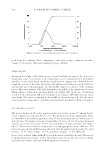
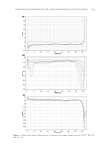
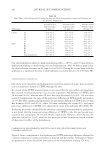
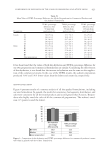
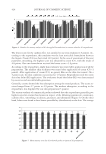
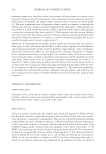
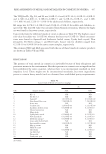
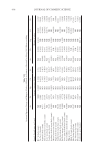
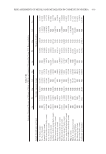
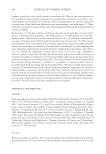
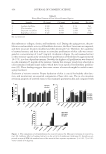
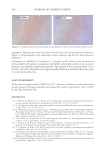
JOURNAL OF COSMETIC SCIENCE 424 The lowest score for the cushion effect was awarded to our own emulsion (2.5 points). Ac- cording to the respondents, this emulsion was the least noticeable formulation between the fi ngers. Cream (C4) was best rated (4.0 points). In the case of assessment of the next parameter, smoothing, the highest score was obtained by cream (C3), with the result of 4.8 points. Our own formulation received the lowest score—3.9 points. According to the respondents, slight skin stickiness was sensed after application of all the preparations. The smallest skin stickiness was sensed after application of cream (C5) (4 points). After application of cream (C1), no greasy fi lm on the skin was sensed. On a 5-point scale, the skin condition was assessed at 4.9 points. Respondents rated the worst skin after balm (B2) application. The evaluators found that balm (B2) was characterized by excessive and uncomfortable greasiness. Generally, creams showed the best absorption among the tested products. The scores re- ceived ranged from 4.7 points to 4.9 points. The weakest absorption, according to the respondents, was displayed by our own preparation (3 points). The sensory analysis of commercial products showed that the respondents generally gave higher scores for creams than lotions in respect of the following parameters: consistency, cushion effect, smoothing, stickiness, greasiness, and absorption (Figure 5). On the other hand, balms were found to have better spreadability (distribution) on the skin. The average Figure 4. Results of a sensory analysis of all the applied formulations (as a mean value for all respondents). Figure 5. Mean sensory score for all evaluated products (mean of all parameters).

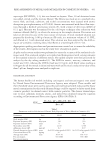
COMPARISON OF EMULSIONS IN THE CARE OF DEMANDING AND ATOPIC SKINS 425 score for each of the creams was 4.50 ± 0.05. The weakest assessed product was the authors’ formulation. CONCLUSIONS Market analysis of selected 10 commercial products for atopic skin care popular among consumers showed that components of synthetic origin are prevalent in them. It was observed that the highest average increase in skin hydration was achieved after cream (C5) application on the skin. The formula contained, among others, mineral oil, glycerine, and a unique ingredient—evening primrose oil. The greatest percentage decrease in TEWL was noted after application of the authors’ formulation. Thus, the selection of ingredients and the fat modifi cation allowed to form an ingredient which properly protects the skin from water loss. Therefore, it can be stated that the emulsion containing interesterifi ed fat had good moisturizing properties and formed a protective barrier against skin evapo- ration and commercial preparations. Sensory analysis showed that the highest scores were obtained for creams. The highest scores were awarded to creams (C4) and (C3). Balm (B2) was evaluated the best among the balms. The respondents evaluated the preparation based on interesterifi ed fat as not fully satisfying. The results showed that the emulsion with interesterifi ed fat based on natural components as sesame oil and mutton tallow can applicate as a formulation for atopic skin care. Phys- ical characteristics showed proper stability of the dispersion. However, parameters such as color, smoothing, cushion effect, and absorption should be improved in that model preparation. Taking into account the amount of ingredients contained in the presented commercial preparations, it can be concluded that there is a very wide area in which authors can modify the composition to improve the fi nal product proposed for atopic skin care, thus fulfi lling the criteria and requirements of consumers. ACKNOWLEDGMENTS The fi nancial support from the Kazimierz Pulaski University of Technology and Humani- ties in Radom is acknowledged. REFERENCES (1) D. Y. Leung, M. Boguniewicz, M. D. Howell, I. Nomura, and Q. A. Hamid, New insights into atopic dermatitis, J. Clin. Invest., 113(5), 651–657 (2004). (2) M. Car retero, S. Guerrero-Aspizua, N. Illera, V. Galvez, M. Navarro, F. Garcia-Garcia, J. Dopazo, J. L. Jorcano, F. Larcher, and M. del Rio, Differential features between chronic skin infl ammatory diseases revealed in skin-humanized psoriasis and atopic dermatitis mouse models, J. Invest. Dermatol., 136(1), 136–145 (2016). (3) C. N. Palmer, A. D. Irvine, A. Terron-Kwiatkowski, Y. Zhao, H. Liao, S. P. Lee, D. R. Goudie, A. Sandilands, L. E. Campbell, F. J. Smith, G. M. O’Regan, R. M. Watson, J. E. Cecil, S. J. Bale, J. G. Compton, J. J. DiGiovanna, P. Fleckman, S. Lewis-Jones, G. Arseculeratne, A. Sergeant, C. S. Munro, B. El Houate, K. McElreavey, L. B. Halkjaer, H. Bisgaard, S. Mukhopadhyay, and W. H. McLean, Com- mon loss-of-function variants of the epidermal barrier protein fi laggrin are a major predisposing factor for atopic dermatitis, Nat. Genet., 38(4), 441–446 (2006).
Purchased for the exclusive use of nofirst nolast (unknown)
From: SCC Media Library & Resource Center (library.scconline.org)