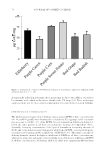
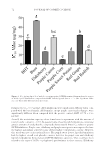
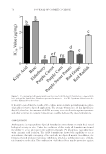
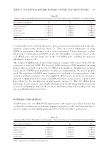
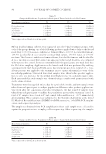
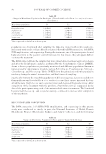
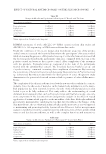
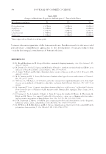
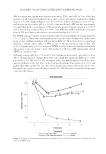
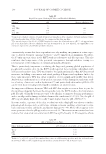
JOURNAL OF COSMETIC SCIENCE 74 It should be noted that the results of IC50 values in micrograms per milligram are physi- ologically relevant to lipstick application. The average woman uses 24 mg lipstick per day (40) therefore, the amounts of ACNs necessary to receive benefi ts against tyrosinase and other activities in cosmetic formulations could be delivered by these formulations. CONCLUSIONS Anthocyanins incorporated into lipstick formulations were shown to retain their tested biological activity in vitro. Under the conditions of this study, all formulations showed the ability to act as photoprotective additives through UV absorption, especially those with cinnamic acid acylation. The ACN formulations showed the capability to act as antioxidants, through scavenging of free radicals, in a lipstick matrix. In addition, the formulas showed profi cient tyrosinase inhibition, which is a well-known source of mela- nin formation in the skin. The combination of all these effects may be protective against Figu re 5. IC50 (μg/mg lipstick) against mushroom tyrosinase for ACN–lipstick formulations compared with kojic acid and the lipstick base. Results are presented as means (n = 8) ± SD. Signifi cant differences are de- noted by different letters above bars.

PROPERTIES OF ANTHOCYANIN-PIGMENTED LIPSTICK FORMULATIONS 75 photoaging, warranting subsequent in vivo investigation. The concentrations necessary to exhibit these activities were all well within physiologically relevant concentrations based on the average uses of lipsticks within the United States. These results suggest ACNs may have uses as potentially bioactive ingredients within cosmetic formulations further studies are warranted for claim substantiations. ACKNOWLEDGMENTS We would like to thank DD Williamson & Co., Inc. and Artemis International for provid- ing the dried anthocyanin extracts. REFERENCES (1) O. M. Anderson and M. Jordheim, “Basic anthocyanin chemistry and dietary sources,” in Anthocyanins in Health and Disease, 1st Ed. T. Wallace and M. M. Giusti. Eds. (CRC Press, Boca Raton, FL, 2014), pp. 13–90. (2) M. M. Giusti and R. E. Wrolstad, Acylated anthocyanins from edible sources and their applications in food systems, Biochem. Eng. J., 14, 217–225 (2003). (3) G. T. Sigurdson, P. Tang, and M. M. Giusti, Natural colorants: food colorants from natural sources, Annu. Rev. Food Sci. Technol., 8, 261–280 (2017). (4) P. Jing and M. M. Giusti, “Analysis of anthocyanins in biological samples,” in Anthocyanins in Health and Disease, 1st Ed. T. Wallace and M. M. Giusti. Eds. (CRC Press, Boca Raton, FL, 2014), pp. 115–140. (5) J. He and M. M. Giusti, Anthocyanins: natural colorants with health-promoting properties, Annu. Rev. Food Sci. Technol., 1, 163–187 (2010). (6) G. Mazza, C. D. Kay, T. Cottrell, and B. J. Holub, Absorption of anthocyanins from blueberries and serum antioxidant status in human subjects, J. Agric. Food Chem., 50, 7731–7737 (2002). (7) C. Ramirez-Tortosa, Ø. M. Andersen, L. Cabrita, P. T. Gardner, P. C. Morrice, S. G. Wood, S. J. Duthie, A. R. Collins, and G. G. Duthie, Anthocyanin-rich extract decreases indices of lipid peroxidation and DNA damage in vitamin E-depleted rats, Free Radic. Biol. Med., 31, 1033–1037 (2001). (8) P. Shih, C. Yeh, and G. Yen, Anthocyanins induce the activation of phase II enzymes through the anti- oxidant response element pathway against oxidative stress-induced apoptosis, J. Agric. Food Chem., 55, 9427–9435 (2007). (9) Y. P. Hwang, J. H. Choi, E. H. Han, H. G. Kim, J. H. Wee, K. O. Jung, K. H. Jung, K. I. Kwon, T. C. Jeong, Y. C. Chung, and H. G. Jeong, Purple sweet potato anthocyanins attenuate hepatic lipid ac- cumulation through activating adenosine monophosphate-activated protein kinase in human HepG2 cells and obese mice, Nutr. Res., 31, 896–906 (2011). (10) J. M. Gee and I. T. Johnson, Polyphenolic compounds: interactions with the gut and implications for human health, Curr. Med. Chem., 8, 1245–1255 (2001). (11) J. Montanari, M. Vera, E. Mensi, M. Morilla, and E. Romero, Nanoberries for topical delivery of anti- oxidants, J. Cosmet. Sci., 64, 469–481 (2013). (12) C. Chan, C. Lien, Y. Lai, C. Huang, and W. C. Liao, Infl uence of purple sweet potato extracts on the UV absorption properties of a cosmetic cream, J. Cosmet. Sci., 61, 333–341 (2010). (13) J. Y. Bae, S. S. Lim, S. J. Kim, J. S. Choi, J. Park, S. M. Ju, S. J. Han, I. J. Kang, and Y. H. Kang, Bog blueberry anthocyanins alleviate photoaging in ultraviolet-B irradiation-induced human dermal fi bro- blasts, Mol. Nutr. Food Res., 53, 726–738 (2009). (14) K. Tsoyi, H. B. Park, Y. M. Kim, J. I. Chung, S. C. Shin, W. S. Lee, H. G. Seo, J. H. Lee, K. C. Chang, and H. J. Kim, Anthocyanins from black soybean seed coats inhibit UVB-induced infl ammatory cylooxygenase-2 gene expression and PGE2 production through regulation of the nuclear factor-kappaB and phosphatidylinositol 3-kinase/Akt pathway, J. Agric. Food Chem., 56, 8969–8974 (2008). (15) C. K. Hsu, S. T. Chou, P. J. Huang, M. C. Mong, C.-K. Wang, Y. P. Hsueh, and J. K. Jhan, Crude ethanol extracts from grape seeds and peels exhibit anti-tyrosinase activity, J. Cosmet. Sci., 63, 225–232 (2012). (16) E. R. Gonzaga, Role of UV light in photodamage, skin aging, and skin cancer: importance of photopro- tection, Am. J. Clin. Dermatol., 10, 19–24 (2009).
Purchased for the exclusive use of nofirst nolast (unknown)
From: SCC Media Library & Resource Center (library.scconline.org)