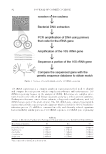
JOURNAL OF COSMETIC SCIENCE 78 (coconut) fruit extract] was compared with a negative control (water) and a positive control (triclosan). The microbiome population was determined by DNA extraction, 16S ribosomal RNA (rRNA) polymerase chain reaction (PCR) amplifi cation, and sequencing. A less conventional approach was used in regard to panel size and evaluation during this study. Large subject panels allow for trend recognition between subjects. However, with the individuality of each person’s microbiome in mind, it would be diffi cult to establish trends within a group of subjects. This study analyzed rRNA gene sequences obtained from one distinct site, the nasolabial folds, of healthy human subjects. The use of one distinct site was to isolate the geographic location of the microbiome, and it allowed for the individual evaluation of microbial change. BACKGROUND To understand the importance of this study, it is crucial to recognize some of the com- mon microorganisms located on the skin and the method of bacterial identifi cation. To understand the importance of the protective force of fl ora due to the constant inter- action between commensals and epithelium, it is crucial to investigate some of the common microorganisms located on the skin. These are historically known for their pathogenic role in disease, yet it is proposed that they may offer a means by which they function to positively promote skin health. The benefi cial role of microbes on the sur- face of the skin, unlike digestive probiotics, remains relatively untapped aside from the known roles of these species in protection against other pathogenic and opportunistic invaders. The species of microorganisms investigated in this study were Staphylococcus sp., Coryne- bacterium sp., Propionibacterium sp., Streptococcus sp., and Aerobacillus sp. One of the most common and abundant microbes located on the skin is Staphylococcus epidermidis. This is a Gram-positive bacterium that may have a similar mutual relation- ship with the skin as most fl orae in the gut function (3). It is one of the most common isolates of cutaneous microbiota to date (comprises 90% of aerobic fl ora according to the present research) and typically resides benignly with infection only occurring in patho- genic form when in conjunction with host predisposition or environmental triggers. Ac- cording to Cogen et al., a signifi cant amount of research has been performed to identify secondary metabolites and has revealed that many strains of epidermidis can produce com- pounds called lantibiotics and other antimicrobial peptides, which can protect the host from unwanted pathogenic invaders. One of the main roles of commensals is to protect the host, but these signifi cant investi- gatory studies also provide fundamental insight on the topic of promoting skin health via mechanisms such as Toll-like Receptor (TLR) signaling, keratinocyte response to patho- genic invaders, and their relation to similar microbial species present on the skin. For example, certain strains of Staphylococcus aureus on the skin have also been shown to pro- duce other bacteriocins such as staphylococcin, a peptide responsible for growth inhibi- tion of other S. aureus strains (3). This has primarily been recognized as a pathogen until now, as new discoveries regarding its protective role have come out to provide more tools to potentially use this fl ora for alternative health-promoting effects on the skin.

EFFECT OF NATURAL ANTIMICROBIALS ON THE SKIN MICROBIOME 79 There has been signifi cant research investigating a second bacterium commonly found on the skin, Corynebacterium jeikeium. This microbe offers epidermal protection via a mutualistic relationship with the host. It is a ubiquitous and primarily innocuous bacterium that recently has been found to use manganese acquisition to protect from superoxide radicals (3). This is important for cosmetic chemists, as the enzyme superoxide dismutase may also function to prevent oxidative damage in epidermal tissue. Because C. jeikeium scav- enges iron and manganese, researchers propose it may also serve as a way to prevent colo- nization by other invaders. Given the prevalence of skin colonization, the relative rarity of C. jeikeium pathogenesis and the unexplored benefi ts of the bacterium indicate that this microbe probably lives mutually with other microbes and epithelial cells and has more positive than negative effects on the skin (3). By isolating cultures of Corynebacterium, it is also assumed that they could be used to prevent or control oxidative damage to the skin. In addition, the Cory- nebacterium glutamicum strain (a Corynebacterium with functional capabilities) has the capac- ity to produce glutamic acid. The production of a compound and the way in which it interacts with the skin could have a potential effect on downstream targets that cosmetic chemists focus on, such as moisturization. Propionibacterium acnes is often associated with the detrimental effects of acne, as it is well established that both healthy and acne-prone patients are colonized with the bacterium. Acne may be triggered by many intrinsic and extrinsic factors as comprehensive research on the ailment has demonstrated. However, P. acnes involvement in infl ammation is a relatively minor one. It is proposed that the abnormal growth of this organism, which is often associated with acne blemishes and pustules, might be a side effect of infl ammation, rather than the root cause of it (3). Studies have shown that antibiotics have mostly reduced infl ammation in said volunteers affected with acne, whereas only secondarily inhibiting P. acnes growth. Because P. acnes is present on healthy skin and acne-prone skin alike, the authors suggest that it may serve more as a mutualistic microbe than a pathogenic one (3). These data taken in conjunction with the aforementioned studies suggest that along with the other microbes commonly associated with infection or disease, these may actually have a lower pathogenic potential than initially hypothesized, with minor roles in the true development of the signs and symptoms associated with acne. Furthermore, researchers have also used mice, immunized with heat-killed P. acnes, and subsequently challenged them with lipopolysaccharides. The results showed that these mice had increased TLR4 sensitivity and lymphocyte antigen 96 (MD 2) up- regulation, which means that the increased cytokine levels was a direct indication of the detrimental effects of P. acnes in vivo (3). This suggests that P. acnes has the ability to enable host cells to respond effectively to pathogenic trauma. Cogen et al. pro- posed that because of this, it is probable that a similar response could be observed if injections of other types of bacteria were used, serving to highlight another potential mechanism. It is theorized that the supply of nutrients found in the ecological envi- ronment of P. acnes, such as sebum, is a direct exchange for protection against other pathogenic microbes P. acnes defends against (3). Streptococcus and Pseudomonas, microbes highly present in the human microbiome, have been studied in terms of their detrimental contributions to infection and disease. How- ever, Cogen et al. now suggest that they may also serve the host in a protective role,
Purchased for the exclusive use of nofirst nolast (unknown)
From: SCC Media Library & Resource Center (library.scconline.org)