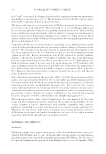
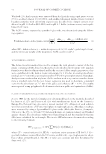
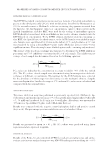
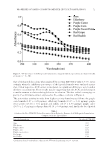
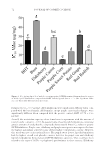
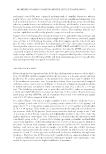
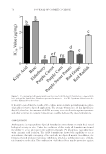
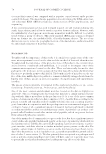
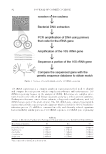
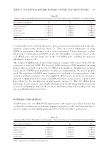
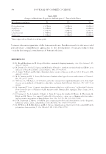
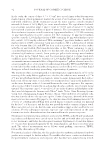
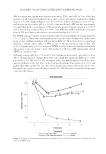
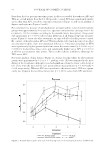
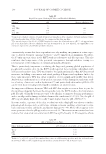
JOURNAL OF COSMETIC SCIENCE 82 Figure 1. Overview of bacterial identifi cation by 16S rRNA sequencing. Table II Changes in Microbiome Population for Participant 1 Treated with Leuconostoc Radish Root Ferment Filtrate Microbiome population T0 T2 T3 Propionibacterium 5.78E+05 3.41E+04 4.08E+03 Staphylococcus 1.07E+05 1.05E+03 2.32E+02 Aerobacillus 1.05E+04 5.58E+02 4.10E+01 Corynebacterium 2.00E+04 1.01E+03 1.20E+02 Streptococcus 1.89E+04 6.25E+03 1.18E+03 Values expressed in cfu/mL at each timepoint. 16S rRNA sequencing is a common amplicon sequencing method used to identify and compare bacteria present within complex microbiomes and environments. 16S rRNA sequencing focuses on the analysis of rRNA. Ribosomes are complex struc- tures found in the cells of all living organisms and play a role in protein synthesis. Prokaryotic ribosomes consist of two subunits, a large and a small subunit, with 16S rRNA being a part of the small subunit. The 16S rRNA gene contains hypervariable regions that provide a species-specifi c signature which is useful for the bacterial iden- tifi cation process (7). rRNA is conserved in cells, and distantly related organisms have remarkably similar portions of 16S rRNA sequences. 16S rRNA gene sequencing

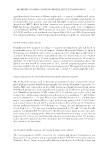
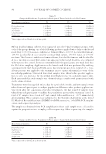
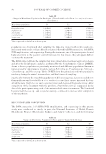
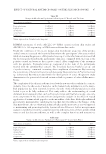
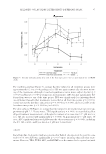
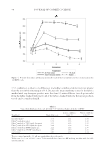
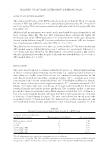
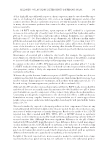
EFFECT OF NATURAL ANTIMICROBIALS ON THE SKIN MICROBIOME 83 is commonly used to identify diversities in bacterial microorganisms and study phy- logenetic relationships between them (7). There are several advantages of using rRNA in molecular techniques such as gene sequencing. These advantages include the presence of ribosomes and rRNA in all cells, the highly conservative nature of the 16S rRNA gene, and the large size of the 16S rRNA gene, enabling its usage for informatics purposes (8). The analysis of rRNA genes begins with isolating a sample of bacteria, followed by the extraction of bacterial DNA. The bacterial DNA undergoes PCR amplifi cation using primers that specifi cally code for the 16S rRNA gene fragment. Amplifi cation produces a population of rRNA gene fragments of equal size, determined by the specifi c primers used. The population of rRNA gene fragments is considered to be representative of the natural microbial population (8). The amplifi ed rRNA genes are then cloned and se- quenced. Comparison of the sequenced rRNA with those in the genetic sequence data- base allows for the identifi cation of phylogenetic groups (9). The 16S rRNA–based taxonomic characterization can provide information on the microbial population present in a given environment and how their relative distribution may differentially evolve un- der an applied treatment over time. MATERIALS AND METHODS A DNA extraction, 16S rRNA PCR amplifi cation, and sequencing study of the skin was conducted to evaluate the microbiome population present on the facial skin and the re- spective changes in microbial populations after 2 weeks of product applications. Table III Changes in Microbiome Population for Participant 2 Treated with Leuconostoc Radish Root Ferment Filtrate Microbiome population T0 T2 T3 Propionibacterium 7.14E+03 8.04E+03 6.57E+03 Staphylococcus 1.05E+03 1.20E+01 2.44E+02 Aerobacillus 5.50E+01 3.00E+00 3.30E+01 Corynebacterium 3.40E+01 3.13E+02 5.10E+01 Streptococcus 1.64E+02 8.10E+01 1.60E+01 Values expressed in cfu/mL at each timepoint. Table IV Changes in Microbiome Population for Participant 3 Treated with Leuconostoc Radish Root Ferment Filtrate Microbiome population T0 T2 T3 Propionibacterium 5.46E+03 2.43E+03 5.98E+03 Staphylococcus 8.02E+02 3.70E+01 2.35E+03 Aerobacillus 8.40E+01 3.20E+01 1.05E+02 Corynebacterium 7.03E+02 1.15E+02 5.44E+02 Streptococcus 1.10E+01 9.00E+00 4.00E+00 Values expressed in cfu/mL at each timepoint.
Purchased for the exclusive use of nofirst nolast (unknown)
From: SCC Media Library & Resource Center (library.scconline.org)