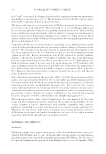
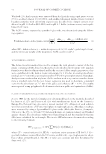
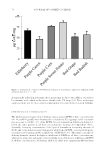
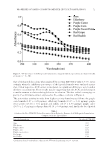
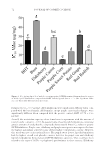
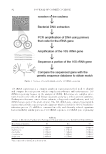
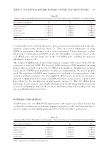
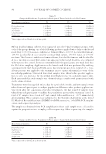
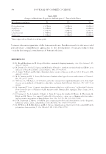
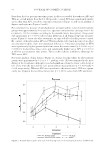
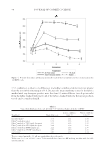
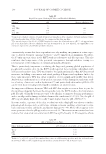
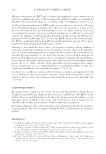
JOURNAL OF COSMETIC SCIENCE 84 Fifteen healthy human subjects were separated into fi ve blind treatment groups, with each of the groups having one of the following products applied twice daily to the lateral nasal folds: 100.0% Leuconostoc radish root ferment fi ltrate, 100.0% Lactobacillus ferment, 100.0% Lactobacillus & Cocos nucifera (coconut) fruit extract, 100.0% water, or 100.0% triclosan. The Leuconostoc radish root ferment fi ltrate, Lactobacillus ferment, and Lactobacillus & Cocos nucifera (coconut) fruit extract are aqueous products and, therefore, are compared with water as the control. It was recommended that the participants not wash their face for 8 h before sampling. Application to the lateral nasal folds was performed by rubbing a premoistened swab back and forth across the treatment area for a total of 60 s. Con- sistent pressure was applied to the treatment area to ensure substantial recovery of the microbial population. Untreated skin swab samples were taken before product applica- tion to serve as a reference for the normal microbial presence on each participant’s skin. Each untreated skin swab sample was obtained using a sterile swab premoistened with sterile saline solution. Treatments were then applied twice a day for a period of 2 weeks, and new samples were taken from each participant to analyze population differences after product applications. One week after the conclusion of product treatments, the last round of samples were taken from each participant to analyze the populations present after treatment ceased. A total of 45 samples were stored in 15 mL conical tubes and frozen at -20°C immediately after sampling. These samples were submitted to the Genomics Laboratory at the David H. Murdock Research Institute (DHMRI) for DNA extraction, 16S rRNA PCR amplifi - cation, and sequencing analysis. The amplicons obtained from PCR amplifi cation from each sample were collected in equimolar proportions into a single pool for sequencing. After sequencing, the samples Table V Changes in Microbiome Population for Participant 4 Treated with Lactobacillus Ferment Microbiome population T0 T2 T3 Propionibacterium 3.03E+05 3.40E+03 1.12E+04 Staphylococcus 5.80E+04 5.69E+02 2.98E+03 Aerobacillus 6.76E+03 6.40E+01 1.85E+02 Corynebacterium 6.24E+03 7.63E+02 4.76E+02 Streptococcus 3.06E+02 4.20E+01 4.20E+01 Values expressed in cfu/mL at each timepoint. Table VI Changes in Microbiome Population for Participant 6 Treated with Lactobacillus Ferment Microbiome population T0 T2 T3 Propionibacterium 5.28E+03 5.32E+03 3.11E+03 Staphylococcus 5.41E+02 4.04E+02 1.94E+02 Aerobacillus 6.20E+01 9.00E+01 6.40E+01 Corynebacterium 8.19E+02 5.87E+02 3.76E+02 Streptococcus 1.20E+03 1.54E+03 1.09E+03 Values expressed in cfu/mL at each timepoint.

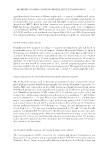
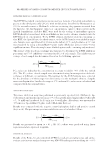
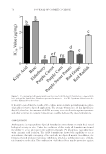
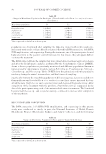
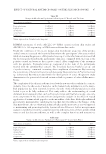
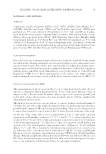
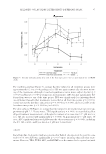
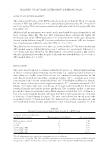
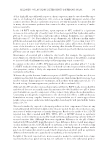
EFFECT OF NATURAL ANTIMICROBIALS ON THE SKIN MICROBIOME 85 underwent taxonomic clustering and analysis. The resultant usable reads were clustered into organizational taxonomic units (OTUs) using the OTU reference database Silva/ Arb. OTUs classify closely distinct microbial organisms from sequences via DNA homology, although, in some cases, they may only read genus or a higher level of taxonomy. It is important to note that OTUs do not always provide specifi c species for each sequence, but these units still serve as effective indicators of the bacterial diversity on the skin. Taxonomic clustering and analysis were performed after sequencing the samples to allow for the generation of a phylogenetic tree. The bioinformatics team at DMHRI performed quality assurance (QA) analysis for base-calling quality. In-depth analysis was also per- formed to analyze the size and nature of 16S rRNA. The data obtained from the readings met the QA specifi cations for the bioinformatics team to create scoring reads for align- ment and database searching. The usable reads were blasted against the OTU reference database (Silva/Arb) to generate OTU abundance results, creating phylogenetic trees and multiple alignments. These results were used to calculate diversity estimates, based on the abundance of microorganism genus in each sample. DMHRI’s analysis shows a di- verse population with an abundant presence of Propionibacterium sp., Staphylococcus sp., Aerobacillus sp., Streptococcus sp., and Corynebacterium sp. RESULTS The present study determined the microbial population present on the skin and the effect of the microbial population after 2 weeks of varying product treatments. Microbiome Table VII Changes in Microbiome Population for Participant 7 Treated with Lactobacillus & Cocos nucifera (Coconut) Fruit Extract Microbiome population T0 T2 T3 Propionibacterium 1.00E+04 1.02E+04 7.19E+03 Staphylococcus 5.70E+01 9.79E+03 3.39E+03 Aerobacillus 1.60E+01 2.37E+02 1.07E+02 Corynebacterium 0.00E+00 1.95E+03 2.73E+02 Streptococcus 2.65E+02 5.10E+01 7.00E+01 Values expressed in cfu/mL at each timepoint. Table VIII Changes in Microbiome Population for Participant 8 Treated with Lactobacillus & Cocos nucifera (Coconut) Fruit Extract Microbiome population T0 T2 T3 Propionibacterium 5.93E+03 7.94E+03 5.20E+03 Staphylococcus 5.87E+02 6.90E+02 1.45E+03 Aerobacillus 9.20E+01 7.90E+01 1.00E+02 Corynebacterium 1.14E+02 1.62E+02 2.04E+02 Streptococcus 6.40E+01 1.90E+01 1.68E+02 Values expressed in cfu/mL at each timepoint.
Purchased for the exclusive use of nofirst nolast (unknown)
From: SCC Media Library & Resource Center (library.scconline.org)