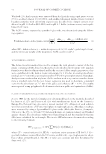
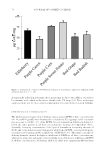
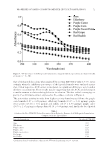
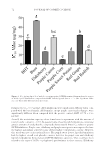
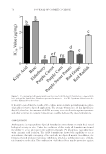
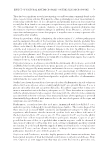
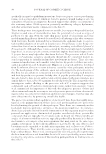
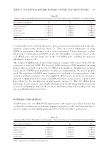
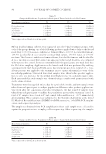
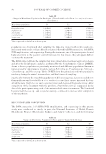
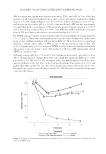
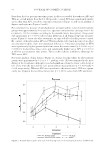
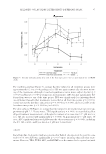
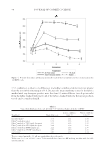
JOURNAL OF COSMETIC SCIENCE 68 using Minitab statistical software version 16 (State College, PA) and GraphPad Prism version 6 (La Jolla, CA). RESULTS AND DISCUSSION CHARACTERIZATION OF ACNS IN LIPSTICK FORMULATIONS Sources of ACNs used in lipstick formulations were selected to represent a variety of natural structures and commercial availability. The main characteristics of each extract and their concentrations used in these lipstick formulations were characterized by Westfall and Giusti (21) and are summarized in Figure 1. Several sources of cyanidin, such as elderberry (Sambucus nigra L.), purple carrot (Daucus carota L.), purple corn (Zea mays L.), and purple sweet potato (Ipomoea batatas L.), were selected because of the high predomi- nance in nature and commercial availability. Sources of acylated ACNs were also included as they have high reported stability (30). Hibiscus (Hibiscus sabdariffa L.) is a source of nonacylated delphinidin and was evaluated because of its reported high antioxidant activ- ity (31). Red radish (Raphanus sativus L.), a source of acylated pelargonidin, was included as it is reported to be highly stable and as an alternative to synthetic red colorants (32). Red grape (Vitis vinifera L.), which contains predominantly malvidin and also all six ma- jor aglycones, was also investigated to better understand the effect of chemical structure on color stability. As the lipstick formulations were developed based on inclusion of 8% dried plant extract, ACN concentrations in the lipstick formulations ranged 2.2–16.5 μg/mg of lipstick (Figure 1). TOTAL PHENOLIC CONTENT The total phenolic content in the methanolic extracts was expressed as micrograms of GAEs per milligram lipstick (Figure 2). The total phenolic content ranged from 85.8 ± 3.3 μg GAE/mg lipstick for purple sweet potato to 46.1 ± 5.5 μg GAE/mg lipstick for purple carrot. The other lipstick formulations contained 51.6 ± 8.3 (red grape), 56.6 ± 8.1 (red radish), 66.7 ± 3.5 (elderberry), and 76.6 ± 1.8 (purple corn) μg GAE/mg lip- stick. The phenolic content was compared with the total ACN content determined in a previous study (21). A high correlation (r = 0.97) was found between the total phenolic and total ACN contents for formulas containing acylated ACNs: purple carrot, purple corn, purple sweet potato, and red radish. These results are expected as the assay also measures the cinnamic and malonic acid acylating groups within the formulas (24). As phenolics are often associated with antioxidant activity, it is an important variable to consider when interpreting the antioxidant activity results of the formulas (33). UV ABSORPTION AND SPF CALCULATIONS The UV light absorbance of each formula compared with that of the lipstick base alone, from 290 to 400 nm, is shown in Figure 3. All formulas showed greater absorbance than the lipstick base alone along the entire UV spectrum, although absorption was higher in

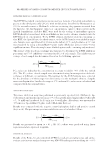
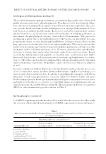
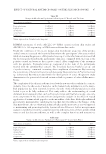
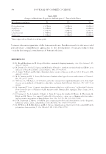
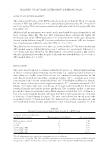
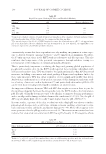
PROPERTIES OF ANTHOCYANIN-PIGMENTED LIPSTICK FORMULATIONS 69 the UVB range than the UVA range for all formulas tested. All formulas showed statisti- cally signifi cant differences when compared with the base. The formula that showed the highest UV absorbance was the red radish formula the purple sweet potato formula also showed high absorbance across the UV range. Both of these sources contained aromati- cally acylated ACNs, which is likely related to their increased UV absorbance. Red rad- ish, purple sweet potato, and elderberry showed absorbance values at or above 0.5 for all wavelengths in the UVB (290–320 nm) range (Figure 3). Elderberry ACNs are not typi- cally acylated, and the increased absorbance could be related to the high overall phenolic content of this material (Figure 2). The calculated in vitro UVB SPF values of the ethanolic extracts of the formulas are shown in Table I. Values followed the same pattern as that of the absorbance values in Figure 3 SPF values were highest for red radish, purple sweet potato, and elderberry. Lowest SPF values were calculated for red grape skin and purple carrot however, all formulations showed an increase in absorbance over that of the lipstick base alone. The increased UV Figu re 1. Characterization and quantitation (microgram ACN/milligram lipstick as cyanidin-3-glucoside equivalents) of ACNs in lipstick formulations.
Purchased for the exclusive use of nofirst nolast (unknown)
From: SCC Media Library & Resource Center (library.scconline.org)