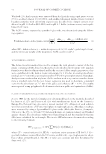
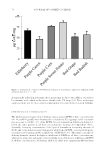
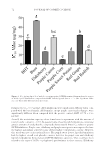
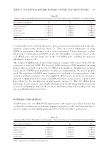
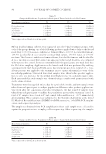
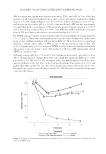
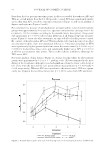
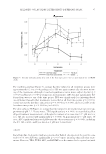
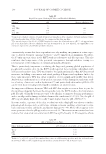
JOURNAL OF COSMETIC SCIENCE 70 absorption by red radish and purple sweet potato may be due to the addition of acylation by cinnamic acids, which are known to absorb in the UV range (34). These results may suggest a future role for these extracts as photoprotective ingredients in topical formulas. DPPH FREE RADICAL SCAVENGING ABILITY The inhibitory percentages of each formula extract against DPPH at three concentrations (40, 60, and 100 μg/mL) were determined to calculate the IC50 (μg/mg), or the concentra- tion necessary to inhibit 50% of the DPPH, for each formulation. Inhibitory ability fol- lowed the same pattern at all three concentrations, showing dose-dependent effects. Generally, increasing concentration of the lipstick formulation (increasing amounts of ACNs and total phenolics) resulted in greater inhibition of DPPH, consistent with previ- ous reports investigating ACNs as inhibitors of DPPH (35,36). The purple corn and el- derberry formulas showed the highest inhibition of DPPH at all three concentrations, whereas the grape skin and purple carrot formulas showed the lowest inhibition of DPPH at all three concentrations. All formula inhibitory values were signifi cantly different from Figu re 2. Total phenolic content of ACN–lipstick formulations in methanol, expressed as milligram GAE/ milligram lipstick (n = 5 ± SD).

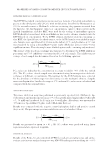
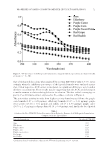
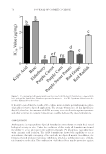
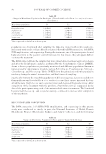
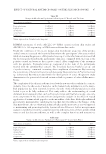
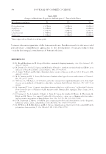
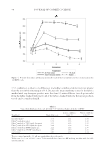
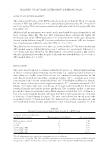
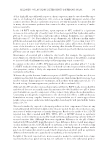
PROPERTIES OF ANTHOCYANIN-PIGMENTED LIPSTICK FORMULATIONS 71 that of the lipstick base alone when analyzed by one-way ANOVA (p value 0.05). Inter- estingly, when the inhibitory percentages of the lipstick formulas were analyzed against that of their respective ACN extract in methanol, no signifi cant differences were found at all three concentrations. These results may be suggesting that the ACNs are behaving in a similar manner to their reducing behavior in solution. The free radical scavenging ca- pacity of each formula extract, expressed as IC50 values, is shown in Figure 4. The antioxidant activity in order from highest activity found was as follows: the purple corn formula (4.87 ± 0.28 μg/mg), elderberry formula (13.35 ± 0.21 μg/mg), purple sweet potato (13.44 ± 0.01 μg/mg), red radish (14.49 ± 1.30 μg/mg), purple carrot (28.59 ± 2.65 μg/mg), red grape skin (31.18 ± 0.68 μg/mg), and, fi nally, the base lipstick Figu re 3. UV absorbance of ACN–lipstick formulations compared with the lipstick base in ethanol. Results are means (n = 8 ± SD). Tabl e I Calculated In Vitro UVB SPF Values Determined from Ethanolic Extracts of ACN–Lipstick Formulations Compared with the Lipstick Base Lipstick formulation Calculated UVB SPF Base 8.19 Elderberry 13.85 Purple carrot 11.27 Purple corn 11.62 Purple sweet potato 14.44 Red grape 11.39 Red radish 15.84 Calculations based on absorbance values in the UV wavelength range of 290–320 nm.
Purchased for the exclusive use of nofirst nolast (unknown)
From: SCC Media Library & Resource Center (library.scconline.org)