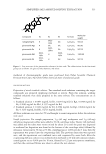
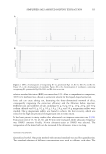
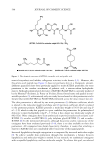
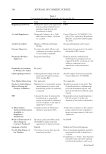
512 JOURNAL OF COSMETIC SCIENCE Several studies have reported various biological activities of saponins, such as anticarcinogenic (3), immunoregulation (4), cardiovascular protection (5), and anti-inflammatory hemostasia (6), especially as powerful scattered stasis hemostasis agents (7). Therefore, in addition to applications as pharmaceutical active substances, saponins have great potential as oral care ingredients, which have been shown to have significant effects on oral ulcers, gingivitis, and dental plaque. Due to the beneficial properties of saponins, being used as raw material in the manufacture of oral care products is an interesting innovation for chemical industries. However, indicating that an oral care product contains natural ingredients is still a claim to a great extent. Therefore, it is necessary to develop analytical procedures to control industrial processes and to assess the quality of oral care containing saponins. Different analytical methods for the characterization of saponins in Panax notoginseng samples (powder, pieces), Chinese patent medicine, functional foods, and biological samples have been published. HPLC-UV (8) and ultra performance liquid chromatography (9) coupled with electrospray ionization mass spectrometry (10) are the most commonly used detection methods. Methol and n-butyl alcohol are the extractants that have been evaluated for the recovery of saponins (10–12). However, there are few reports describing the determination of saponins in toothpastes, not to mention silica matrix. Toothpaste is a complex system that contains surfactants, abradants, thickeners, humectants, aseptics, essences, active matters, and sweetening agents. Precipitated silica is made of the silicon oxygen tetrahedron three- dimensional network structure. This structure determines use as a toothpaste thickener can provide paste with excellent pseudoplasticity and thixotropy, but when the particle size decreases and the smaller than average distance between the particles and forces increases, the structure is prone to reunite and not to disperse easily, thus increasing the difficulty of toothpaste sample pretreatment. Here, we describe a simple, selective, and highly sensitive HPLC-UV method for the determination of notoginseng R1, ginsenoside Rg1, Re, Rb1, and Rd in different types of silica matrix toothpaste samples. The method was fully validated and applied to the quality control of the finished toothpaste products. EXPERIMENTAL APPARATUS An Agilent 1260 II Infinity LC (Agilent, Santa Clara, CA, USA) system including a UV/visible light detector was employed. The column used was Poroshell 120 EC-C184.6×250 mm, 4μm)(Agilent, Santa Clara, CA, USA). A Kudos SK 5210LC ultrasonic bath (35 Hz) (Shanghai Kudos Ultrasonic Instrument Co., Ltd., Shanghai, China) was used to auxiliary extraction. A high-speed Bioridge TG18.5 centrifuge (Shanghai Lu Xiangyi centrifuge instrument Co., Ltd., Shanghai, China) was used to accelerate separation. A VORTEX-5 (50 W, ≥2,800 rpm) (Qilinbeier, Haimen, China) was used to accelerate the liquid–liquid extraction of toothpaste samples. REAGENTS AND SAMPLES The reference standards of notoginseng R1, ginsenoside Rg1, Re, Rb1, and Rd were purchased from the National Institute for the Control of Pharmaceutical and Biological Products (Beijing, China). Chemical structures are shown in Figure 1. Acetonitrile and

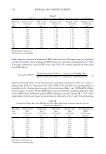
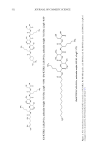
513 SIMPLIFIED SALT-ASSISTED SOLVENT EXTRACTION methanol of chromatographic grade were purchased from Fisher Scientific Chemical Division (Fair Lawn, NJ, USA). Other chemicals were of analytical grade. PROPOSED METHOD Preparation of mixed standards solutions. Two standard stock solutions containing the target compounds was prepared employing methanol as solvent. From this solution, working standard solutions were daily prepared in the same solvent. The concentrations are as follows: 1. Standard solution 1: 0.0943 mg/mL for R1, 0.2034 mg/mL for Rg1, 0.0788 mg/mL for Re, 0.2085 mg/mL for Rb1, 0.1337 mg/mL for Rd. 2. Standard solution 2: 0.1161 mg/mL for R1, 0.2394 mg/mL for Rg1, 0.0464 mg/mL for Re, 0. 4165 mg/mL for Rb1, 0.2714 mg/mL for Rd. All these solutions were stored at 4°C and brought to room temperature before the solutions were used. Sample preparation. For sample preparation, 5 g (±2 mg) toothpastes and 1 g (±2 mg) anhydrous magnesium sulfate were added to 50 mL centrifuge tubes. Twenty mL methanol was added and the tubes were vortex mixed for about 20 s until the paste was dispersed in methanol (no deposition was found at the bottom of the centrifuge tube), followed by ultrasonic extraction for 30 min at 35 Hz, centrifugation at 4,000 rpm for 5 min, then the supernatant was poured into the evaporating dish. The previous extraction was repeated once, and the supernatant was combined twice and evaporated by water bath. After the evaporating dish was cooled, it was redissolved in methanol to 10 mL with constant volume, centrifugation set at 6,000 rpm for 10 min, filtered by 0.22 μm microporous membrane, and then the continued filtrate was taken to obtain the test solution. Compound R1 R2 R3 Formula Molecular weight notoginseng R1 H Glc(2- 1)Xyl Glc C47H80O18 933.13 ginsenoside Rg1 H Glc Glc C42H72O14 801.01 ginsenoside Re H Glc(2- 1)Rha Glc C48H82O18 947.15 ginsenoside Rb1 Glc(2- 1)Glc H Glc(6- 1)Glc C54H92O23 1109.29 ginsenoside Rd Glc(2- 1)Glc H Glc C48H82O18 947.15 OH OR 3 R 1 O R 2 Figure 1. Core structure of the ginsenosides referenced in this work. The abbreviations for the functional groups are as follows: Glc glucose, Rha rhamnose, Xyl xylose.
Purchased for the exclusive use of nofirst nolast (unknown)
From: SCC Media Library & Resource Center (library.scconline.org)